Progress from the pandemic:
COVID-19 inspires innovation in immunization for children

On a sweltering day in June 2022, three generations of women in the same family arrived outside a small rural grocery store where a team of vaccinators had temporarily set up a one-stop shop for protection against disease.
Beneath a shady tree, Satha, the baby, was immunized against measles and rubella. Her mother, Pum Sony, and grandmother, Krak Nhuong, received booster shots to protect them from COVID-19.
For mother and grandmother, the store-front vaccination service was a sign of progress for Mondulkiri, a remote region in the northeast of Cambodia, home to the Bunong indigenous community.
“There’s more information on all vaccines, and they’re delivered right here in our community,” Sony said. “Before, we had to travel on 15 kilometres of dirt roads to get vaccinated at a health centre.”

The progress that has benefited Nhuong, Sony and Satha resulted from investments that the Royal Government of Cambodia has made in the country’s health system over the course of decades.
“Immunization improved even before the pandemic,” said Pyun Kunthea, the government health care worker who vaccinated the family. “Just 20 years ago, preventable diseases were still common . .. Things got better, but it was still difficult to reach villages like this, which were distant from health centres.”
However, the government’s response to COVID-19 has inspired innovations in communication, technology and social behaviour change that are being applied to the national childhood vaccination programme. At the start of the pandemic, the Cambodian Government, with the support of partners including UNICEF and the World Health Organization, launched an intensive communications and social behaviour change campaign aimed at reaching the entire adult population with COVID-19 vaccinations.
Health officials adapted tools from successful polio and measles campaigns to design and conduct rapid community assessments. These adapted tools provided up-to-date information on where people were not vaccinated and why. Consequently, health workers could provide targeted outreach services and communication campaigns in local languages to communities where coverage was low. The tools were used in eight provices with low immunization rates.In addition, the Government of Cambodia launched the country’s first digital immunization registration system, KhmerVacc. The mobile application, which has 15.8 million registered users, allowed people to sign up for vaccination and sent reminders for follow up.
As a result of these efforts, Cambodia is among the countries with the highest COVID-19 vaccination coverage rates in the world, with over 99 per cent of adults protected.
For children, Cambodia generally has high routine vaccination coverage rates, with 76 per cent of children under the age of 1 receiving a full range of essential vaccines. However, about 8 per cent of children in the country are considered zero-dose children1 and in communities with large populations of ethnic minorities who live in remote areas, such as Mondulkiri, far too many children miss out. Just 64 per cent of children under age one in Mondulkiri receive all essential vaccines.
In 2022, the Government of Cambodia committed to building upon the success of KhmerVacc and began incorporating its features into a new, improved platform. Families will be able to register for the service and record routine vaccinations including those that protect children against measles, polio and tuberculosis, among other diseases. This new Electronic Immunization Record, designed by the Ministry of Health with UNICEF's support, will help health officials and families keep track of children’s immunization status and send appointment alerts to caregivers via SMS. The improvements to these systems were also focused on reaching zero-dose children and enhancing primary health care.Next year, these innovations will be rolled-out, as the Cambodian Government introduces the new HPV vaccine that protects against cervical cancer.
For Sony, the improvements in routine immunization services mean that her daughter will benefit from a full range of immunizations that are supported by better registration, targeted communications and expanded integrated outreach services.
“Previously, children from poor families who couldn’t afford to travel to health centres missed out on vaccinations,” Sony said. “I'm so happy my children won’t miss out and will be properly protected.”
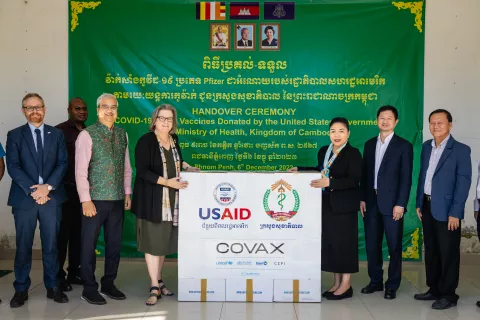
Thanks to the generous support from the people and governments of Japan, Australia, the United States of America, Germany, the Czech Republic, COVAX, and Gavi!
1 Based on Key Indicator Report of the Cambodia Demographic Health Survey 2020–2021, MOH.