How schools stepped up to keep children learning during Covid
A story of how two schools kept education alive for young children with creative approaches and dedicated staff
- English
- Khmer
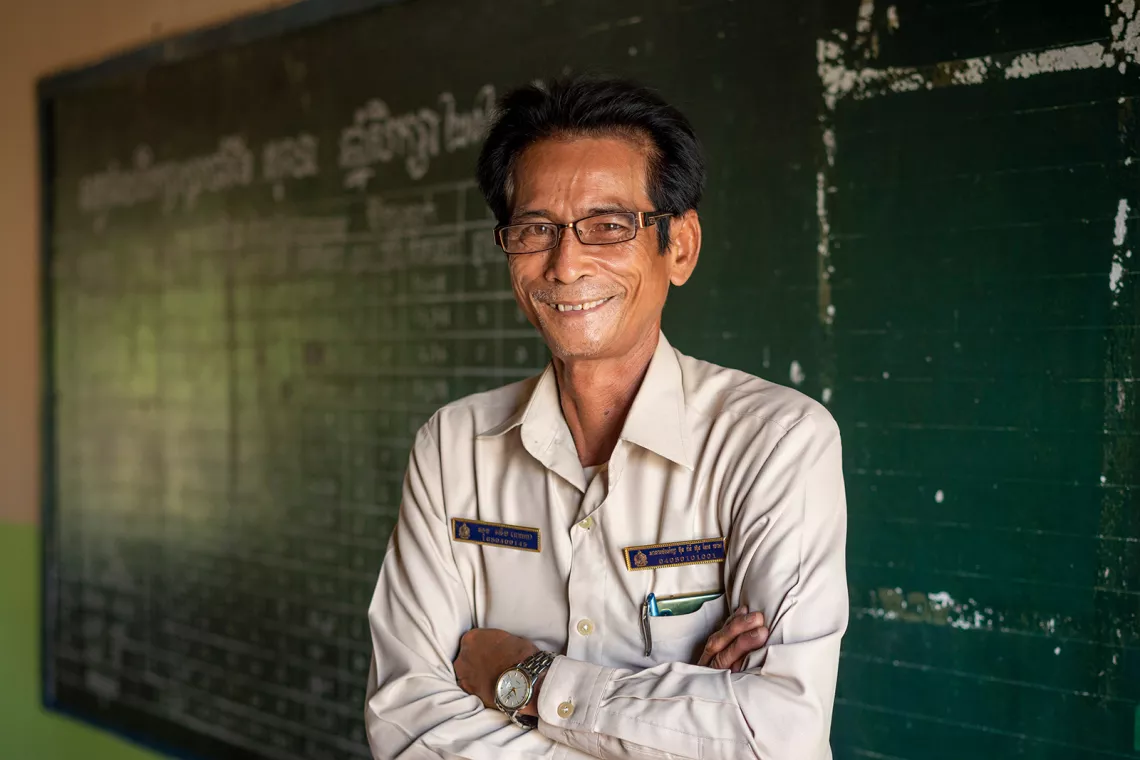
All the best school directors are driven by passion, but Koh Vanet – the 32-year-old in charge of Prasat Neang Torng Primary School in rural Kampong Chhnang – has a particularly powerful connection with the school he leads. He attended Prasat Neang Torng as a young student and was taken under the wing of the school director of the time, who recognised his academic excellence. “He really took care of me,” Mr. Koh says, “so I knew what a large part school directors had to play in people’s lives. After I finished training as a teacher, I asked to come back here in 2015, and he mentored me for two years, then I took over his job. I want all the children who study here to get the same quality of education as I got.”
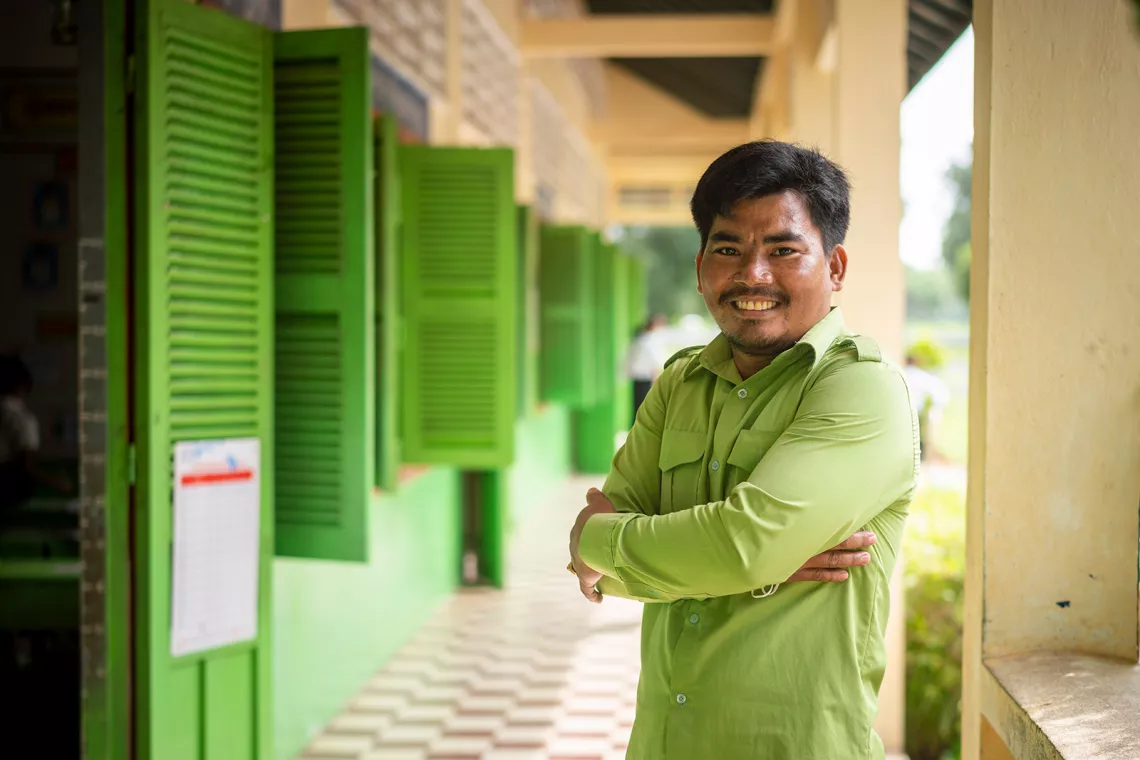
At nearby Bunrany Hun Sen Romeas Primary School, Mr. Koh’s fellow school director - Sok Weng – has a similar sense of mission. He began his career in 1984, when Cambodia was still shattered by the Khmer Rouge genocide and ongoing civil war. “There were very few teachers left alive after the time of Pol Pot,” Mr. Sok remembers. “I thought to myself that if I didn’t become a teacher, who would? I wanted to do my part in helping rebuild Cambodia.”
Both directors say their top priority has always been to ensure that every child in their area gets the best education possible, but the closure of schools during the peak of the COVID pandemic made this much more challenging. While online distance learning materials provided by the Ministry of Education with support from UNICEF were invaluable, students who didn’t have access to the Internet were disadvantaged, and UNICEF research has shown that at least 45% of pupils rely on paper-based materials.
These challenges were one of the reasons that the Global Partnership for Education (GPE) provided a $7 million grant to UNICEF to support Cambodian schools throughout the crisis, which contributed to crucial priorities such as the development of study materials, additional training for teachers in distance learning, and the purchasing of hygiene supplies to keep students safe. One important component was block grants of funding provided to all primary and lower secondary public schools in Cambodia during 2021, to be used at each school’s discretion to fit their own unique challenges in maintaining education during the pandemic.
“We had to choose how to spend our school’s block grant wisely,” explains Mr. Sok. “We decided to focus on printed worksheets, as printing costs can be high. We knew that if we didn’t get printed materials for children whose families don’t have Internet access, they would probably have lost their opportunity to keep up with education and got discouraged or even dropped out. That would be so damaging at such a young age. The block grant definitely helped us make sure that all students did return when schools re-opened.”
Chhem Thorn Sitha is one of the teachers Mr. Sok charged with ensuring the printed materials reached students. Although her commitment never wavered, she admits “It was very tiring. I had to drive my motorbike all around Kampong Chnnang, to many different houses. Sometimes nobody would be at home and I would have to go and find the family, who might be working in the fields.”
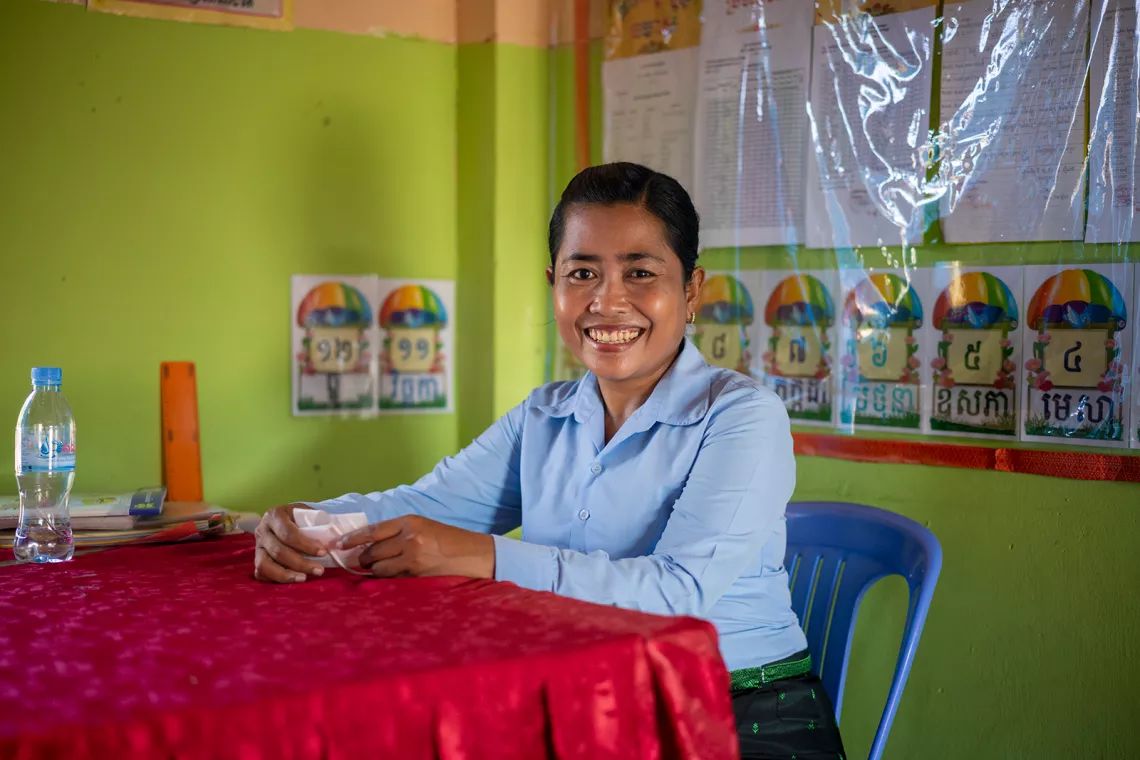
Chhav Sophal, a teacher at Prasat Neang Torng Primary School, tells a similar tale. Her school also decided to use some of the block grant on printed materials. “I worked more hours during COVID than before,” Ms. Chhav says, one of many teachers who report that enabling distance learning during the pandemic was demanding. “We did ask parents and children to come and collect worksheets and homework, but some didn’t and I would have to go and find them. And I really worried about some students. One girl I know has disabilities which make it difficult for her to learn, she struggles with the alphabet. And her parents left her with an uncle, who is a farmer, so she was often by herself. I would make special efforts to visit, and go through the study materials with her and make sure she didn’t drop behind.”
Ms. Chhav was fully supported in these extra efforts by her director, Mr. Koh, whose top priority during COVID was supporting the more vulnerable and poor students. “It was really important to me that they all kept up and came back to school,” he says, “and that is what the block grant was used for. As well as printing, we used it for hygiene products like masks and alcohol and soap for handwashing, and made sure that students who didn’t have these could get them so they could stay safe and then return to school.”
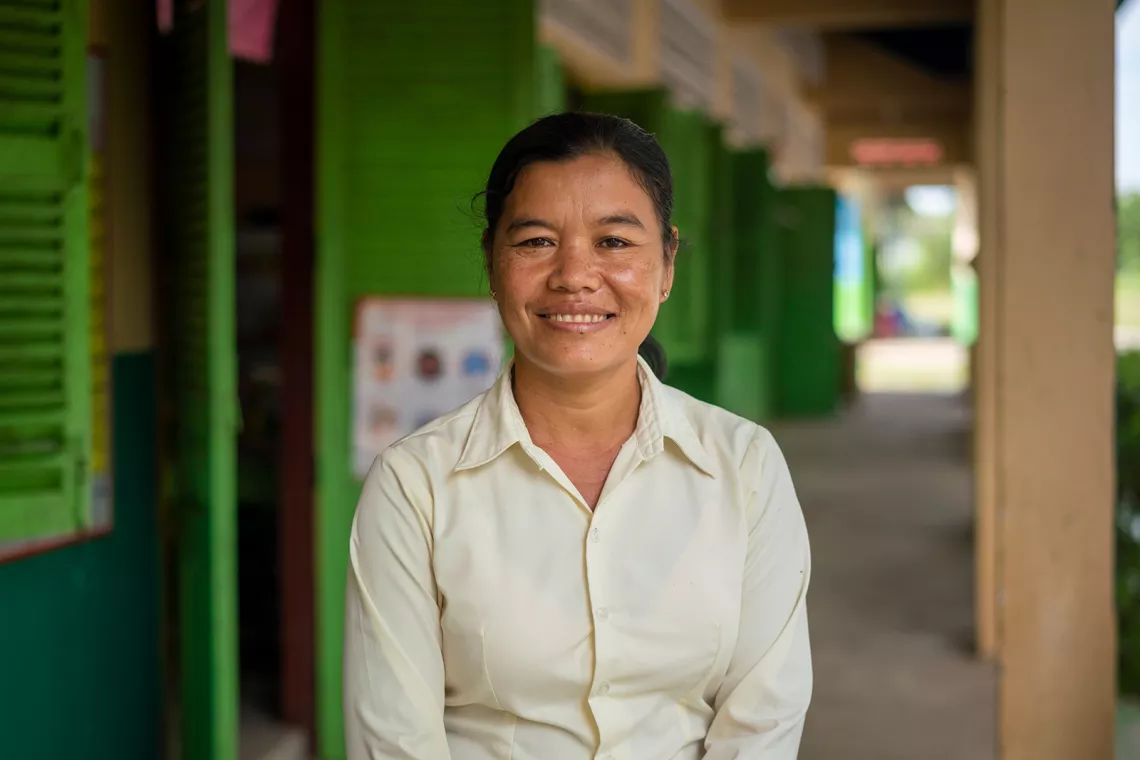
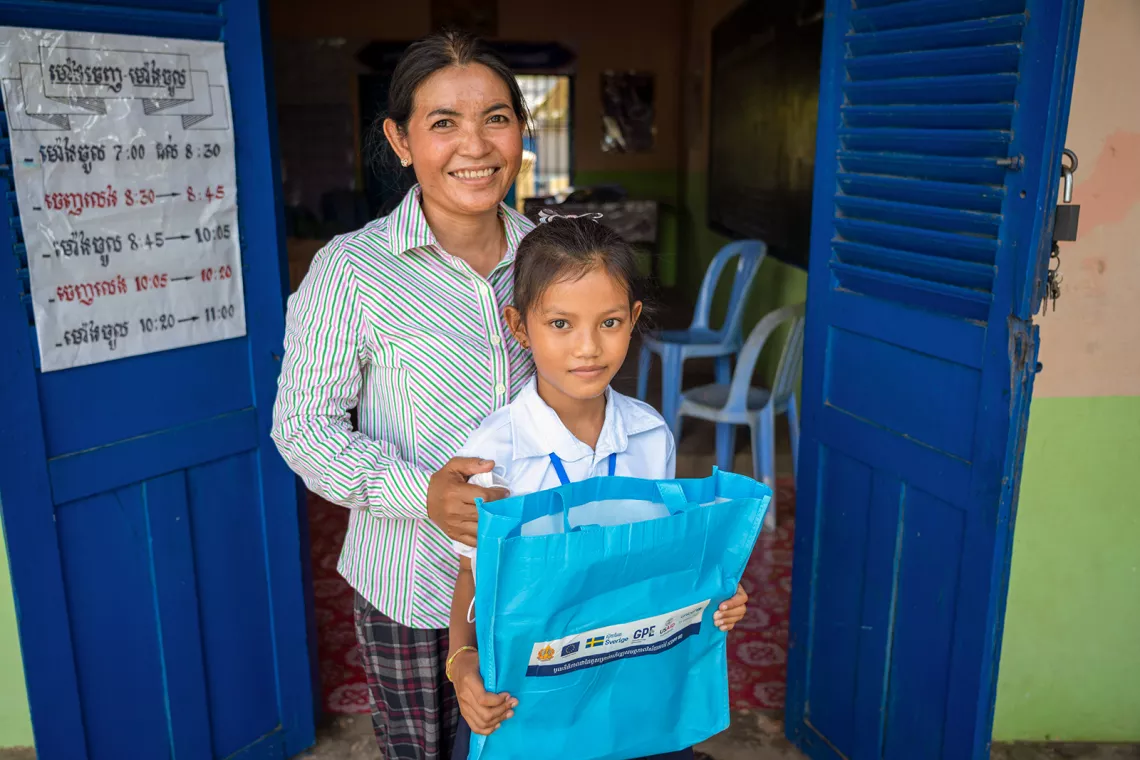
Local mother, Ek Nary, was grateful for the extra efforts the school made in helping her children continue studying. “The teachers would come all the way out to my house with books and homework, and I could see how happy that made my kids,” she says. “Education matters to me, it’s the only way to make sure my children get good knowledge and a good future.”
Her 8-year-old daughter, Weng Riya, is just as enthusiastic. “I hated COVID because it stopped me learning, but it really helped when my teacher came to me and taught me. I have decided I want to be a teacher and help children like me learn in the future.”
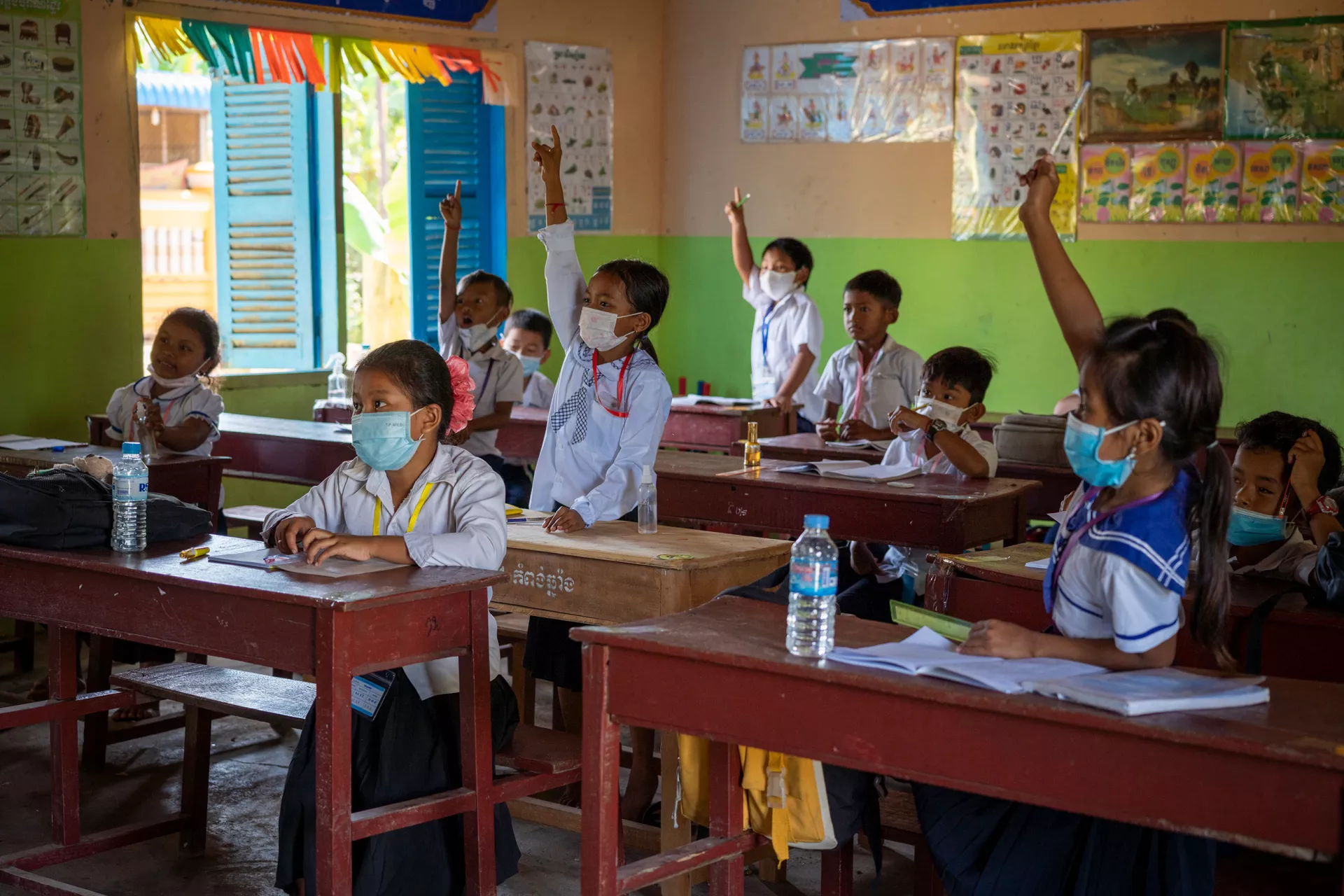
Mr. Koh is thankful for the support his school received throughout the COVID period, and particularly happy that no children dropped out and some families even returned to the local area specifically so that their children could return to school. As his school reopens he feels confident that his school is well prepared, and that the investment in hygiene products will help keep children safe. “
I feel very proud of what we have achieved,” he says, before laughing, “but also a bit exhausted! This was much harder than a normal school year, a huge logistical challenge. But it’s worth it now all the children are back and we can see them smiling and learning together.”