Climate-resilient pipe water lets children learn
In remote communities, the arduous daily responsibility of fetching water once kept children from school. Today, clean piped water at home keeps them in the classroom
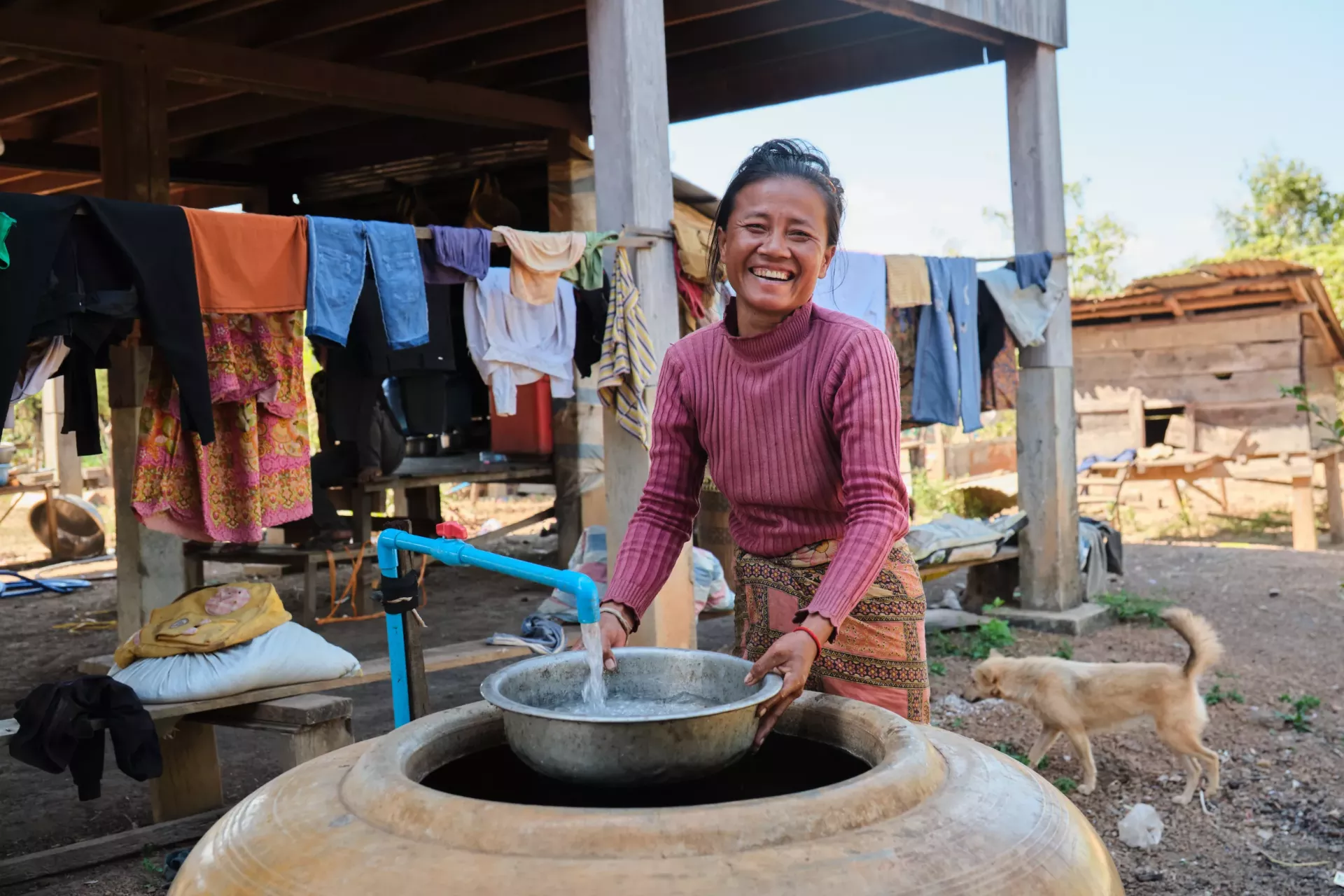
7 January 2025, Ratanakiri – 39-year-old Huong Meng, a mother of four, easily recalls a time when fetching water meant an hour-long walk to the nearest stream.
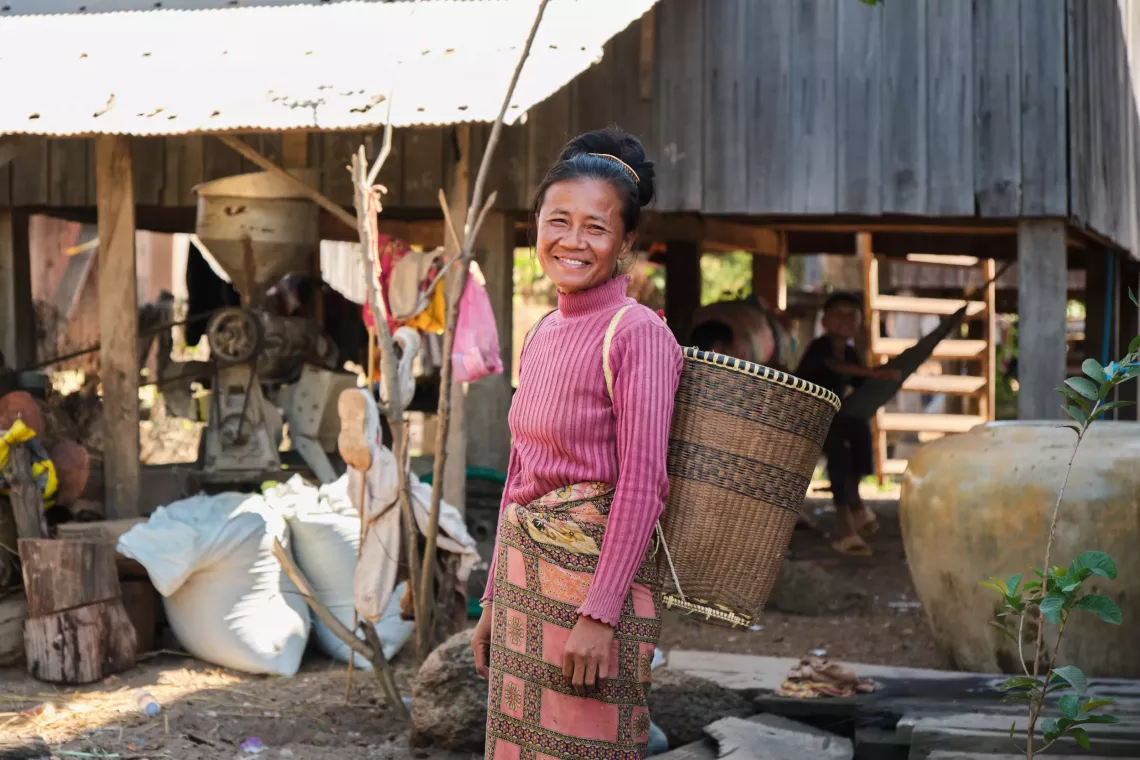
“It was very hard because at that time I would bring my children with me, and one of them was very young so I had to carry both her and the kapah,” she says in her native Tompuon language. A kapah is a handwoven rattan basket commonly used among indigenous communities in Cambodia’s northeastern provinces, including Ratanakiri. In remote communities without access to water at home, it’s women and children who are often left with the responsibility of collecting water for the household, weighing down the kapah with as many water-filled plastic bottles as they can carry.
During the dry season, when drought dried up the water Meng could access nearer to her home, she would need to make the trip multiple times per day to collect enough for her growing family. Her older children, then eight and nine years old, would also help out with this grueling chore, leaving them exhausted with little time to focus on going to school.
As a result, her eldest daughter dropped out after completing only Grade 1.
“I regret that,” she says. “I've now committed that the other three children must go to school.”
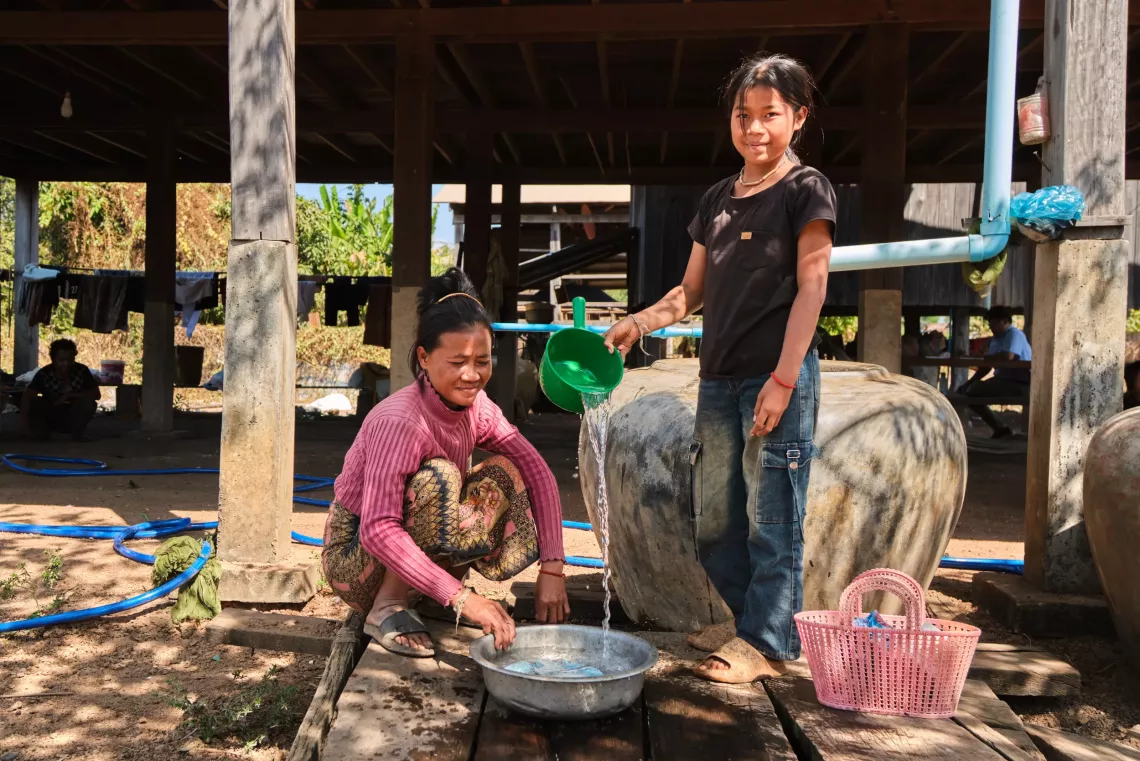
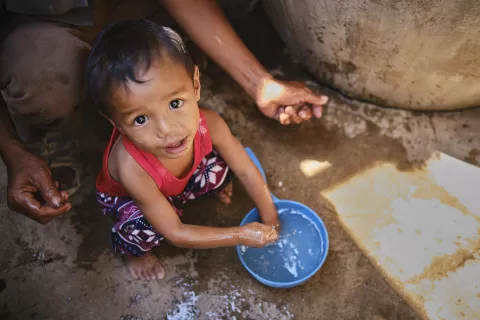
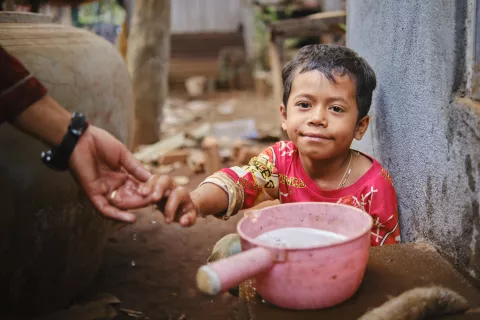
Today, this commitment is made much easier. Two months ago, her house was connected to a community pipe water system supported by UNICEF, with funding from AEON 1% Club Foundation. Today, her family can access water right at home, at the easy touch of a tap.
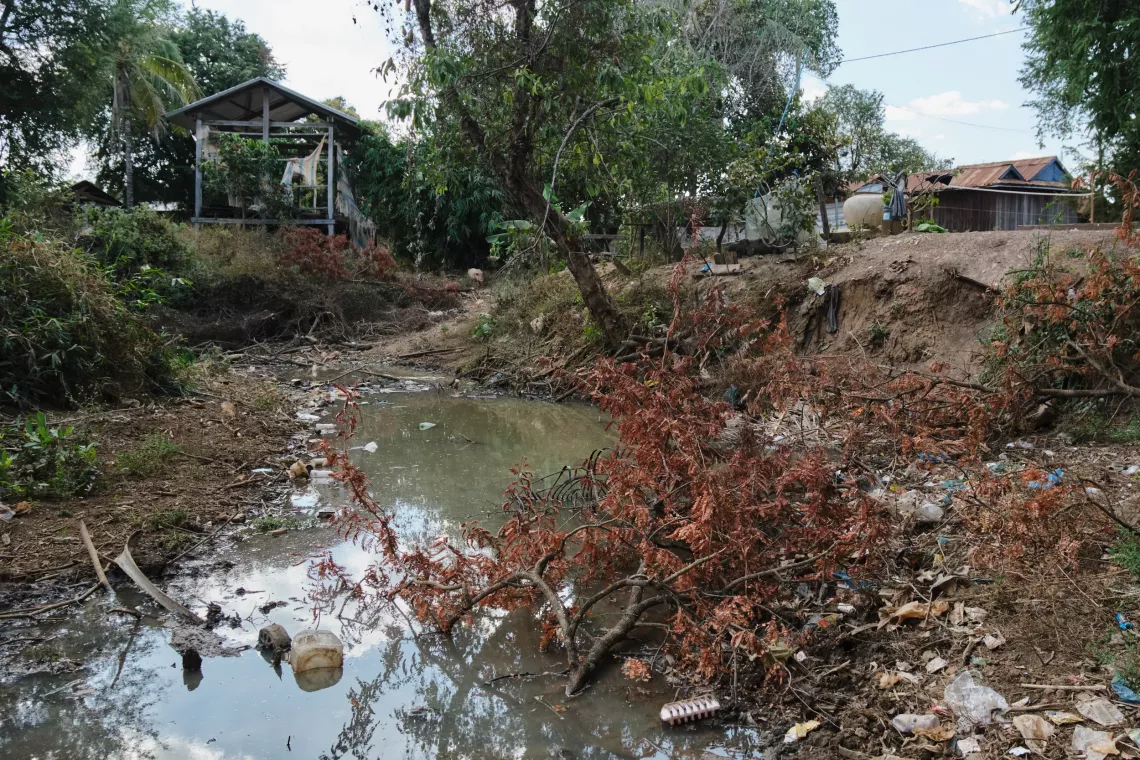
“I was so happy when I heard that the community was going to build a water system,” she says. “I was also worried that the stream water was dirty because my children used to get sick. So now I'm less worried.”
In Cambodia, despite an increasing number of households gaining access to basic water services, many families still rely on unprotected sources like wells, rivers, and springs. Only 19 per cent of the rural population have access to safely managed water services, putting children at major risk of diseases like diarrhea, which can cause stunting, impaired brain development, and even death.
Extreme weather exacerbated by climate change, including prolonged periods of drought during the dry season and increased rainfall and flash flooding during the rainy season, is making it even harder for communities to access clean water and increases these risks for vulnerable children.
The Children’s Climate Risk Index (CCRI) for Cambodia reveals that around 80,000 children under 18 in Ratanakiri, which is 89 per cent of children in the province, are extremely vulnerable to the impacts of climate change and environmental hazards because of a lack of access to essential services.
With UNICEF support, over 175,000 Cambodians have been reached with clean water through private and community pipe systems and bottled water enterprises. The climate-resilient systems, meaning they are powered by solar energy and can withstand flooding and drought, ensure families can access safe, clean water year-round – saving time, improving health, and giving children a chance to stay in school.
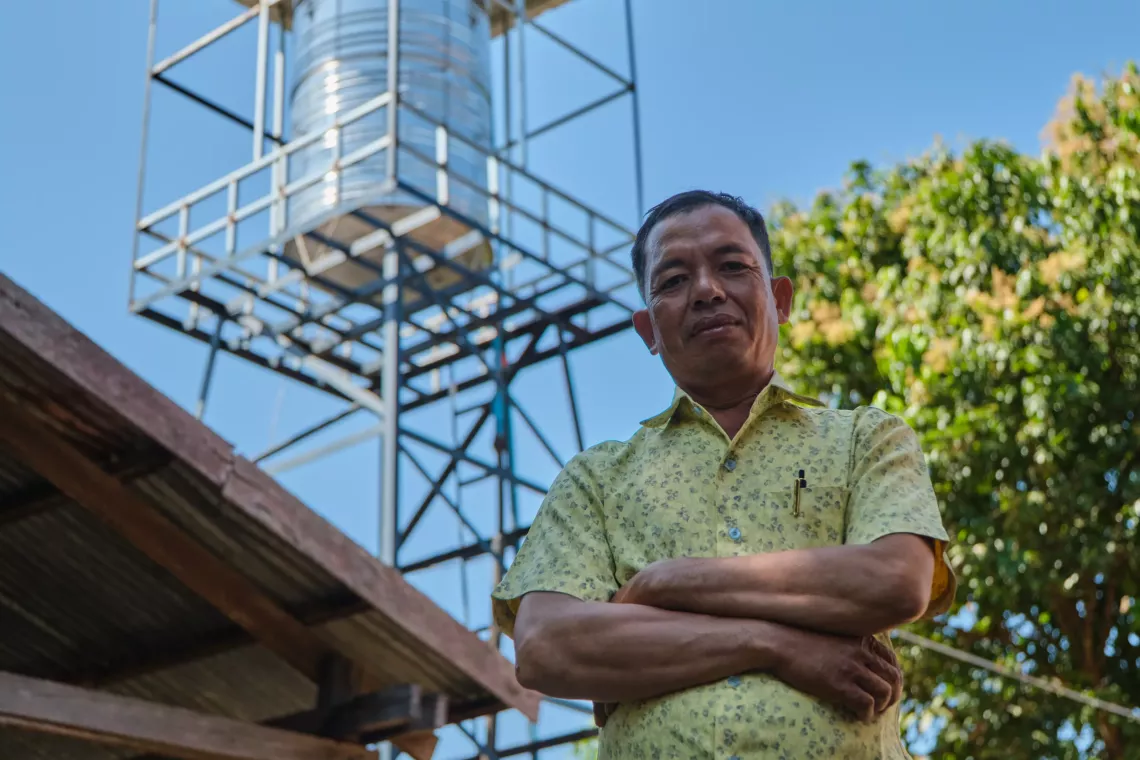
“For my system, we can supply sufficient water to all households in the village, both during the rainy and dry season,” says Joy Soth, Chief of the water management committee in Samotr Leu village. Community-managed pipe systems are supported by UNICEF in remote, hard-to-reach areas where private water suppliers see little financial benefit to expand their operations.
“If we want to take a shower, we take a shower. If we want to clean the dishes, we clean the dishes. If we want to cook, we cook. We no longer worry about the shortage of water.”
As of January 2025, more than 60 out of 105 households in Samotr Leu village have been connected to the pipe system, with more connecting day by day.
“On behalf of the committee, we are committed to urging the families in each household to connect to the pipe by early 2025,” says Soth, who’s seen the benefit on his own family, too. “For myself, both as a committee member and as a villager, I’m very – 100 per cent – happy. My children no longer struggle once they come back from school, as they no longer need to collect water, which is far from the house.”
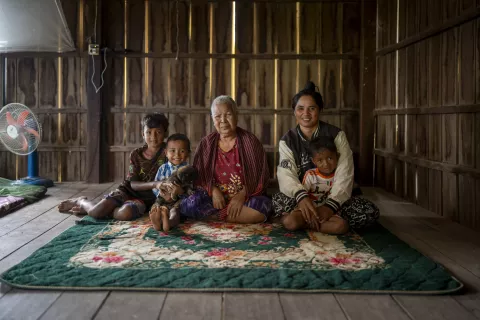
Huong Meng says she loves that she now has more time to spend with her family, and that her three remaining children are now regularly attending school. Her 16-year-old is in Grade 11, while her 14-year-old and 12-year-old are both studying in Grade 3. She won’t let them drop out.
“I want to see my children become teachers or doctors,” she says.