A step forward in Birth registration: an innovative interoperability pilot approach
To promote birth registration in the province of Kirundo, the United Kingdom Committee for UNICEF supports the interoperability approach between civil registry services and health facilities in the province of Kirundo.

- English
- Français
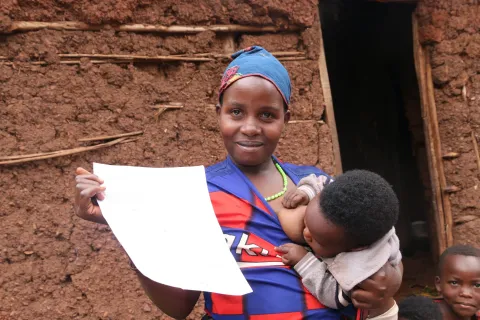
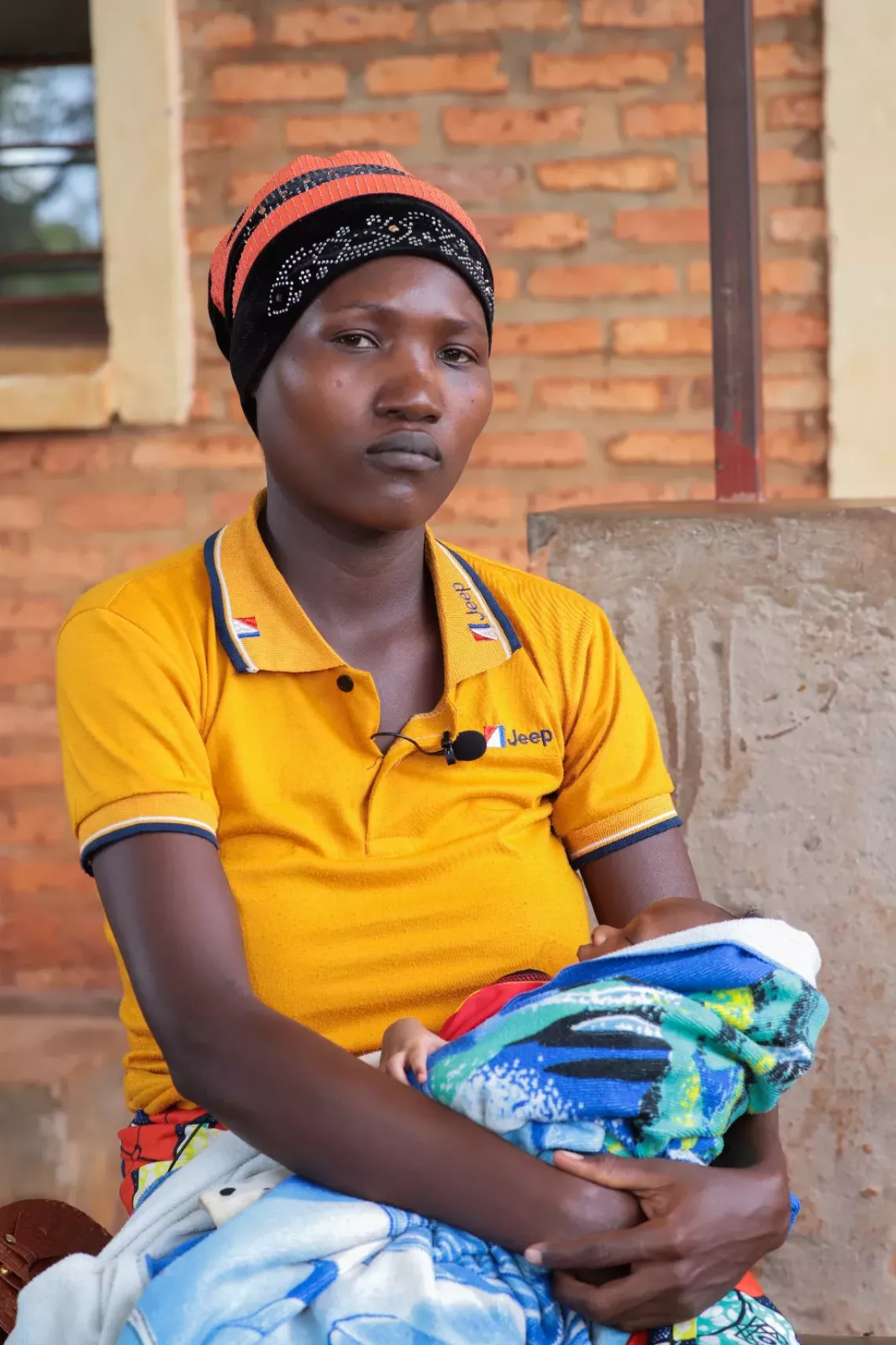
At Vyanzu Health Center in Busoni, Ephrasie Butoyi, a resident of this commune and mother of three children, is delighted to return home with the birth certificate of her third child, who was also vaccinated during her visit. Previously, she had difficulties registering her children due to the long journey, the need to travel with witnesses, pay for their tickets, and endure a lengthy process. "I welcome the arrival of this project because now these registrations don’t cost us much, and it allows us to register our children on time," she says with satisfaction.
Additionally, due to existing regulations, healthcare personnel were unable to offer free care to sick children without a birth certificate. In response to this situation, parents were often forced to self-medicate or use traditional remedies. "Now, this intervention brings great relief to parents who come to vaccinate their child and leave after registering them with the civil registry," explains Damien Ndayisenga, a nurse at Vyanzu Health Center.
Prior to October 2023, only 34% of children in Kirundo province were registered with the civil registry, the lowest rate in the country. Most children in this province did not enjoy all their rights. Difficult access to education and free healthcare for children under five were the main obstacles to their rights in this province. This situation has improved thanks to the support of UNICEF and its partners, who have facilitated timely birth registration by implementing interoperability between civil registry services and health facilities (FOSA).
Since its launch in 2023, this pilot approach is now operational in 35 of the 54 FOSA in the province of Kirundo. Civil registry agents now offer birth registration services through two weekly sessions at health centers (CDS), coordinated by the provincial medical director and the provincial civil registry controller, following a pre-established schedule aligned with the provincial vaccination calendar.
"Before this intervention, we were overwhelmed by the number of parents seeking to register their children and obtain birth certificates," explains Damien Ndayisenga, a civil registry agent in Busoni, highlighting the significant impact of this new initiative in the province.
"In the span of a month, we registered 1,000 children at the 35 health centers, whereas previously, registrations amounted to 100-120 children at 25 centers," explains Grace Itangishaka, the provincial controller of Kirundo province.
"It was necessary to travel between 30 and 40 km to reach the commune's headquarters. Additionally, due to the large number of births and long waiting lines, some parents left without being able to register their children," explains Dr. Kwizera, the medical director of the Kirundo health province, confirming that this lack of civil registry deprives children of one of their fundamental rights: the right to health.
Thanks to this initiative, thousands of children in the province of Kirundo can now benefit from their fundamental rights, such as access to education and free healthcare. This pilot interoperability project not only simplifies administrative procedures but also transforms the lives of families by making civil registry services more accessible and efficient.
By joining forces, UNICEF and its partners have demonstrated that innovative solutions tailored to local realities can improve the daily lives of the most vulnerable communities. Through this initiative, a more promising future is emerging for the children of Kirundo, paving the way for a model that could be extended to other provinces in Burundi and possibly beyond.