"Innovation challenge": Let's meet "Bakame", a computer system that interacts with children
This system is one of six innovative projects created and implemented by UNICEF Burundi's staffs to benefit early childhood development, the fulfilment of adolescents as well as environmental protection in response to climate change challenges

- English
- Français
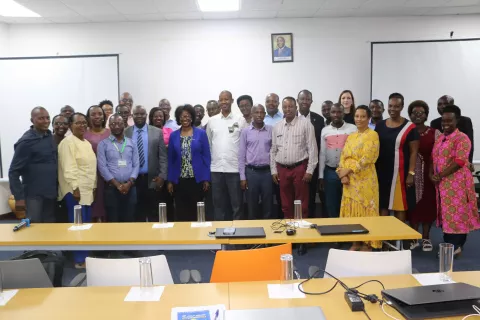
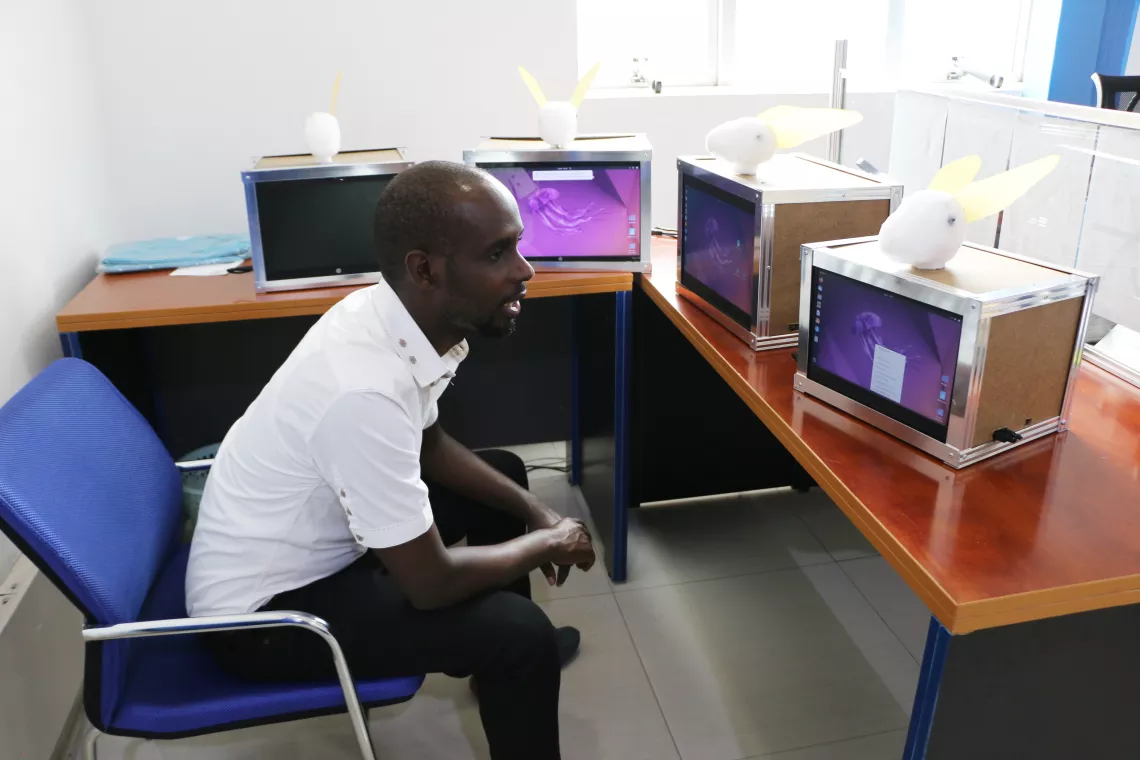
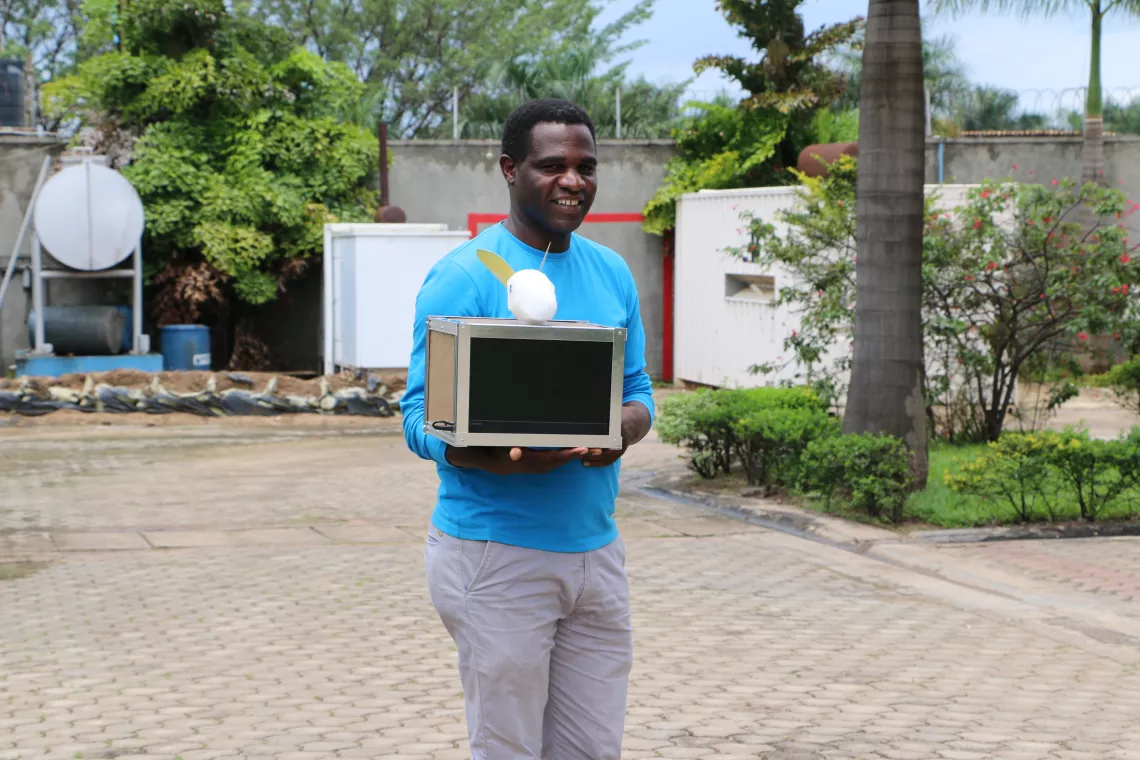
Looking at the boxes , one might think that it is a television, a microwave, or an old radio. But it's none of that! This computer system, integrated in a box and named “Bakame” (“rabbit” in Kirundi), is the product of an innovation project called “ROAU - Making Amortized Computers More Useful”. It was created and developed by a group of 4 members of UNICEF Burundi's staffs as part of the “innovation challenge” launched by the Burundi Country Office in May 2022.
This magic box with a rabbit's head has been made from recycled electrical and electronic materials and is able to interact orally with humans. The device narrates stories and sings songs in Kirundi, which will contribute to the cognitive and mental development of the children.
“This is an innovative computer system in Burundi that allows to communicate with children orally”, says Jean Vernack Mbanje, currently working in the Adolescents Section of UNICEF Burundi, former in the Information and Communication Technology Unit (ICT4D) at the time of the project submission.
“This system was given a head similar to that of a rabbit because it is an animal that is often referred to in Burundian stories. The head of the ‘Bakame’ can also help to attract children's attention to the box, explains Jean de Dieu Nzambimana, driver at UNICEF Burundi and member of the team that designed "Bakame. “Even in the songs and stories in this box, we find stories about rabbits”, added Jean de Dieu.
Another positive aspect of the “Bakame” is that it can be deployed in rural areas where there is no internet or electricity, as these devices have a power autonomy of about 4 hours.
One of the conditions for the submission of innovative projects to the “innovation challenge” was that the proposed projects should be linked to, at least, one of the cross-sectoral priorities of UNICEF Burundi, which are climate change, early childhood development, and youth participation. This project effectively responds to the 3 priorities of the Burundi Country Office.
Indeed, with the use of recycled electrical and electronic equipment, the climate change aspect is taken into account. These boxes will also be used for early childhood development, as they offer an innovative way to stimulate children's brains through songs and stories. “Usually, Burundian children do not really have enough toys to develop, either cognitively or physically. These systems can be deployed in pre-schools or health centers for the benefit of children aged 0-6 years”, says Irène, Contracts Officer at UNICEF Burundi's Supply and Logistics Unit, also member of this group of innovators at UNICEF.
To involve young people in the project, the UNICEF group of innovators developed this system with a working group of adolescents, coordinated by a partner experienced in youth skills development. “We guided them, but they are the ones who produced the final result that we can see now. We believe that in the future this experience will allow them to stimulate their innovative ideas and create other projects in this sense,", adds Irène.
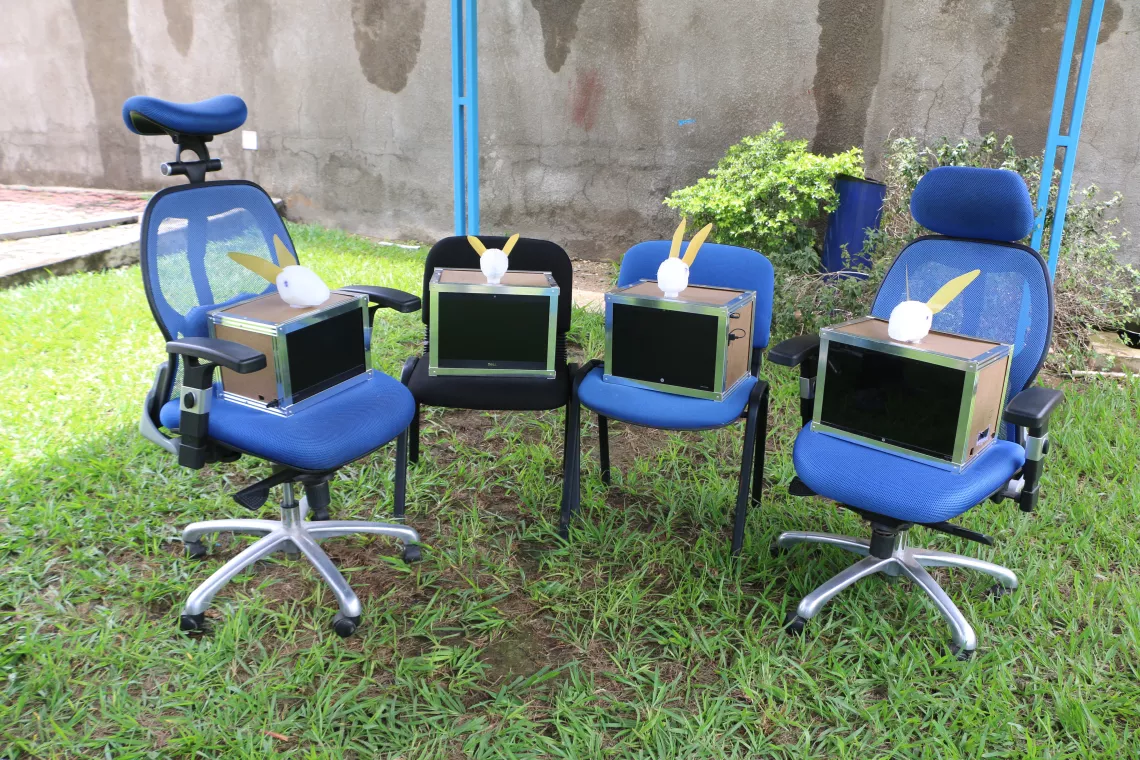
In a first pilot phase of the project, funded by UNICEF Burundi, 20 devices have been designed and will be deployed in 20 schools in the Muyinga and Kirundo provinces. “The content of the systems in this phase is aimed at pre-school children, but this does not exclude children in the first or second year of primary school also benefiting from this system”, notes Jean Vernack.
This group of innovators is highly motivated to continue developing the project. They affirm that they have a lot of ideas about other functionalities that could be added to the system, if they obtain further funding, after the evaluation of this pilot phase.
Thanks to UNICEF Burundi's own funds, a total of 6 innovative projects, including "ROAU - (Making Amortized Computers More Useful), were developed and implemented in 6 months by staff from the different sections of the country office.