Door-to-door against Ebola!
UNICEF in Burundi focuses on C4D approaches to spread critical information about Ebola and stopping it from arriving in Burundi.

Rugmonbo, Cibitoke, Burundi-As a mobilizer who volunteers with the Burundi Red Cross, Consolatte Ciramunda goes door to door to explain what Ebola is and how best to protect against the disease, should it come to Burundi. In Rugombo, Consolatte walks to Eric Adaykengurukiye’s door who welcomes her cheerfully.
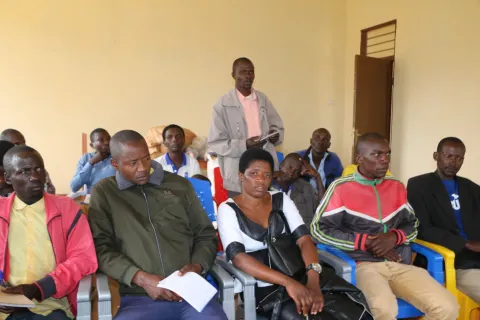
A few minutes later, Eric’s neighbors curiously gather around Consolatte as she clarifies what every drawing on the Ebola leaflet means.
‘’I do this because I love to help others’’, Consolatte succinctly answers when asked what motivates her to this voluntary work every day.
“I have always had a lot of respect for people who give of their time and sometimes money to help others, she continues. Now that I have the opportunity to do so, I ensure that my community in Rugombo receives accurate information about Ebola. The best part of this is when I visit households and I find everyone in the house, because then I know there will be a lot of questions to answer!’’, Consolatte chuckles.
I do this because I love to help others

Everybody actively listens to Consolatte’s pieces of advice: wash your hands with soap, avoid spoiled meat that comes from the bush, avoid touching people who look sick (fever, blood, sweat…), among others.
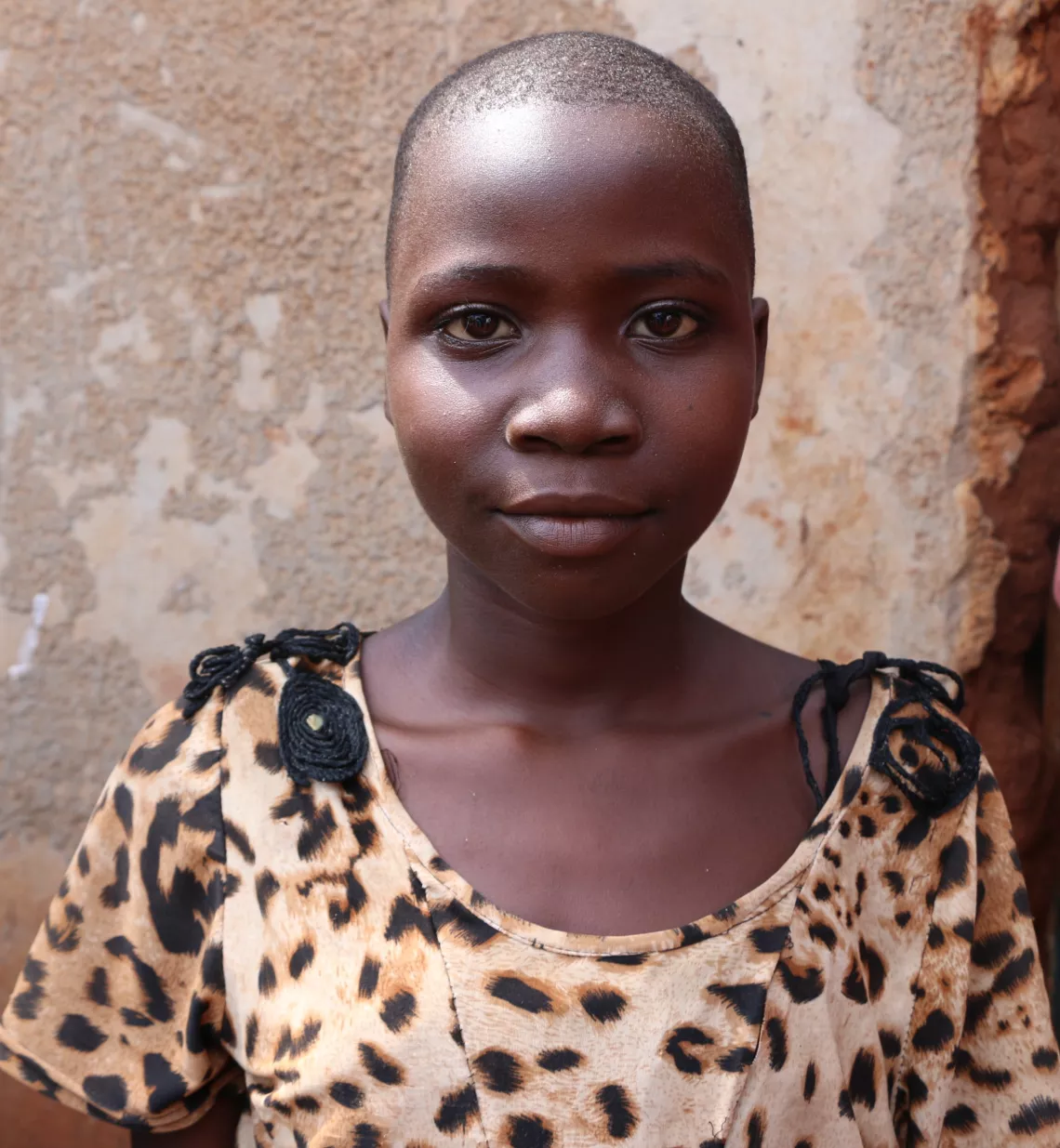
Once people got engaged in a deeper conversation with Consolatte, Cynthia Uniteka, a 11 years-old girl from the neighborhood, had something to tell us: ‘’I heard about Ebola, it is a disease that can kill people. My teacher told us about it in school and asked us to wash our hands with soap when we finish using the toilet’’.
Cibitoke province has been identified as a priority zone (1) by the Burundian Ministry of Public Health in terms of Ebola preparedness, as it is close to the land border with DRC. Rugombo commune alone is located near two important official entry points: Ruhwa, with a daily transit of 5,000 people and 6,000 on market days, and Mparambo which witnesses a lower daily flow of 300-550 people.
In rural Burundi, people rely mainly on the radio that is accessible at: the small cafes, bars, the market and few households. Using members of the community to convey important messages has proven very successful, since it fosters social cohesion and increases awareness. Community mobilizers like Consolatte are trusted because people know that they have received trainings. She can therefore give them reliable pieces of advice and answer their questions with confidence.
Not far from the crowd, two young people are standing and listening to the passionate conversation.19 years old Thierry Manirakiza has dropped out of school and doesn’t have a job, while 16 years old Mylene Akimana is in 6th grade, who has learnt key information about Ebola from her teacher.

Thierry is convinced that the lack of hygiene can accelerate contracting all sorts of diseases, including the Ebola virus disease. He confidently explains: ‘’Ebola comes from the bushes, from dead animals and birds and humans can contract it if they eat spoiled meat’’. Thierry sadly notes that adolescents and youth do not seem to be interested or concerned: ‘’I see my friends sitting there doing nothing and not believing the news coming from DRC about Ebola, and I want to change that’’. Thierry dreams of becoming a community mobilizer, so he can organize gatherings with his friends in the neighborhood and discuss Ebola-related concerns.