
Little Hassan saved from malnutrition by U-Reporters
During the Faso Jeunes caravan, young people are trained on multiple lifesaving practices to inform their communities
- Français
- English
At a hasty pace, Pugsablega Sawadogo enters the health centre, as she is preoccupied by her 18-month-old Hassan’s health. Over the past months, the little boy has lost appetite and weight, and cries a lot.
“When I arrived at the health centre, the nurse told me that if there were any complications with my child, she would transfer me to the regional hospital,” she says.

At the health centre, little Hassan was measured, weighed and screened for severe wasting. At 6.5 kg, Hassan is too small for his age. Pugsablega who lives in Kaya in Burkina Faso’s Centre North region says her son fell into malnutrition because she lacks the means to prepare nutritious food for him.
“We don't have anything good to eat. I often want to prepare good food for him, but how do I do it? ... I go from house to house to do the laundry to meet our needs, but I don't have laundry to do all the time. My husband does not have a job,” she explains.
Burkina Faso is experiencing an unprecedented humanitarian crisis, with children and families at heightened risk of illness due to diseases and malnutrition, dropping out of school, and experiencing abuse and violence. Currently, an estimated 5.5 million people require humanitarian assistance in the country, including 3.2 million children caught in the conflict. Global acute malnutrition (GAM) rate rose from 8.1% in 2019 to 9.7% in 2021 with 6 out 13 regions over the 10% emergency nutrition threshold. In 2022, almost 180,000 children experienced severe acute malnutrition also known as wasting.
Hassan was immediately put on ready-to-use therapeutic food (RUTF), a highly energetic life-saving essential food supply that treats severe wasting in children under 5 years old. Wasting is defined as low weight-for-height and happens when someone has not had enough food or food of adequate quality.

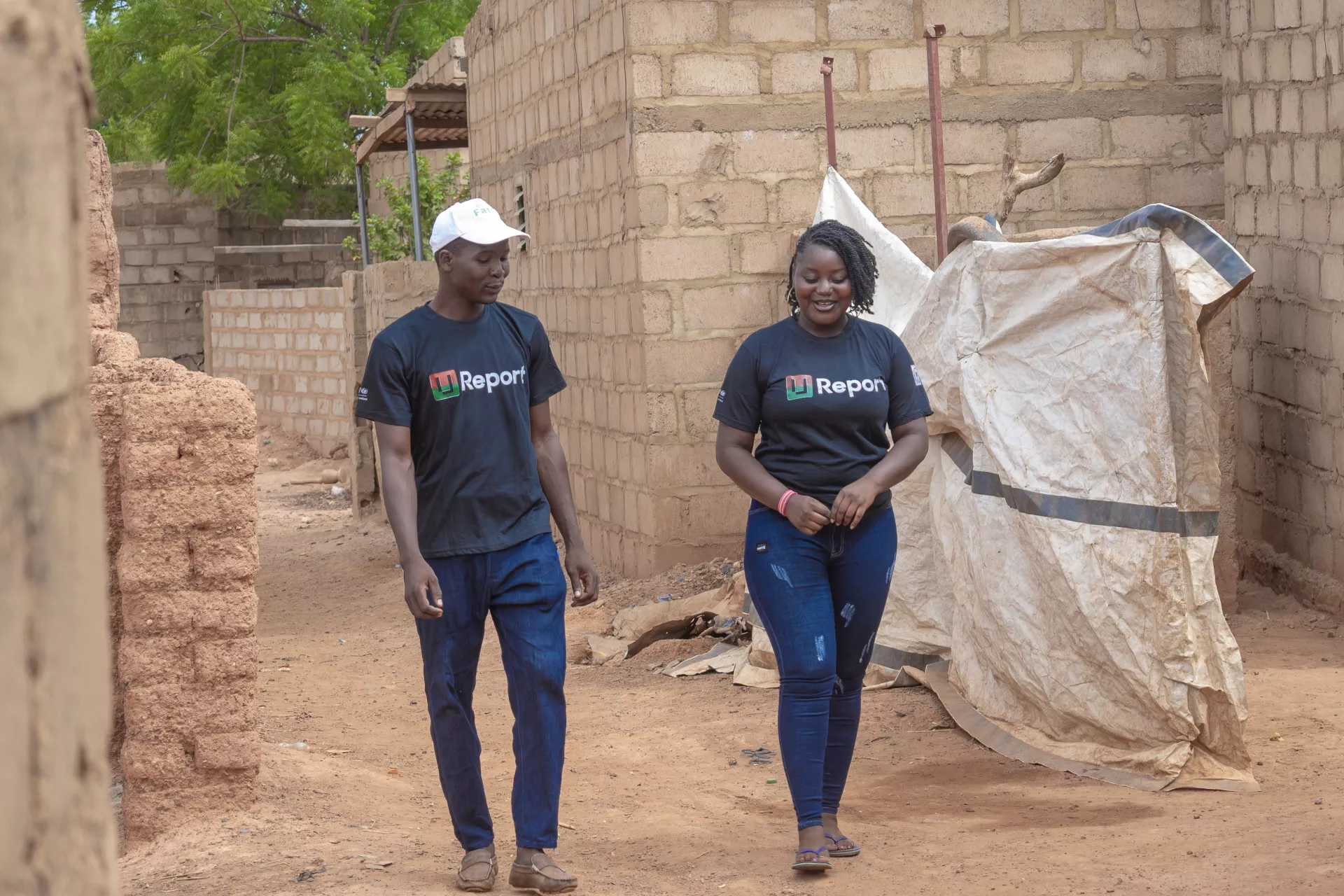
Pugseblega could realize her son has signs of malnutrition thanks to a focus group organized by U-Reporters in her community during the Faso Jeunes caravan.
“This morning, we came to educate women about malnutrition. We noticed that in our community, because of a lack of means or lack of information, children are often neglected. Some fall into malnutrition and others die, which is not good. We inform women on how to behave during pregnancy and after childbirth,” says Lydia Sissaogo,21, U-Reporter from Kaya.

Between 9 June and 18 July, the Faso Jeunes caravan will criss-cross Burkina Faso to reach at least 5 million people with lifesaving information, while training 3,200 and directly targeting 80,000 adolescents and youths with messages on good hygiene, health and nutritional practices, preventing female genital mutilation and child marriage.
“We have acquired knowledge thanks to UNICEF. And during the caravan, we were trained on key family practices and on prevention of malnutrition. We know enough about the subject to raise awareness among the community and among our peers,” says Sissaogo.
The event is built around U-Report, a youth movement that counts has 154,900 subscribers across the country who receive a stream of information about on children's rights and share their own thoughts on the situation for children. The caravan also sensitizes on climate change effects and seeks to reinforce social cohesion.
All along these 8 weeks, Faso Jeunes caravan will continue addressing child survival and development as well young people’s issues, thanks to support from Bill and Melinda Gates Foundation, the European Union, Japan and Sida.
"Adolescents and young people are the driving force of Burkina Faso. When they are well-skilled and well-equipped and given equal chances, the youths will become changemakers and will uplift their communities. In times of emergency, young people need to have the knowledge and tools to protect themselves and their communities. Investing in young people is essential to multiply gains for the well-being of women and children," says Sandra Lattouf, UNICEF Representative in Burkina Faso.
From January to April 2023, UNICEF scaled-up its response to the humanitarian crisis despite a dire lack of access du to insecurity. 30,700 children suffering from severe wasting were treated and nearly 355,000 pregnant and lactating mothers received counselling services on infant and young child feeding. UNICEF also trained 19,000 mothers on how to screen acute malnutrition at community level.
Pugseblega is still worried about her little Hassan because she also lost one child to evitable diseases. Thanks to the RUFT treatment and quality nutrition, her son has fair chances to live, grow and develop to their full potential.
To continue reaching vulnerable children like little Hassan and their families with lifesaving goods and services in 2023, UNICEF requires US$226.7 million. To date, only 9 per cent of funding has been allocated.


