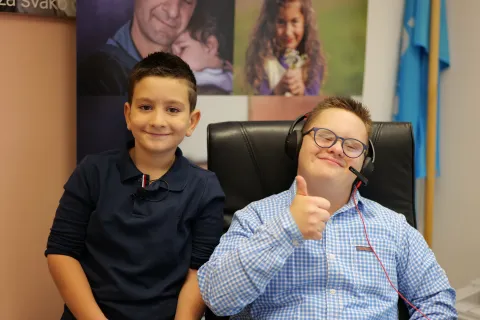
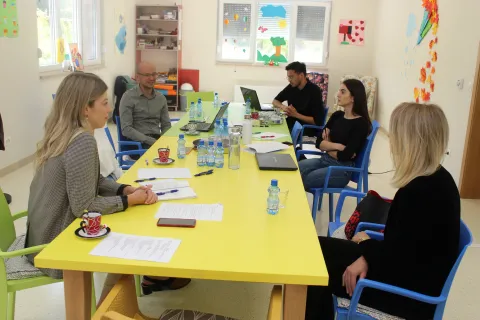
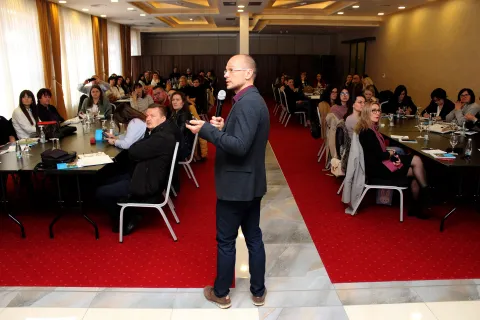
"We need to create a system that will have an already mapped out path, without improvisation."
"The role of the parents of a child with disabilities is a continuous struggle to improve the child's condition"

- Bosanski/Hrvatski/Srpski
- English
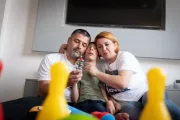
In 2019, the Fazlić family from Sarajevo participated in UNICEF's campaign focused on the social inclusion of children with developmental disabilities. Azur, who was then 8 years old, together with his mother Samira and father Jasmin, posed for our photographers.
Today, Azur is almost 13 years old, and during this year's Parenthood Month we spoke with his parents.

"The child protection system needs to be organized so that the moment it is known that a family has a child with developmental difficulties, proactive work with that family (parents and children) immediately begins."
"We need to create a system that will have an already mapped out path, without improvisation, and that will guide parents through further life. There should be developed methods, institutions and individuals who will have all the necessary answers to the questions that bother parents."

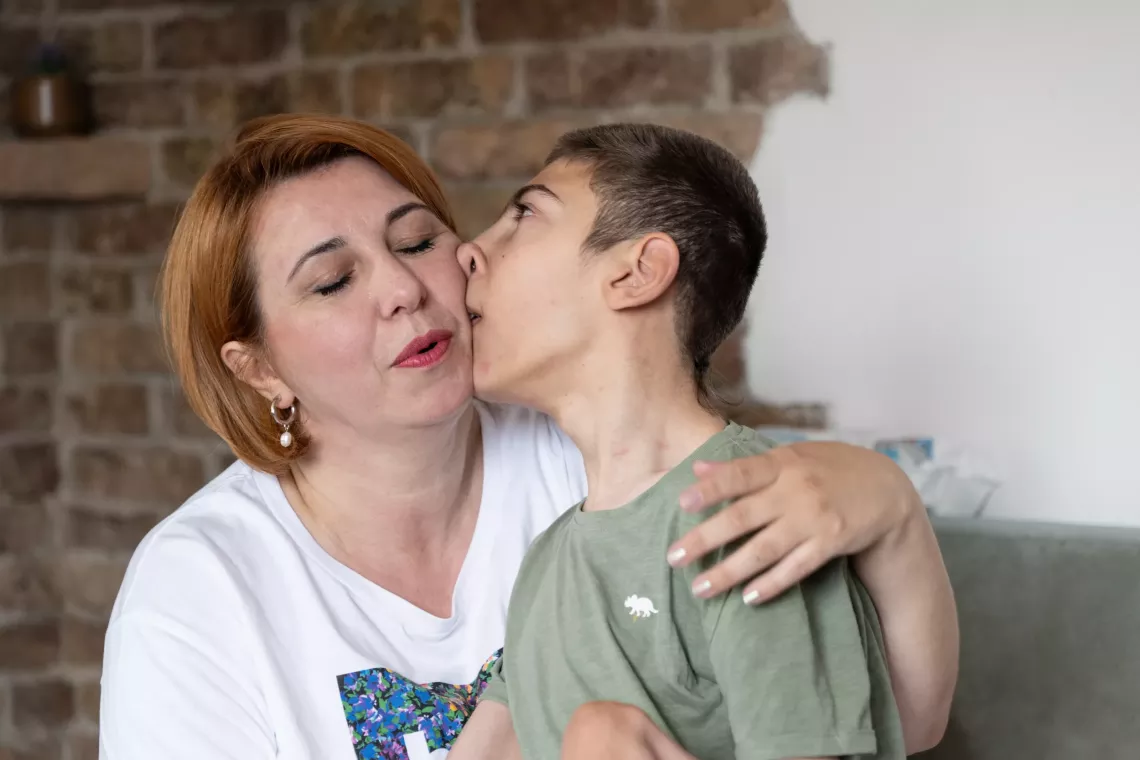
"The role of the parents of a child with disabilities is a constant and continuous struggle to improve the child's condition. Facing the realisation that the child will have problems in development, and that he will almost certainly be a disabled person who will not be able to perform basic personal needs, is a key moment for parents. How you accept that realisation has a big impact on the family as a whole, as well as the child."
"You need a quality program and plan in working with children, especially with more severe forms of difficulties. Your life is reduced to stages. It's very painful when a child has deviations, then it's time for kindergarten, and the child can't go and there are no kindergartens for children with disabilities. Then the school period, and that phase is also painful because you worry about whether the child will be accepted into any kind of education."
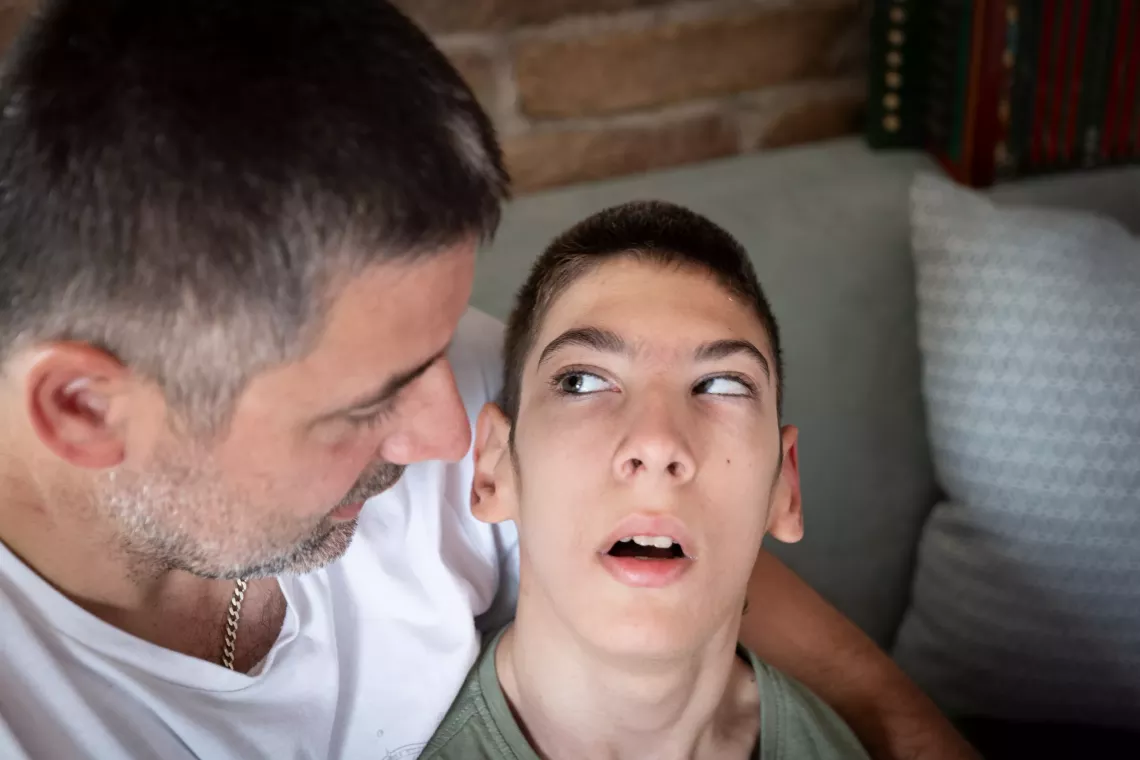


"Neither is the educational system favourable to children with disabilities. Many children are excluded from schooling because they are "judged" by what they cannot do, and not by the potential they have."
As a leading advocate of the right of every child to progress, learn, participate and be protected, UNICEF BiH works with the authorities and partners to improve the system's response to the needs of children with developmental disabilities. This process begins with the early detection of developmental difficulties through early intervention, and includes education, health and social care. Practice has shown the absolute necessity of introducing the International Classification of Functioning (ICF) instead of the existing and widely applied medical model of disability classification.
UNICEF BiH conducted an analysis of legal solutions and practices used to assess children with disabilities in 10 cantons of the Federation of BiH (FBiH), as a basis for creating a road map for reform, in close consultation with the competent authorities in the fields of health, education and social protection. The goal of the reform is to adjust the assessment of children with disabilities in accordance with the ICF in all 10 cantons in FBiH