

Developing Healthy Habits in Children as Early as Possible
Dr. Pamela Kapetanović Goluža, pediatrician, answers key questions on the importance of breastfeeding and improving children's eating habits
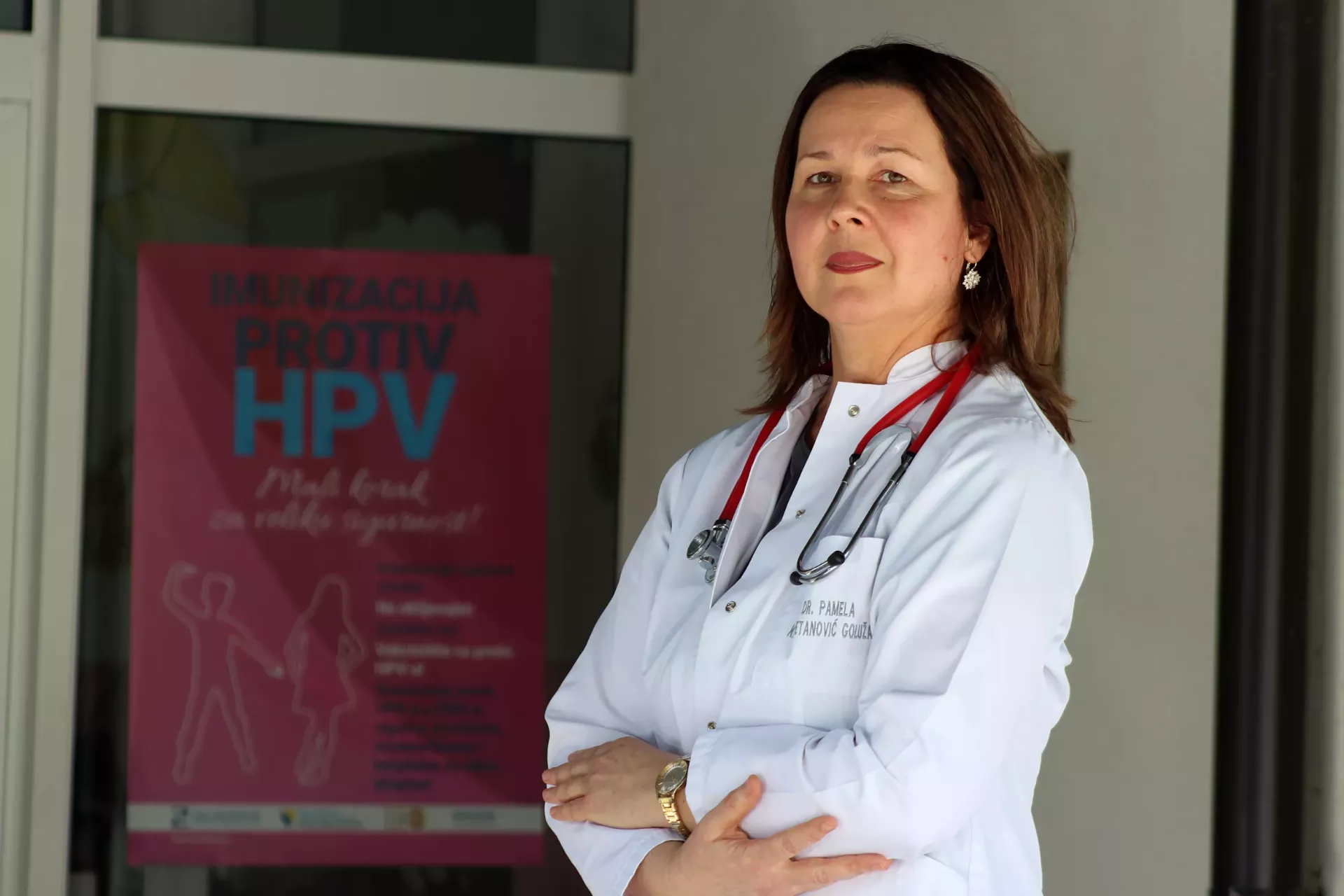
- Bosanski/Hrvatski/Srpski
- English
Pediatric specialist and family doctor, head of the Pediatrics Department at the Vitez Health Center, Dr. Pamela Kapetanović Goluža, in an interview for the UNICEF.ba website, highlights the importance of improving children’s dietary habits and increasing their physical activity, promoting healthy lifestyles from an early age, as well as the benefits of breastfeeding. She points out that more salads, vegetables, and the elimination of sugary drinks in kindergartens—alongside the introduction of healthy menus—help prepare a preschool child to become a healthy schoolchild. Additionally, breastfed children are significantly less likely to develop hypertension or diabetes, while breastfeeding also reduces the risk of weight gain for mothers and protects against conditions such as breast cancer.
UNICEF’s “Eat Healthy, Grow Healthy” program is currently in its seventh phase, aiming to improve nutrition, increase physical activity, and promote healthy lifestyles among children. How important are such programs?
They are extremely important. Unfortunately, each year when children are enrolled in the first grade of primary school and we conduct checkups for six-year-olds—the future students—I am shocked by the amount of tooth decay these children already have. I can hardly recall more than a couple of children for whom I didn’t have to note “caries.” These are not small issues—these are major problems, mostly caused by sugary drinks and the lack of toothbrushing afterward. Parents often don’t realize that after every sugary drink, children should brush their teeth—which most don’t. The fact is, by introducing healthy meals—fruits, vegetables, meat, and so on—not only do we improve overall health, but also oral health. That’s always one of the most shocking findings for me, because unfortunately, children drink a lot of sugary beverages and consume a lot of chips and other snacks. In EU kindergartens, sugary drinks are not allowed at all.
What are the basic measures that should be implemented as early as possible?
More salads, more vegetables, and definitely removing sugary drinks from kindergartens, along with the introduction of healthy menus, prepare a small preschool child to grow into a healthy schoolchild, then a healthy adolescent, and eventually someone who prepares healthy meals for themselves. If we allow things to continue the way they are, we will face an epidemic—every fourth or fifth adolescent has elevated blood pressure, cholesterol levels—we will face an increasing problem. If we don’t work on improving nutrition during early childhood, particularly in the first five years of life, it will be very difficult to influence a child’s eating habits later on.
How important is it for children to adopt healthy habits early?
It is extremely important to establish proper dietary patterns, because a child who adopts healthy habits early becomes an educator within their own family—a promoter of health. A healthy child with healthy habits and a positive attitude toward sports and physical activity. Unfortunately, children today are physically inactive. We live in the digital era, which has brought many benefits, but has also anchored children to couches and chairs. They used to spend hours playing; now even when they socialize, they just sit and use their phones together.
In BiH, 17.5% of children under the age of five are overweight…
That is a major problem. If you examine what these children are actually eating, it’s horrifying what passes for food in their diets. Especially when they enter puberty, shame, sadness, and all those frustrations are often dealt with through food, and we end up with a serious issue—a child with low self-esteem and potential psychological difficulties later in life. And this can be improved with very small changes—from us in healthcare, from parents, and from the children themselves.
How important is breastfeeding for giving every child the best start in life?
Undeniably important! Mothers are often told their child isn’t gaining weight because something is wrong with their milk, but there is nothing more unique or more naturally suited to a child than breastfeeding. I always tell mothers that the milk they produce is unlike any other—no other mother or industry can replicate it. That milk is specifically designed for her baby. It contains all the essential immunological, nutritional, and caloric components needed. There is nothing more original or more irreplaceable.
What are the main benefits of breastfeeding that you highlight to mothers?
Breastfed children definitely have a significantly lower risk of hypertension and diabetes. All the ingredients in breast milk are perfectly balanced, and the likelihood of obesity and chronic illnesses later in life is greatly reduced. I always tell mothers that with minimal effort they achieve maximum results—it’s enough to simply breastfeed as much as possible. It’s also beneficial for the mother—breastfeeding reduces her risk of weight gain and other health issues. We know that breastfeeding protects against breast cancer, so my message is always: recommend, recommend, recommend. If a mother breastfeeds for six months, I sincerely thank her. If she continues for a year, I’m thrilled. And if she goes beyond that, I strongly recommend it—because of the deep psychophysical bond between mother and child.
What if a mother, despite her best intentions, cannot breastfeed?
If there is an objective reason a mother cannot breastfeed, I try to ensure she doesn’t feel guilty or inadequate, and I offer all possible support—especially in those first days when she is most emotionally vulnerable and susceptible to outside influences. We still have many societal messages suggesting cow’s milk is healthy. So, in that fragile first month, we provide absolute support—through our nurses and the visiting care service—to help her persevere with breastfeeding. We remind her that breastfeeding is not only the cheapest option, but also the simplest—no heating, no sterilizing bottles—just the best and most accessible form of nutrition.
How satisfied are you with the breastfeeding rates in the area covered by your health center?
I’m happy that we have a large number of mothers—especially young, first-time mothers—who are persistent in their efforts to breastfeed, and I believe UNICEF has done an excellent job through all its campaigns. Overall, I believe our older colleagues faced more challenges, as there was a time when infant formulas were "in," and breastfeeding was pushed aside. Thanks to ongoing breastfeeding promotion, and of course to us pediatricians who should be the leading advocates, a great deal has been achieved. When I see a mother with her first child choosing to breastfeed and fully committed to it, I’m overjoyed. We are in constant contact with mothers—we are always on the phone—when they call, the nurses are always there to provide the right information, and of course I am too, if needed.


