Protecting every child with vaccines
How outreach clinics are reaching children with lifesaving vaccines in remote Bhutan
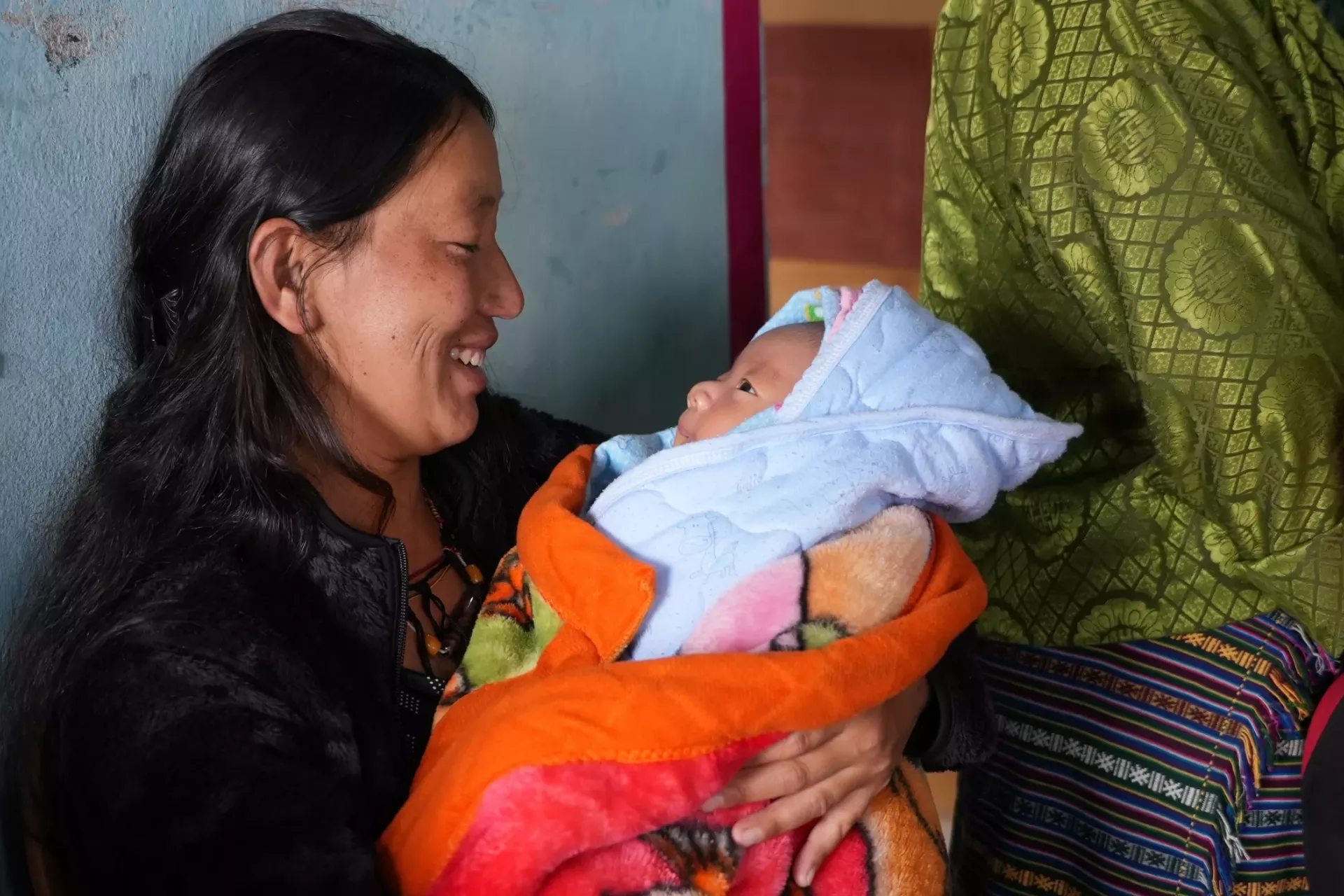
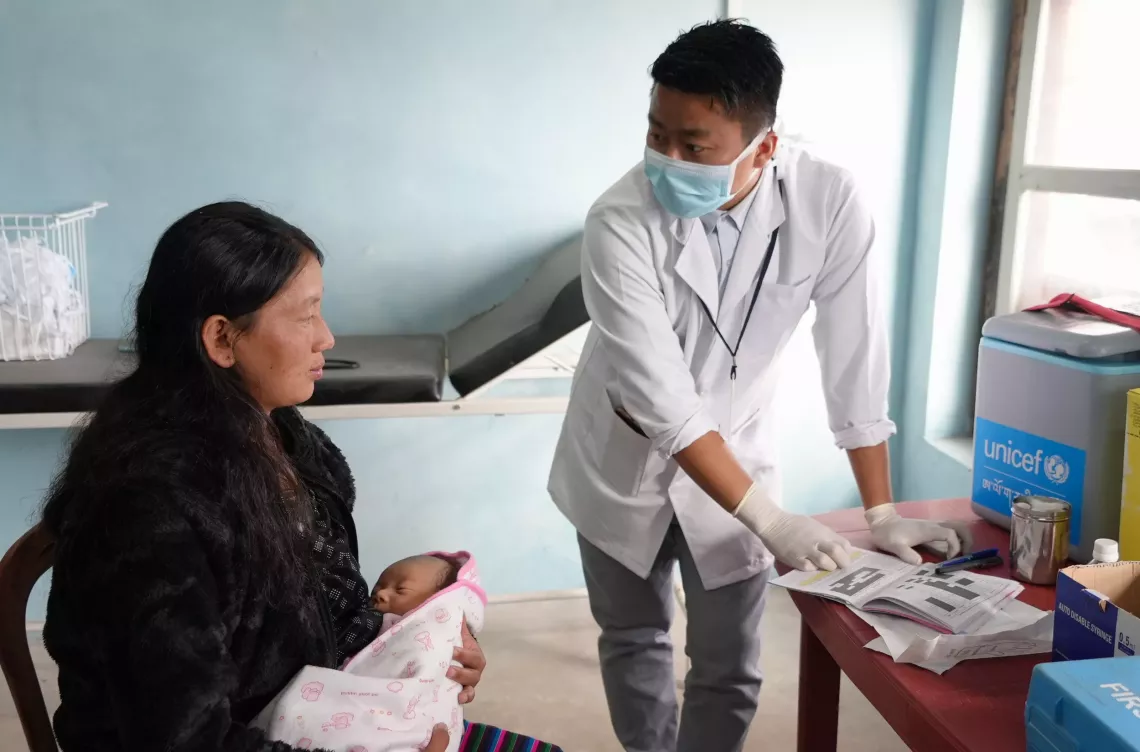
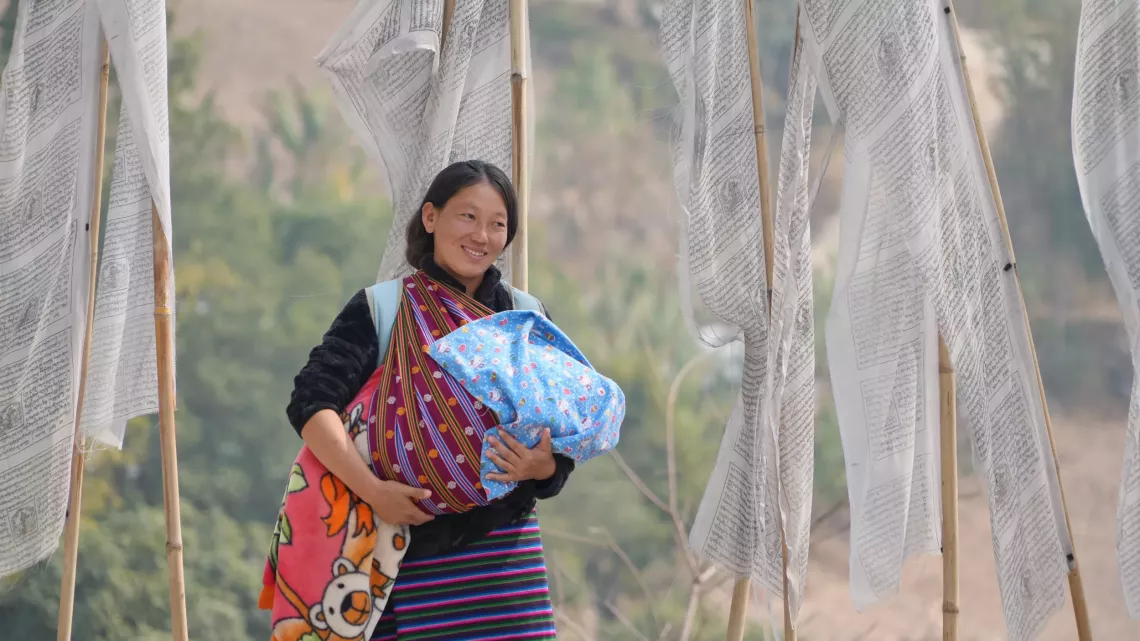
Kengkhar, Mongar: It is an important day for Sangay Yangzom, a mother of two. Her newborn son is six weeks old, and she is aware that it is time for him to get his first dose of vaccines. The community health worker had also called to remind her of her son’s immunization schedule.
Sangay, 29, lives with her family at remote Murung village in Kengkhar, in the far eastern district of Mongar. Her husband is home with her nine year old daughter. She starts early from home, with her son, climbing up the farm road towards the outreach clinic (ORC) to get him immunized. She has to walk for about an hour.
Around the same time she leaves home, at Kengkhar Primary Health Care centre, which is about two hours walk up from Sangay’s home, Health Assistant (HA) Rinchen Thinley is readying the vaccines, the weighing scales and other medical supplies for the ORC. A female health assistant and the caretaker accompany the HA for the ORC, which is about 30 mins drive from the health care centre.
Sangay’s son is the only newborn scheduled for immunization at the ORC that day. Other children in the community visit the ORC to get their weight and height measured while the elderlies visit to get a refill for the medicines.
“I came to vaccinate my child so that he does not get infected with diseases,” says Sangay. “The health worker is here at the village to vaccinate my son and if I did not visit today, I would need to visit the primary health centre, which would take me more than two hours on foot.”
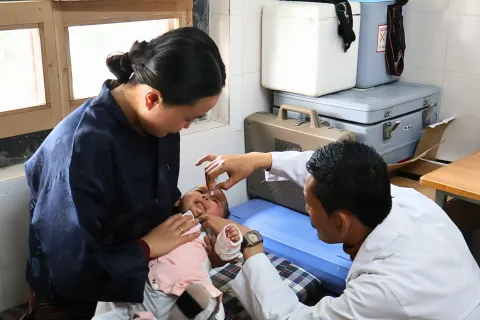
HA Rinchen vaccinates Sangay’s son soon after she reaches the ORC. He starts with the polio drops and administers other two vaccines on the child. Each time, he prepares the vaccine, he explains to Sangay the diseases it would protect her son from.
“We conduct immunization programme five times a month in our catchment area, one at the primary health center and once every month in each of the four villages through ORC visits,” says Rinchen.
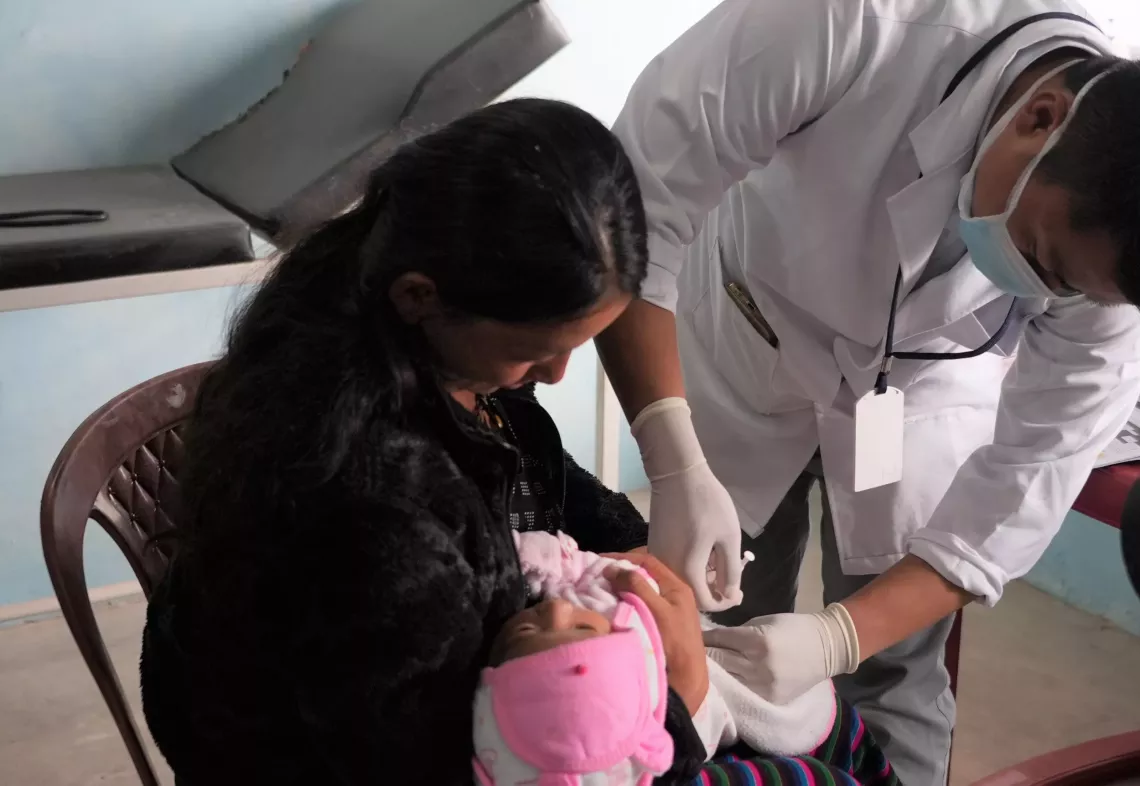
For the last four years Thinley has been stationed at the primary health center, he makes sure that the ORC visits are held as scheduled. “Even if there is only one child, we make sure we are at the ORC to vaccinate the child and that no child is left out,” he says. “Vaccines save lives, and the parents are aware about the importance of immunization. So we make sure we are there to provide these lifesaving services.”
During summer, when the farm road he takes to the villages gets unpliable, he said, his team carry all the supplies and walk hours to reach the villages. Mothers like Sangay are grateful that critical healthcare services are brought to their villages.
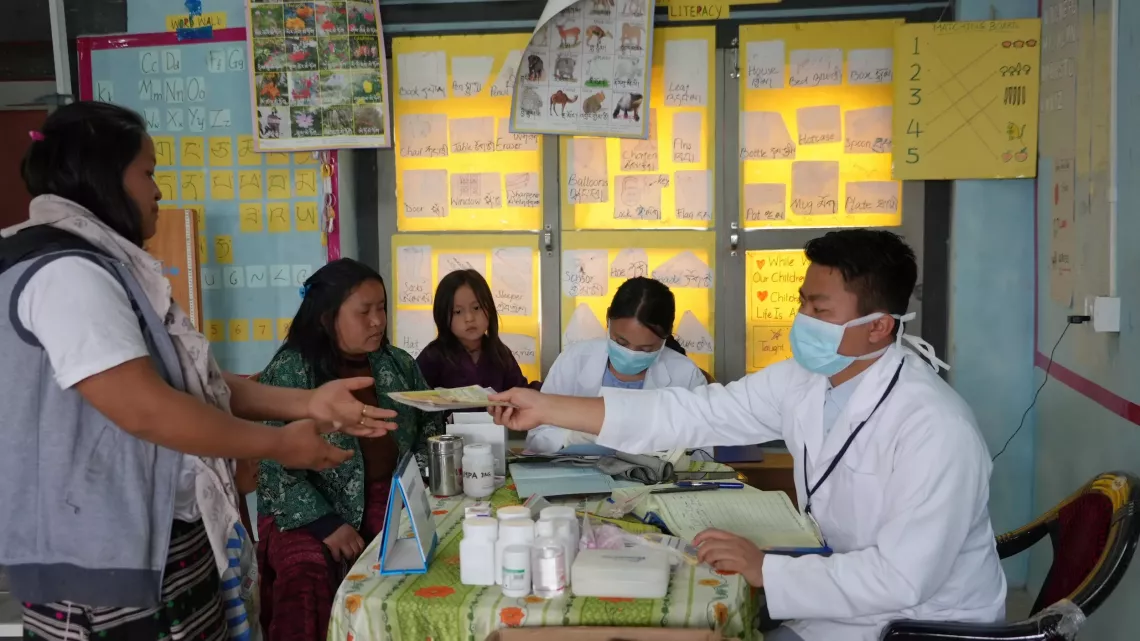
Sangay Lhamo, a mother of three was at the ORC to get her child’s growth monitored. “I used to bring my child here to get his vaccines on schedule so that they don’t fall sick and grow up well. During summer, it becomes challenging with the roads getting blocked but despite these challenges, we made sure that our children’s vaccination wasn’t missed.”
Another mother, Dorji Yangzom, 23, says vaccinating her son was important to keep him healthy and for him to do well in school. “It is very helpful when the health workers visit us at in our villages. Otherwise, we would need to walk to visit the primary health centre, which would take us a long time.”
Their children are among the 40,000 aged 0 to 12 years across Bhutan who received their routine immunization on schedule in 2023.
Meanwhile, Sangay is happy that her son is immunized and protected. HA Rinchen is as satisfied that the village’s lone newborn is vaccinated. “Seeing the happiness of the people when they see us arriving with lifesaving vaccines and other medicines make me happy.”