A Family’s Journey from Lead Exposure to Prevention
How one family took action to reduce lead exposure and protect their daughter's health.

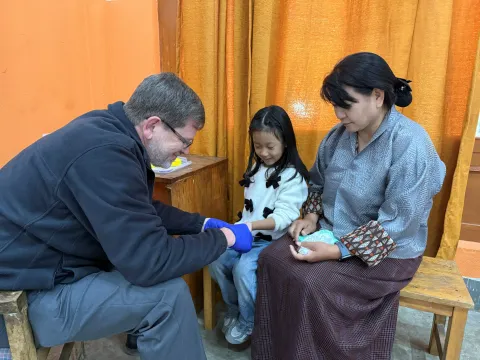
Gidakom, Thimphu: In April 2026, Kinley Zam, a mother of two from Gidakom, was worried when she learned that her young daughter, Sonam Tshoki, had elevated levels of lead in her blood. Gidakom, where the family lives, is a community near an industrial estate in the outskirts of the capital city, Thimphu.
What began as a routine health check-up led to an unexpected discovery: several everyday household items contained unsafe levels of lead.
The test results prompted Kinley and her family to make changes at home to protect their daughter's health.
Six months later, those efforts brought encouraging news.
A follow-up blood test showed that Sonam Tshoki's blood lead level had fallen from 31 µg/dL to 4.8 µg/dL. For Kinley, the improvement brought relief and reinforced the importance of identifying sources of lead exposure and taking action.
“I was worried when I first heard the test results, as every parent wants their child to grow up healthy, safe and happy,” said Kinley.
Following the initial diagnosis, health professionals visited the family home and tested household items, including cookware, kitchen utensils and toys. Several items were found to contain high levels of lead. The family immediately removed the contaminated products.
“I discarded cookware and toys containing high levels of lead. Many of the colourful toys my daughter used were also found to have high lead content,” Kinley said.
The family also changed some of their daily habits. Handwashing became an important part of their routine, particularly before meals and after playing outdoors.
“My daughter has now developed the habit of washing her hands without being reminded,” she said.
The family also paid greater attention to nutrition, ensuring that Sonam Tshoki had regular, nutritious meals. Kinley says her daughter's appetite has improved and she is now more energetic.
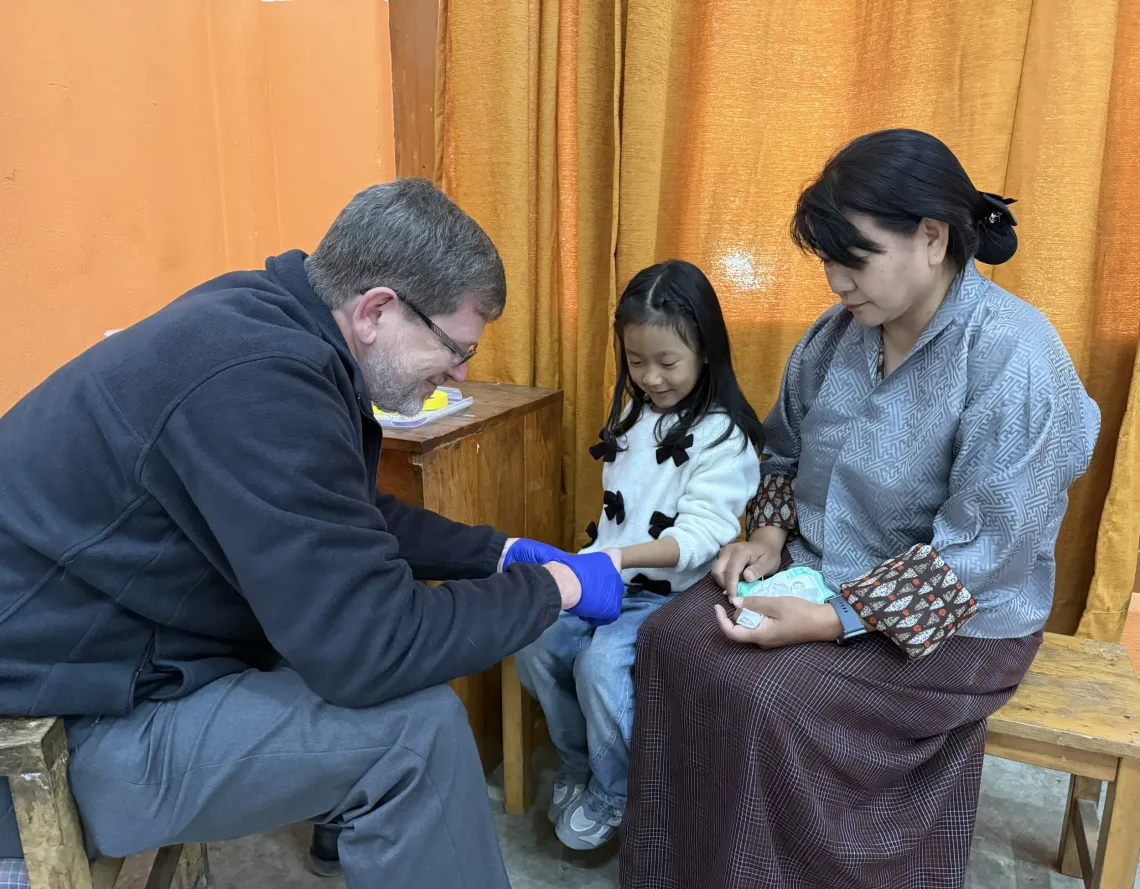
Dr Philip Erbele from the Khesar Gyalpo University of Medical Sciences of Bhutan (KGUMSB) described the reduction in her blood lead level as a significant improvement, highlighting the importance of identifying sources of exposure and taking preventive measures.
For Kinley, experience has been an important lesson in how knowledge and simple changes can help protect children's health.
“The testing helped us understand which changes were truly necessary. Small actions made a significant difference for my daughter's health,” she said.
She hopes other parents will also learn about the risks of lead exposure and take steps to protect their children.
“Testing gave us answers and helped protect my daughter's future. I hope other parents learn from our family's experience,” she said.
Kinley's experience reflects Bhutan's wider efforts to address childhood lead exposure. Bhutan's first National Blood Lead Level Survey found that 76 per cent of young children had unsafe levels of lead in their blood, prompting the Royal Government to strengthen its response through improved regulations, surveillance, public awareness and prevention measures.
Addressing the issue at a high level side event during the 80th United Nations General Assembly in September 2025, Prime Minister Dasho Tshering Tobgay and UNICEF called for urgent global action to end childhood lead poisoning. Highlighting Bhutan's experience as an example of how evidence can lead to action, the Prime Minister said, “No nation is too small, and no child's future too unimportant to protect.”
Kinley's experience brings this message closer to home. It shows how identifying risks, acting on health advice and making changes in everyday life can help protect children from harmful exposure.
For Kinley, what began as a worrying discovery has become a lesson she hopes to share with other families. As she prepares to enroll her daughter in school next year, she is determined to ensure that Sonam Tshoki grows up in a safe and healthy environment. Her experience is a reminder that protecting children starts with understanding the risks and taking action.