Bhutan Strengthens Action to Protect Children from Lead Exposure
JOINT PRESS RELEASE
Bhutan Strengthens Action to Protect Children from Lead Exposure
More than 100 industry representatives join efforts to prevent childhood lead exposure.
THIMPHU, 23 October 2026 – To better understand the risks and impacts of lead poisoning on children's health and development, more than 100 representatives from manufacturing and industrial enterprises participated in a lead poisoning prevention programme today.
The participants were from the Bjemina Industrial Estate in Thimphu and represented small and medium-sized enterprises producing bricks, furniture, fabricated products, windows, and glass items. This marked the first time representatives from these industries were engaged in lead poisoning prevention efforts.
The Ministry of Health and UNICEF Bhutan jointly organised the event as part of International Lead Poisoning Prevention Week, under the theme “From detection to prevention,” to strengthen workplace safety and contribute to safer communities for children and families.
Participants were sensitised on products and items that may contribute to childhood lead exposure and discussed practical ways to reduce exposure at home and in the workplace. Discussions focused on ways to prevent lead poisoning in households, including the safety of commonly used cookware. As part of the event, participants' work equipment and personal jewellery were also tested for lead content. All items tested were found to be lead-free.
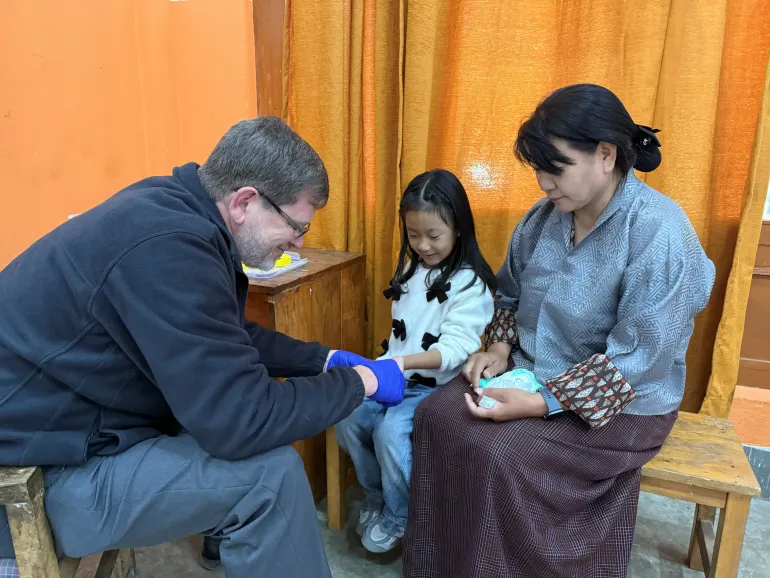
During the event, Kinley Zam, a mother of two and resident of Gidakom, a community near the industrial estate, shared that her five-year-old daughter’s blood lead level had dropped from 31 µg/dL to 4.8 µg/dL within seven months, bringing it below the WHO threshold of 5 µg/dL.
“After we learned that some household items and toys contained lead, I removed them from our home. We also focused on good hand hygiene and a healthy diet, and I believe these changes played a key role in reducing my daughter’s blood lead level,” said Kinley Zam
The discussions also focused on strengthening market monitoring and surveillance and enhancing collaboration between government agencies and industry stakeholders to safeguard public health and reduce children's exposure to lead.
Bhutan's first National Blood Lead Level Survey,2024, found that 76 per cent of young children had unsafe blood lead levels. Elevated blood lead levels were also detected among women and children living in monastic institutions, underscoring the urgent need for coordinated action to prevent exposure and protect children's health and development.
Following the survey findings, Bhutan strengthened efforts to protect children from lead exposure through testing and surveillance, training more than 300 primary health workers on environmental health risks, and engaging the private sector, including industries, to reduce risks in products, workplaces and communities.
Lead is a highly toxic substance that can cause irreversible harm to children's developing brains and nervous systems. Even low levels of exposure can affect learning, behaviour, health and future earning potential. Children under five years of age are particularly vulnerable because their bodies absorb lead more easily than adults.
"Lead poisoning is often invisible, yet it harms our country's health and economy. By identifying sources of lead in our homes and environments, from household products to everyday consumer goods, we can move from detection to prevention and protect our children's future,” said Health Minister Tandin Wangchuk.
The National Lead Poisoning Prevention Strategy has been endorsed by the Office of the Prime Minister, while the framework for National Framework for the Prevention and control of Lead Exposure in Bhutan is awaiting Cabinet approval. In parallel, clinical guidelines for the management of lead poisoning are being finalised. Once endorsed, chelation therapy will be introduced at the Jigme Dorji Wangchuck National Referral Hospital to treat individuals with elevated blood lead levels.
"Every child deserves to grow free from exposure to lead, a preventable danger that can undermine health, learning, and future potential,” UNICEF Deputy Representative Fawiza Hoodbhoy said. “UNICEF commends Bhutan's leadership in moving from detection to prevention and strengthening partnerships to ensure a lead-safe environment for every child.”
UNICEF has also supported national efforts to strengthen blood lead testing, surveillance and environmental monitoring capacity through the provision of testing equipment and essential supplies. The Royal Government of Bhutan, UNICEF and partners will continue to advance measures to prevent lead exposure, strengthen health systems and create safer environments where every child can grow, learn and thrive.
###
Download photos here
Media contacts
About UNICEF
UNICEF promotes the rights and wellbeing of every child, in everything we do. Together with our partners, we work in 190 countries and territories to translate that commitment into practical action, focusing special effort on reaching the most vulnerable and excluded children, to the benefit of all children, everywhere.
For more information about UNICEF and its work for children, visit www.unicef.org.