

Coping with Fear and Anxiety
For Children, Adolescents, Caregivers and Volunteers: Techniques to Manage Fear and Anxiety

- বাংলা
- English
It’s normal to feel scared or anxious during times of uncertainty, especially when you’ve seen or experienced upsetting things like violence.
These feelings are your body’s way of trying to protect itself.
Remember, it’s okay to feel this way.
Everyone feels scared or anxious sometimes, and talking about your feelings and using simple techniques like deep breathing and drawing can help you feel better. You are not alone, and there are people around you who care and want to help.
Breath
Your breathing affects your whole body.
When you are worried and anxious, your body may become tense, and your breathing may speed up. You can use breathing techniques to help you calm down when you are feeling stressed or worried.
It can be very helpful to spend 2-3 minutes breathing deeply a couple of times a day to help you feel calm.

In from your nose
Imagine that they are smelling a flower,
Inhale deeply through their nose.

Exhale Out From Your Mouth
Exhale slowly through their mouth
By bringing their lips together
As if they were blowing Bubbles
Let’s Explore Some Breathing Exercises That Can Help Relieve and Manage Stress, Anxiety, and Fear
5 Finger Breathing
Hand Tracing Breathing Exercise:
Great for children! Also effective for Adolescents and Adults.
Why It Helps:
Combining deep breathing with a simple drawing activity helps focus your mind and calm your body. The act of tracing your hand gives you something visual to concentrate on, which can help reduce feelings of anxiety.
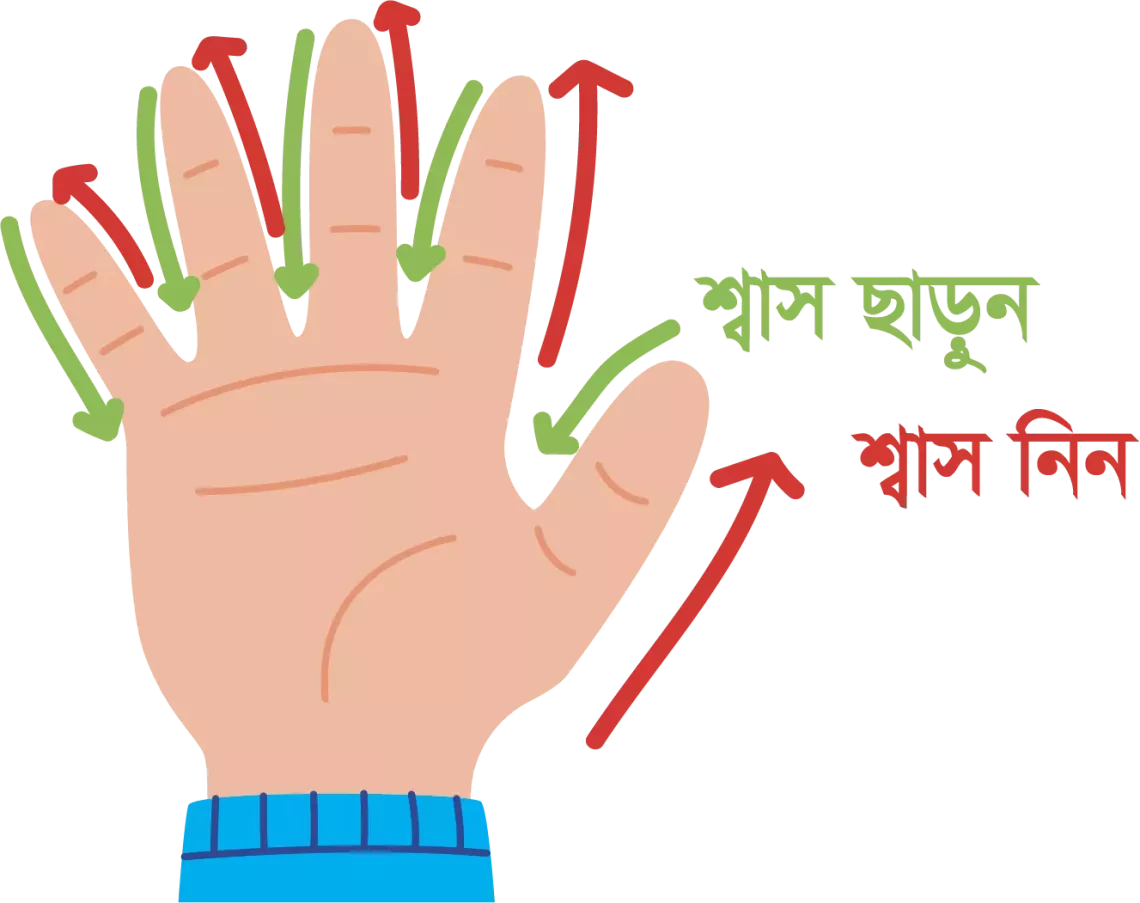
Instructions:
- Prepare Your Hands and Drawing Tool:
- Find a comfortable spot to sit.
- Get a piece of paper and a crayon, marker, or pencil.
- Place one hand flat on the paper.
- Trace Your Hand:
- Using the other hand, start tracing around your fingers slowly.
- As you trace up each finger, breathe in slowly through your nose.
- As you trace down each finger, breathe out slowly through your mouth.
- Repeat the Breathing:
- Continue this breathing pattern (inhaling up and exhaling down) as you trace your entire hand.
- Once you’ve traced your hand, you can switch hands and trace the other one, continuing the breathing exercise.
- Repeat 5 times.
- Creative Activity for Children: Encourage Play
- Once you have completed the activity, encourage your child to make interesting shapes and characters on each figure.
- Ask your children to name each character.
Ask your child to tell you a short story about each of their drawn characters.
Rainbow Breathing Exercise
Great activity for children!
Why It Helps:
Physical Movement: Stretching helps release tension and restlessness.
Deep Breathing: Inhaling deeply and holding the breath helps calm the nervous system.
Visualization: Imagining a rainbow brings joyful and colorful thoughts, distracting from negative or violent thoughts.
Picture a beautiful rainbow with vibrant colors. Each time you stretch and breathe, imagine drawing a different color of the rainbow.

Instructions:
- Introduction to the Rainbow:
- Ask the child, "How many colors are there in a rainbow?"
- Explain that there are seven colors: red, orange, yellow, green, blue, indigo, and violet.
- Get Ready:
- Stand up with the child.
- Start with both your hands on one side, below your knee.
- Drawing the Rainbow:
- Exhale: Breathe out slowly until your lungs are empty.
- Inhale and Stretch: Breathe in slowly through your nose while you raise your hands from one side to the other, reaching high above your head like you are drawing a big rainbow.
- Hold: When your hands are on the other side, hold your breath for three seconds.
- Repeat the Breathing:
- Exhale and Return: Slowly exhale as you bring your hands back down to the starting position below your knee.
Repeat: Do this for each of the seven colors of the rainbow, repeating the sequence seven times.
Bumblebee Breathing
Great activity for Children!

Why It Helps:
Engaging Activity: Visualizing and pretending to be a bumblebee makes the exercise fun and engaging.
Calming Effect: The buzzing sound and deep breathing help calm the mind and body.
By practicing Bumblebee Breathing, children can enjoy a playful and calming exercise that helps manage anxiety and brings joy through imaginative play.
Instructions:
- Introduction to the Bumblebee:
- Ask the child, "How many colors does a bumblebee have?" (Answer: black and yellow)
- Ask, "How does a bumblebee fly?" (Answer: They flap their wings and buzz around)
- Get Ready to Fly:
- Stand up and get ready to move around.
- Smell the Flower and Breathe In:
- Imagine you are a bumblebee smelling a flower.
- Breathe in slowly through your nose for 4 seconds, pretending to smell the flower.
- Buzzing Out and Flying:
- Breathe out slowly while making a buzzing sound like a bee ("bzzzzzzzz").
- Move around the room, flapping your arms like wings as you fly like a bumblebee.
- Repeat:
- Stop to "smell" another flower by breathing in for 4 seconds.
- Exhale with a buzzing sound while flying around the room.
Repeat this activity 7-10 times.
Box Breathing
Exercise for Adolescents, Young People and Adults

Why It Helps:
Box breathing helps reduce stress and anxiety by promoting a sense of calm and control.
Instructions:
- Get Ready: Sit down with a piece of paper and a pen.
- Inhale: Breathe in slowly through your nose for 4 seconds while drawing the first side of a square on the paper.
- Hold: Hold your breath for 4 seconds while drawing the second side of the square.
- Exhale: Breathe out slowly through your mouth for 4 seconds while drawing the third side of the square.
- Hold: Hold your breath again for 4 seconds while drawing the fourth side of the square.
Repeat: Continue this pattern for several minutes, drawing a new square each time.
4-7-8 Breathing
Exercise for Adolescents, Young People and Adults
Why It Helps:
This technique helps relax the body, reduces anxiety, and slows down the heartbeat.
It is a very helpful technique for relaxing the body and falling asleep.
Instructions:
- Inhale: Breathe in slowly and quietly through your nose by putting your lips together for 4 seconds.
- Hold: Hold your breath for 7 seconds.
- Exhale: Breathe out completely through your mouth for 8 seconds, making a whooshing sound.
- Repeat: Continue this cycle 4 times.

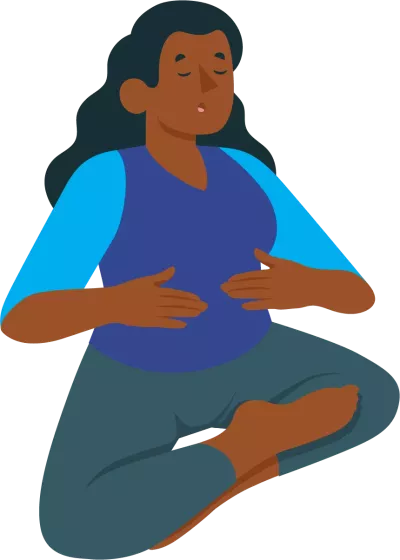
Belly Breathing
Why It Helps:
Belly breathing promotes deep relaxation and reduces stress by engaging the diaphragm.
Instructions:
- Get Comfortable: Sit or lie down in a comfortable position.
- Place Hands: Place one hand on your chest and the other on your belly.
- Inhale: Breathe in deeply through your nose, letting your belly push your hand out. Your chest should not move much.
- Exhale: Breathe out through your mouth, feeling your belly fall.
- Repeat: Continue this pattern for 5-10 minutes.
Alternate Nostril Breathing
Exercise for Adolescents, Young People and Adults
Why It Helps:
Alternate nostril breathing balances the nervous system and enhances focus and relaxation.
Instructions:
- Get Ready: Sit in a comfortable position with your spine straight.
- Close Right Nostril: Use your right thumb to close your right nostril.
- Inhale: Breathe in slowly through your left nostril.
- Close Left Nostril: Close your left nostril with your right ring finger, then release your right nostril.
- Exhale: Breathe out slowly through your right nostril.
- Inhale: Breathe in through your right nostril.
- Switch: Close your right nostril again and breathe out through your left nostril.
- Repeat: Continue this cycle for 5-10 minutes.
Grounding Techniques to Manage Fear, Stress and Uncertainty
5-4-3-2-1 Grounding Technique
Activity for Adolescents, Young People and Adults
Why It Helps:
The 5-4-3-2-1 grounding technique helps bring your focus back to the present moment, distracting your mind from anxious thoughts and bringing a sense of calm and awareness, reducing feelings of anxiety and stress. With this grounding technique, young people can effectively manage difficult emotions and thoughts by focusing on their immediate environment and engaging their senses.
Instructions:
- Find a Comfortable Position:
- Sit or stand in a comfortable position where you feel safe.
- You can do this alone or with a partner.
- Use Your Senses:
- 5 Things You Can See: Look around and name five things you can see. These can be objects, colors, or anything in your surroundings. Describe these to yourself or your partner.
- 4 Things You Can Feel: Focus on four things you can physically feel. This could be the texture of your clothes, the ground under your feet, or a breeze on your skin.
- 3 Things You Can Hear: Listen and identify three things you can hear. These could be sounds like birds chirping, cars passing by, or the hum of an appliance.
- 2 Things You Can Smell: Notice two things you can smell. This could be the scent of food, flowers, your clothes detergent, your shampoo, or even the fresh air.
- 1 Thing You Can Taste: Focus on one thing you can taste. This could be the taste of your last meal, gum, or simply the taste in your mouth.
- Take Deep Breaths:
- As you go through each of the senses, take slow, deep breaths to help calm your mind and body.
You can download the PDF version here.


