Therapeutic milk saving lives in the fight against malnutrition in Afghanistan
Born underweight and critically ill, Shafi’s life turned around with timely treatment and UNICEF-supported therapeutic feeding

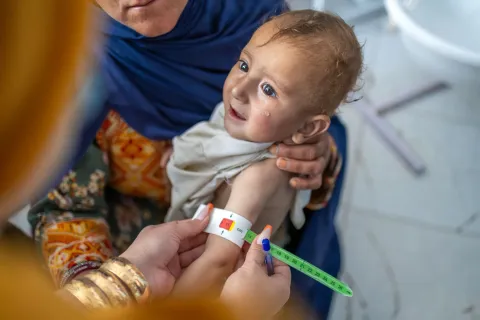
In Afghanistan’s western Herat province, four-months old Shafi started struggling with malnutrition before he could even giggle or laugh. Shafi arrived at the Gozara hospital just a week ago in a life-threatening condition. Born weighing only one kilogram, his fragile body was battling severe acute malnutrition, diarrhoea, fever, and weakness.
Shafi’s early life has been marked by hardship. His mother, Aziza, is gravely ill with cancer and was only able to eat boiled eggs and water during her pregnancy. Despite her condition and medical precautions, she became pregnant and gave birth to Shafi, her fourth child.
Aziza was also not able to breastfeed Shafi, which is why he became malnourished – he was left without the essential nutrition provided to children in their first 6 months of life through breastfeeding.
With Aziza too weak to care for Shafi, the responsibility fell to Seema, Shafi’s grandmother. Seema faced the daunting task of saving her grandson’s life while also supporting her other grandchildren.
When Seema heard that UNICEF-supported Gozara Hospital was offering free malnutrition treatment, including therapeutic milk, for children suffering from severe acute malnutrition, she didn’t hesitate despite living an hour’s walk from the hospital.
Therapeutic milk is powdered milk that is part of the treatment protocols for children suffering from severe acute malnutrition. It contains vegetable fats, carbohydrates, vitamins and minerals and is used to prepare a high energy, liquid therapeutic diet for severely malnourished children.

“When I first heard that this hospital is providing therapeutic milk for free, I cannot explain how happy I felt. I quickly brought Shafi to this hospital,” Seema says.
At the hospital, once admitted for in-patient treatment, Shafi received round-the-clock care. At the Therapeutic Feeding Unit (TFU), the medical staff provided therapeutic milk, monitored his condition, and educated Seema on hygiene and feeding practices.
“The doctors and nurses are very kind and caring,” says Shafi’s grandmother. “They prepared the therapeutic milk on time and explained how to take care of Shafi; how to wash my hands before feeding him. That’s why he gained weight and recovered from diarrhoea and other diseases.”


Bibi Gul, one of Shafi’s nurses, says she often sees two main reasons for malnutrition amongst the youngest of children. “When malnourished children are brought to us, it is usually because their families have economic problems, or they are not able to receive their mother's milk, so they become malnourished,” says Bibi Gul.
For the last week, Bibi Gul was feeding Shafi with carefully prepared and measured therapeutic milk every two hours.
“On the first day he was admitted to the therapeutic feeding unit, Shafi's weight was 4 kilograms, and now, thanks to the therapeutic milk that we are giving him his weight has increased from 4 to 4.5 kilograms,” says Bibi Gul.

In 2024, with thanks to donors and partners like The Afghanistan Humanitarian Fund, SIDA, UNICEF Germany, EU humanitarian aid, the government of Canada, the government of Poland and the U.S. government, UNICEF treated close to 630,000 children for severe acute malnutrition.
For Shafi and his family, this intervention meant more than just medical support; it was a lifeline for them.
Seema, Shafi’s grandmother, has a heartfelt message for all families:
“Please bring your children to this hospital if they are malnourished,” she says. “The doctors and nurses will treat you and the children with kindness, and therapeutic milk saves lives. Your children can become healthy again”.