Shock, chaos and loss
After the devastating earthquake in western Afghanistan, women cope with destroyed homes, uncertain futures, and the loss of their young children
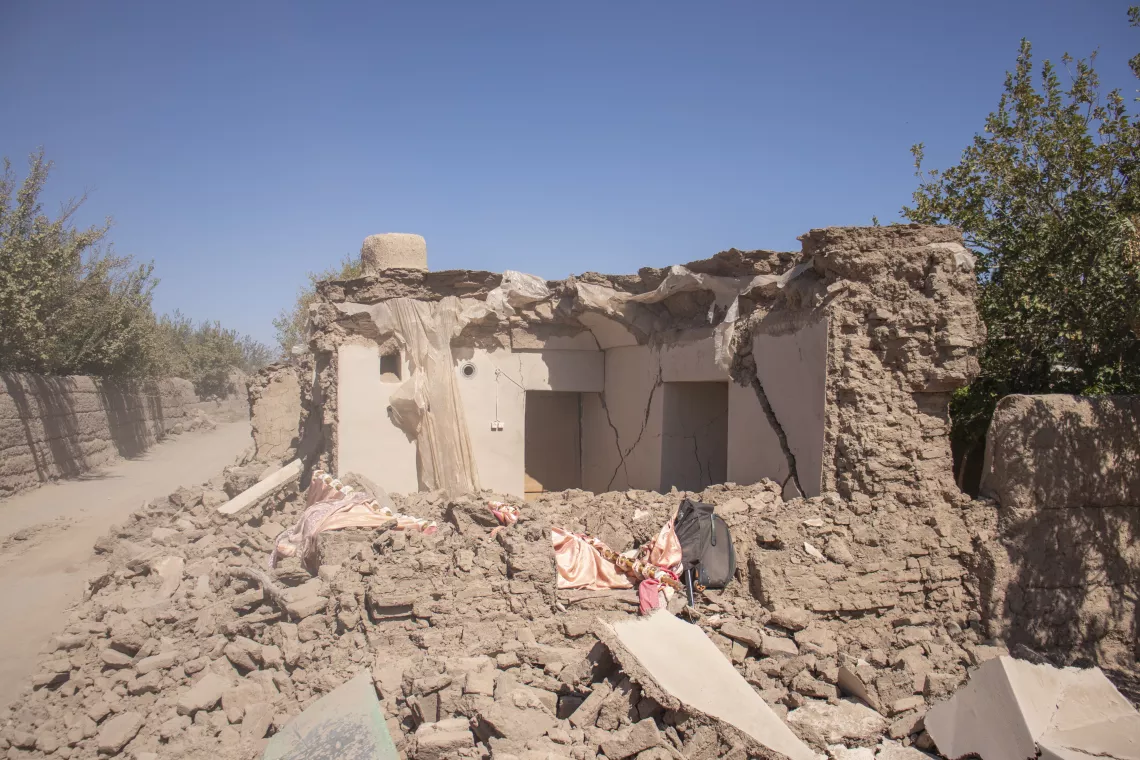
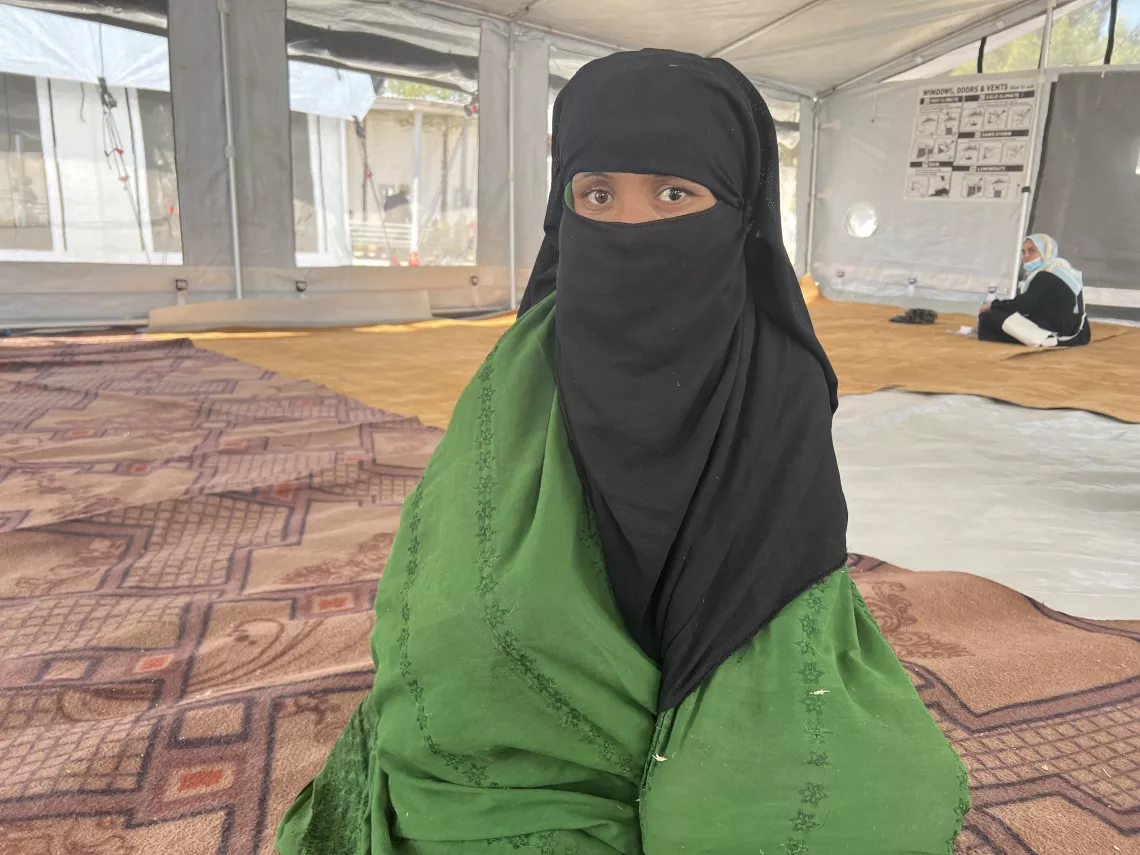
Asifa was at home when the earthquake shook her home in Zinda Jan district. She was just one of thousands who felt the 6.3-magnitude quake in western Afghanistan.
“I heard a loud noise, and at first, I thought it was an explosion. But then, almost immediately the house fell on me and my children,” recalls Asifa.
She could hear the cries of children, relatives and neighbours from underneath the rubble. She helped rescue four people trapped under collapsed houses, including her two-year-old daughter, Asra.
But while Asra emerged safely, Asifa's 9-month-old baby did not make it. At just 21 years old, Asifa became familiar with devastation she should never know.
As the shock lingers, Asifa is now at a temporary shelter in Herat city with her daughter Asra.
"We have food here, and blankets and water. But I don’t know what will happen to us. My whole village was flattened. Where will we go?"
Another uncertain future
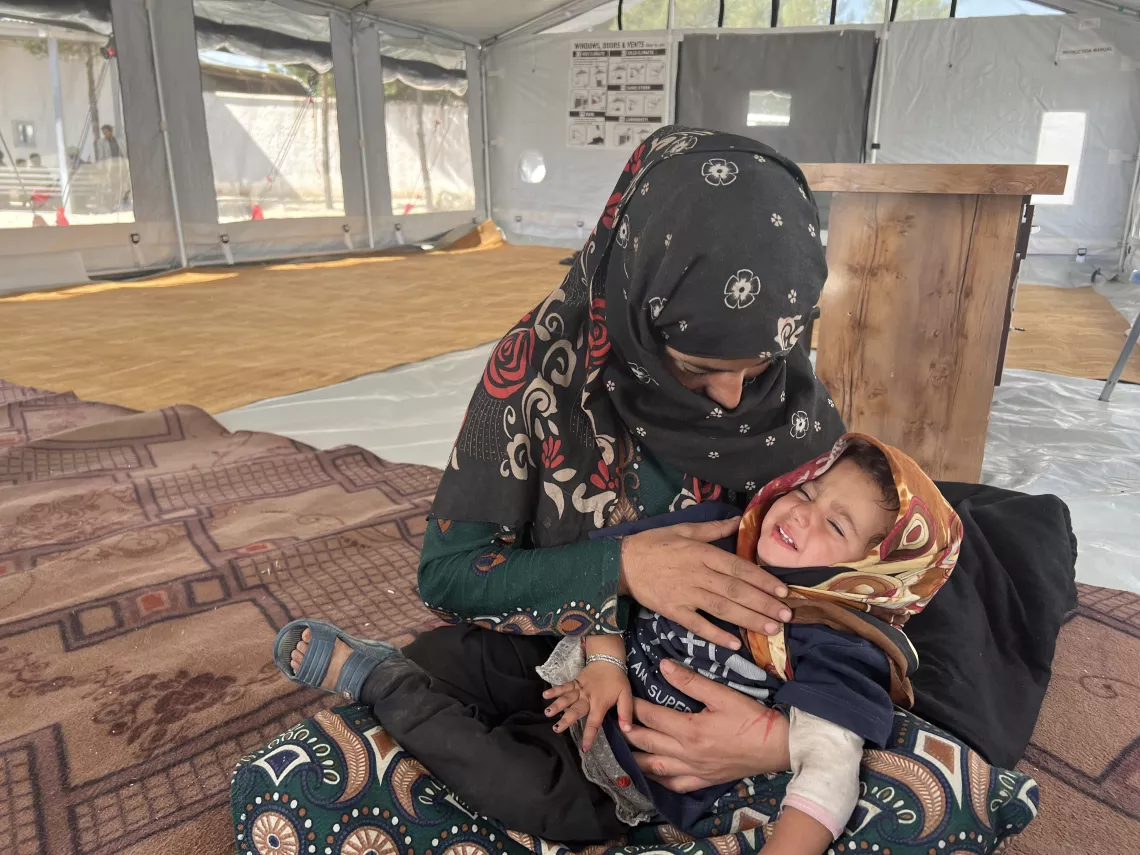
Bibi Gul, 20, is from the same village as Asifa. She is eight months pregnant and worries where she will be when the baby comes.
When her home was destroyed, Bibi Gul moved to a transit centre in Herat city. At this centre, supported by UNICEF in partnership with the Governments of Korea and Japan, and USAID's Bureau for Humanitarian Assistance (BHA), psychosocial counselors speak to Bibi Gul, Asifa and other women and children. They participate in group or individual sessions, tailored to help them cope with the tragedy and trauma which followed the earthquake.
For now, Bibi Gul waits, and hopes.
“I will stay here. Maybe help will come.”
A heartbreaking rescue mission
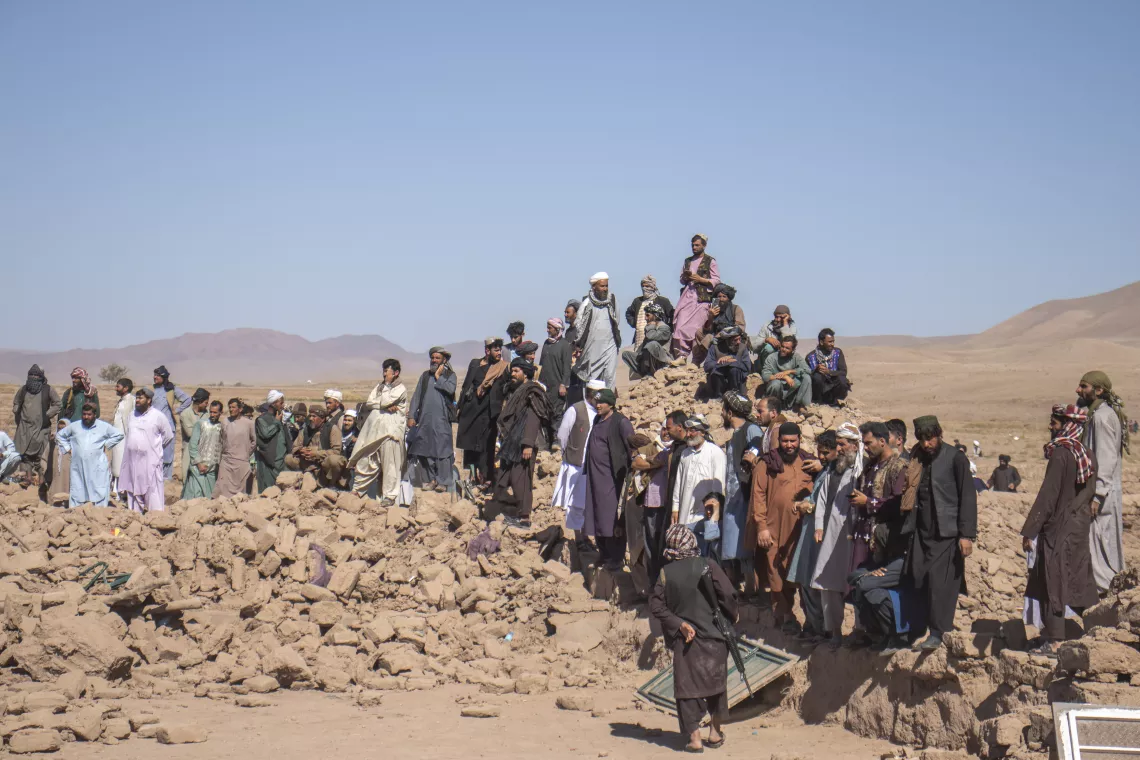
Around 40 kilometres from Herat city, the villages of Zinda Jan district are still reeling from the earthquake. Men dig through the rubble, trying to rescue missing people. They use shovels, hoes, and often, just their bare hands.
Every few hours, there’s a quiet, solemn procession, a carefully covered neighbour or friend carried away, another loved one lost.
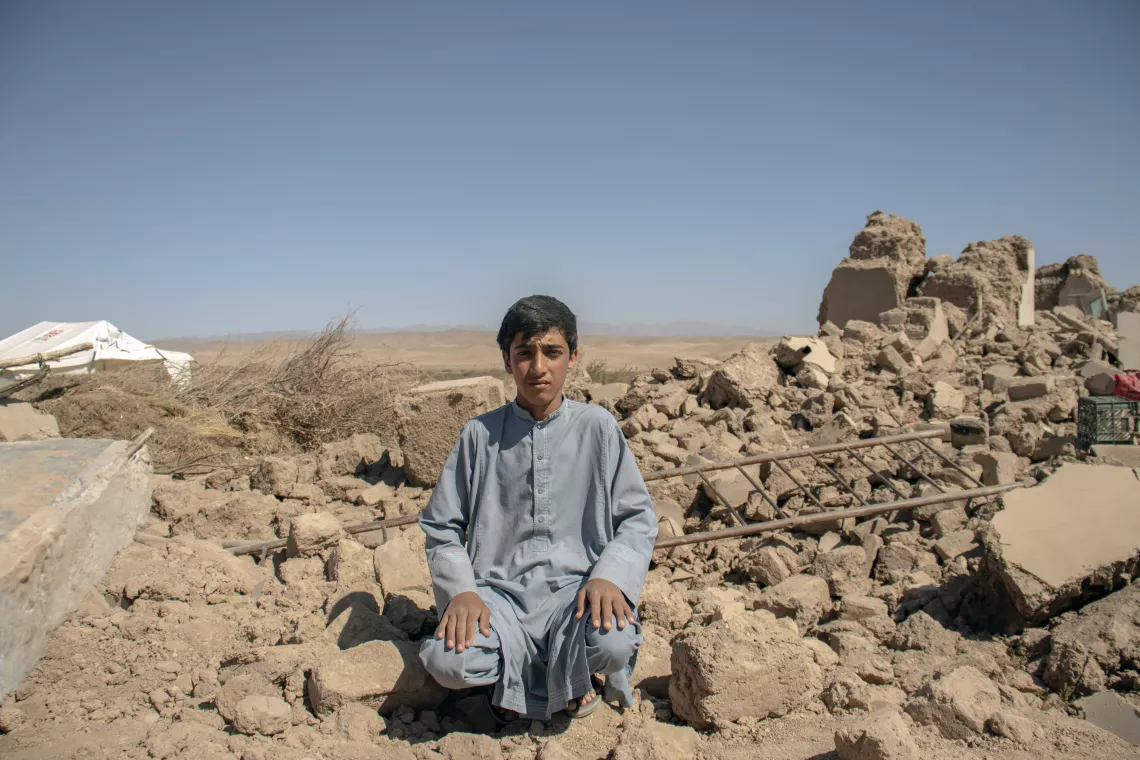
What used to be homes, now piles of debris. In one village, the school collapsed. Health clinics, although still standing, damaged beyond repair. Water systems need repairs to ensure the water still flows, and is still safe to drink.
Helping families in need
Health centres are damaged, but UNICEF set up tents to act as temporary facilities, with emergency medicines provided through funding from the World Bank and Asian Development Bank.
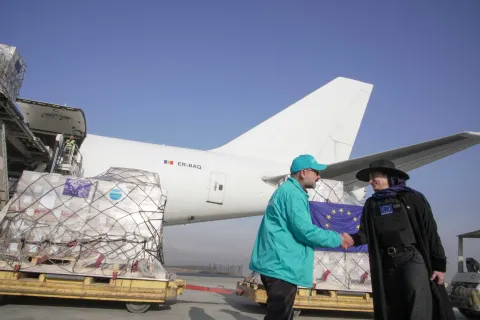
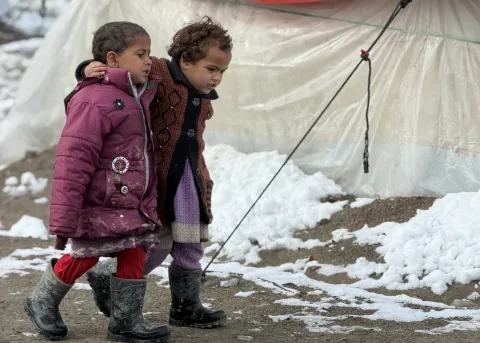
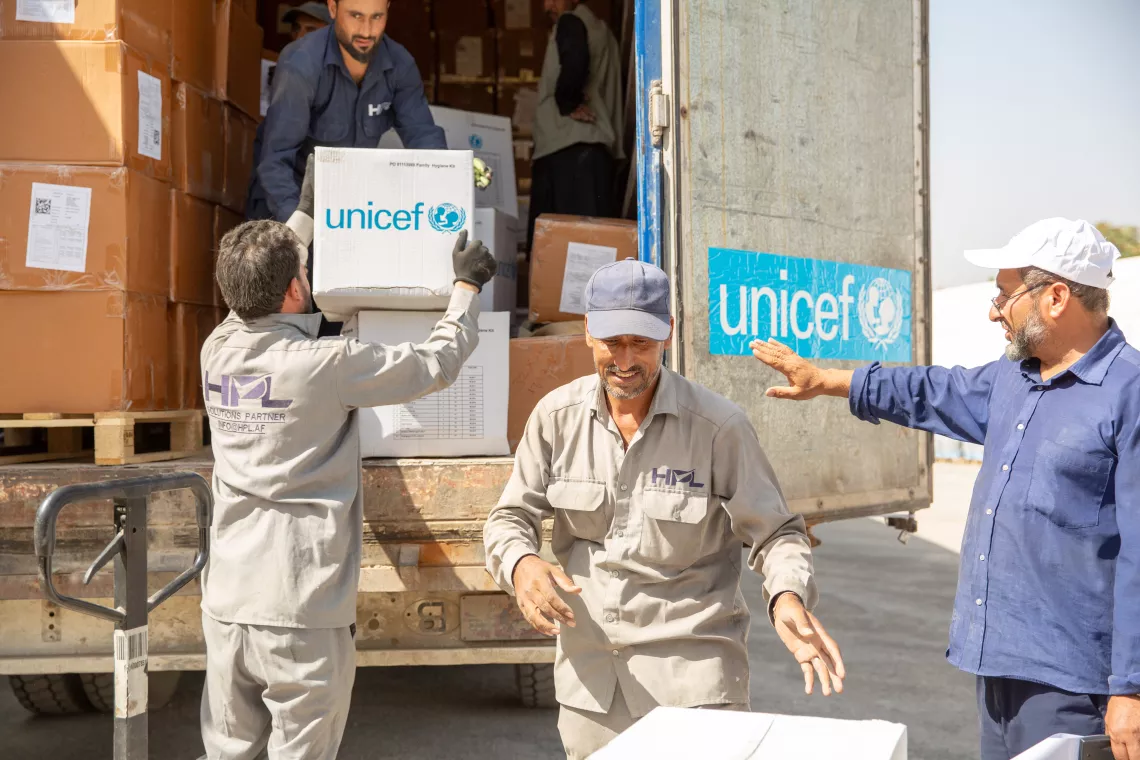
With flexible thematic funding, UNICEF is providing hundreds of blankets and 1,000 tarpaulins to help families cope with the imminent winter. Funding from the European Civil Protection and Humanitarian Aid Operations (ECHO) and Afghanistan Humanitarian Fund allows UNICEF to provide 10,000 family hygiene kits and water purification tablets.
“With winter fast approaching, the need for shelter is urgent."
"Children also need psychosocial support to help them process their trauma," says Siddig Ibrahim, UNICEF Chief of Field Office in Herat.
"Getting these children back to school will be also critical for their long-term recovery."
This is by the far worst earthquake the children of Afghanistan have endured in many years. UNICEF is doing everything we can, but we need more help, urgently.