Leading with Heart: Pari’s Mission to Empower Afghan Teachers
A mentor is promoting student-centered teaching and learning approaches and practices through UNICEF’s Teacher Development and Support Programme.
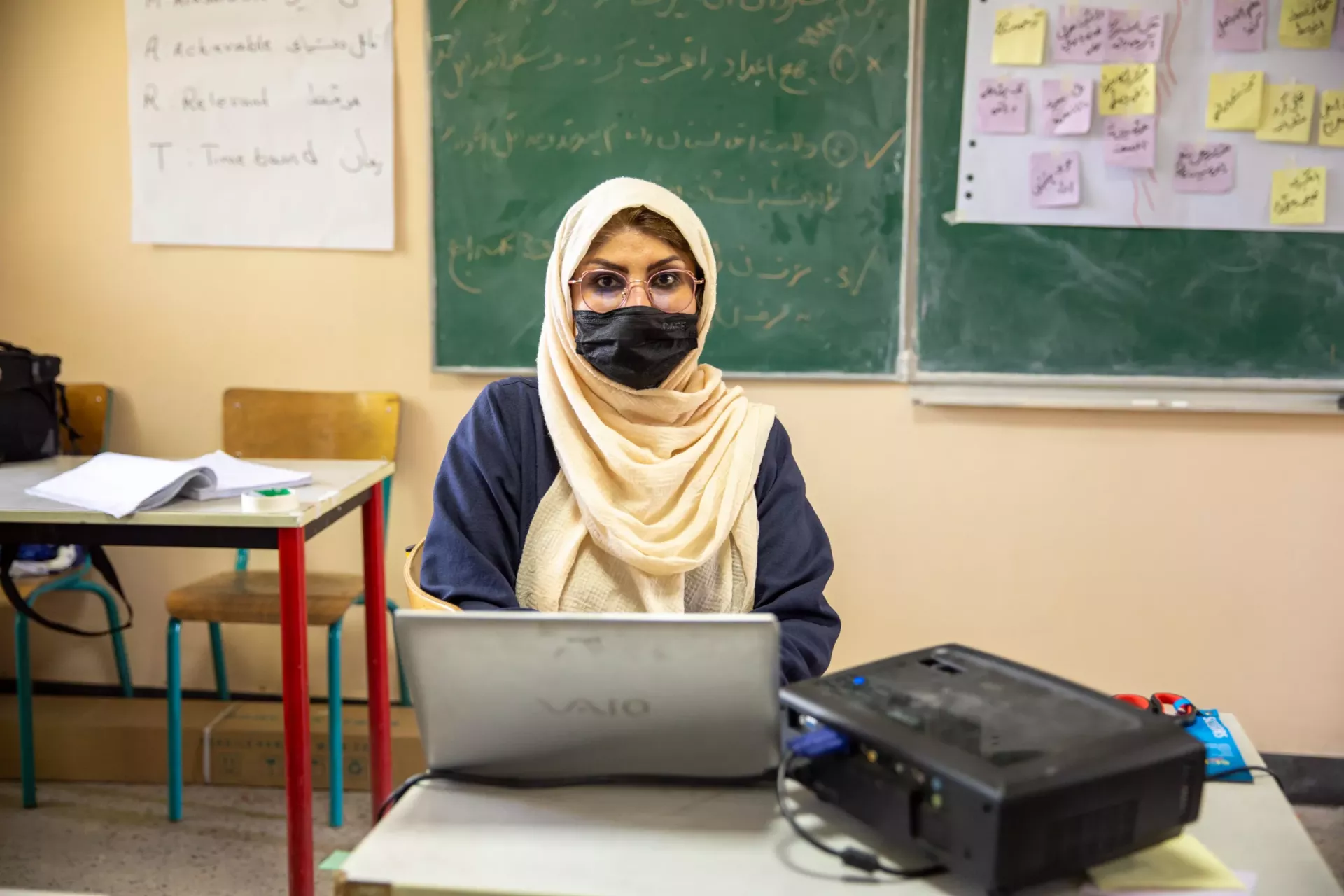
In a brightly lit training room filled with eager trainee teachers, 42-year-old Pari sits confidently, her voice calm, her presence commanding. With over two decades of experience mentoring teachers across Afghanistan, Pari is not just a trainer; she is a changemaker.
Pari’s journey began in the classroom, teaching mathematics, physics, psychology, and education. “Becoming a teacher was always my dream. I wanted to share my knowledge and help others grow,” she says.
“In Afghanistan, teachers work under challenging conditions that make it difficult to adopt new teaching approaches. Traditional, teacher-centered methods are still widely used in schools, and shifting to student-centered practices can be especially difficult without proper support. That is why expanding access to training in student-centered teaching methods is essential for empowering teachers and enhancing learning outcomes,” says Pari.

To address these challenges, UNICEF Afghanistan rolled out the Teacher Development and Support (TDS) programme, funded by the European Union amongst other donors. The programme is designed to strengthen the entire school environment by equipping trainers like Pari with practical, easy-to-use tools that are directly connected to real classroom needs. TDS is a nationwide programme designed to strengthen teaching quality and improve learning outcomes for primary school children in Afghanistan. It ensures that teachers are well-prepared, learning materials are accessible, and school leaders have the skills to guide and support their teams. Most importantly, it lays the groundwork for lasting change by empowering teachers to continue learning and uplifting one another.
Pari brings a wealth of experience. She has trained over 10,000 teachers in different local teacher training institutes in Kabul, and she received trainings in Malaysia, India, and Australia, an achievement that speaks volumes about her dedication and expertise.

In the training classroom, Pari introduces new activities, and explains how to write effective lesson plans. She leads group discussions, acts as a mentor, and encourages collaboration among teachers.
But even with her impressive credentials, Pari faces challenges in the training.
“One of the biggest hurdles is resistance from older teachers. Some teachers are hesitant to adopt the new student-centered teaching methods. They say, ‘We are fine with the old ways, we have been teaching in that way for many years” she explains.
Another challenge lies in the school system itself. “After other trainings, when teachers return to schools the principals do not follow up or support the new methods. Without encouragement, it is hard for teachers to implement what they have learned,” Pari adds. Despite these obstacles, Pari sees hope in this UNICEF-supported Teacher Development and Support (TDS) programme. “What is special about this programme is that teachers are supported, through coaching and Teacher Learning Circles (TLCs) when they return to their schools. Principals are prepared to encourage them to recognize their efforts to continue their own learning and engage them in training other teachers at schools. The supportive environment creates a ripple effect of positive change,” she says.
Pari’s vision is clear:

“I want UNICEF to expand these trainings. We need them in every district, in every school in Afghanistan, so no teacher is left behind.” She adds.
As she balances her professional life with caring for her 9-month-old daughter, Pari remains committed to her mission. Her story is a powerful reminder that when teachers are empowered, entire communities benefit.