EU provides additional €13 million for malnutrition treatment and community-based education in Afghanistan

Pashto version: Here
Dari version: Here
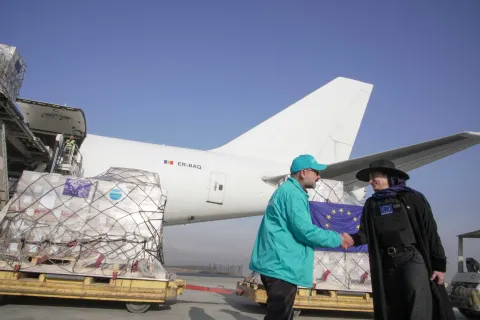
KABUL, 25 August 2024 – Over 78,000 children in Afghanistan will benefit from additional funding for nutrition and Education in Emergencies from the European Union’s Civil Protection and Humanitarian Aid Operations (ECHO).
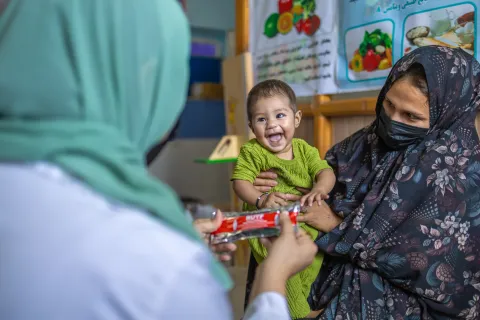
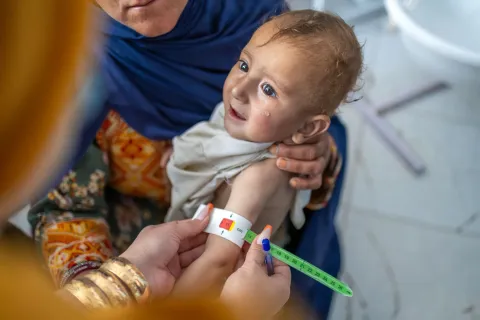
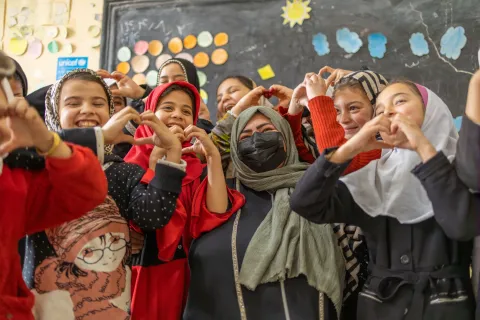
With this €13 million contribution, UNICEF will procure 62,000 cartons of Ready-to-Use Therapeutic Food (RUTF) and train 1,600 health workers to treat severe acute malnutrition among children under five. Additionally, UNICEF will improve the quality of learning in 275 community-based education classes to enable 9,500 children (61 per cent girls) to access primary education. This will include training teachers and school management committees and provision of school supplies.
In Afghanistan, 23.7 million people – over half of them children – require humanitarian assistance this year. In 2024, nearly 2.9 million children are expected to face acute malnutrition. More than 850,000 of them will need treatment for severe acute malnutrition – a life-threatening condition.
Education in Afghanistan also remains in crisis. According to the 2023 Multiple Indicator Cluster Survey, more than half of children do not attend primary school.
“The malnutrition rates in Afghanistan - especially amongst children - show that Afghanistan is facing an emergency. The EU will continue to work with longstanding humanitarian partners like UNICEF to provide urgently needed support, including nutrition and education in emergencies. Even amidst one of the worst humanitarian crises in the world, children have the right to quality education that will help them build a better future,” said François Goemans, Head of EU humanitarian aid in Afghanistan.
The two-year intervention will target about 69,000 children under the age of five for malnutrition treatment across 27 provinces of Afghanistan. It will help nearly 9,500 children and adolescents in four provinces continue their education through community-based learning, developing foundational skills, including social and emotional competencies for positive psychological development. The project will also enable emergency teaching and learning supplies to be delivered to children in need across all 34 provinces.
“We appreciate the continued partnership with EU humanitarian aid, which will help us get RUTF into some of the nutrition treatment facilities where children are most in need and train the frontline health workers administering this treatment in communities,” said Dr. Tajudeen Oyewale, UNICEF Representative in Afghanistan. “This funding will also enable children to continue attending community-based education classes and provide the materials students and educators need for a successful classroom.”
In the past four years, EU humanitarian aid has allowed UNICEF to provide safe water systems, community-based education, life-saving child protection and health services, emergency cash transfers, and malnutrition treatment for children.
Media contacts
About UNICEF
UNICEF works in some of the world’s toughest places, to reach the world’s most disadvantaged children. Across 190 countries and territories, we work for every child, everywhere, to build a better world for everyone.
UNICEF has been in Afghanistan for over 70 years. For more information about UNICEF and its work for children in Afghanistan, visit https://www.unicef.org/afghanistan/ or follow us on X, Facebook, Instagram or subscribe to our YouTube channel.