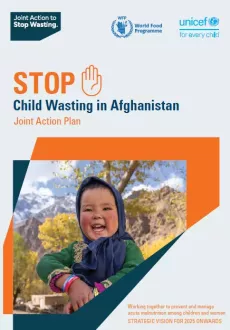
UNICEF and WFP Joint Action Plan to Stop Child Wasting in Afghanistan
About
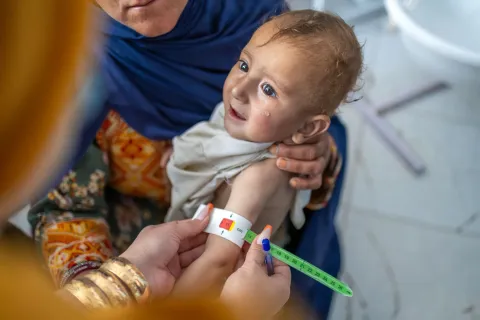
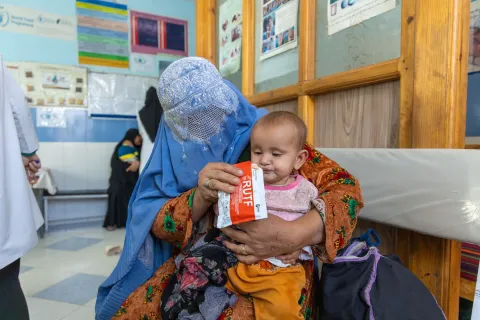
Afghanistan faces one of the world’s toughest child malnutrition crises. Ten per cent of children under five are wasted and nearly half are stunted, with projections of 3.5 million children affected by wasting in 2025. Nearly 80% of households cannot afford a nutritious diet, and 50 per cent of young children living in severe child food poverty underscore the urgency for a holistic, and multi-system approach in the prevention and treatment of wasting. The Joint Action Plan to Stop Child Wasting in Afghanistan, led by UNICEF and WFP with partners, enables operationalization of the WHO’s 2023 guidelines and UNICEF WFP Global Joint Action Plan.
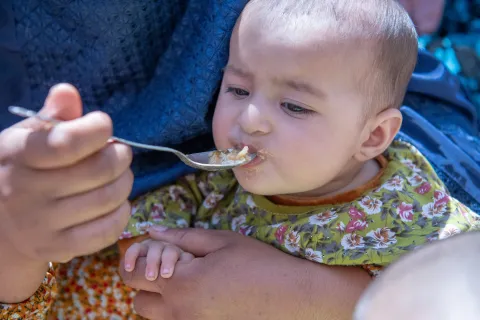
The plan prioritizes the prevention of child wasting including the infants under six months as well as the maternal malnutrition; is supports access and demand to diverse, locally available nutrient-dense foods. In this model, both UNICEF and WFP are joining forces, to scale up community-based solutions for prevention of child wasting through multi-sectorial initiatives—such as Community-Based Nutrition Programme and the First Foods Afghanistan Initiative to tackle child food poverty and malnutrition among children under two in Afghanistan. Once prevention fails, treatment is critical, hence the joint action plan introduces efficiency measures and convergence for facility and community platforms for effective treatment to ensure children with wasting are protected versus survival risks.
The plan also strengthens nutrition information systems, anchors a learning agenda and evidence generation, and embeds joint monitoring, knowledge management and advocacy. Implementation will be phased from August 2025 in priority provinces and health facilities, scaling in waves through early 2026. Together, these actions aim to prevent child wasting and maternal malnutrition—by improving services, diets and caregiving practices—while ensuring timely, high-quality treatment for children with wasting, so every Afghan child can survive and thrive.