In pursuit of education for all
A new data analysis on children with disabilities in West and Central Africa
- English
- Français
Highlights
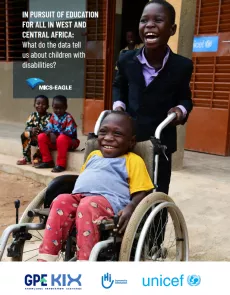
UNICEF is launching a new publication ‘In Pursuit of Quality Education for All’ (2022) with analysis of nine countries in the West and Central Africa region.
The report provides evidence on the situation of access to quality education for children with disabilities. It also explains how the Multiple Indicators Cluster Survey (MICS) collects data on functional difficulties, using the Child Functioning Module, a tool for data collection released by UNICEF and the Washington Group on Disability Statistics in 2016.
The report also provides recommendations on how to better support education systems to ensure quality education for all, particularly for children with disabilities.
Files available for download
Millions of children with disabilities around the globe, and in the West and Central Africa region, continue to be left behind, despite the widespread ratification of the Convention on the Rights of the Child.
A lack of quality data is one of the barriers that has been identified to children enjoying a fully inclusive and quality education, in line with Sustainable Development Goal 4 targets. When children, adolescents and adults with disabilities are absent from official statistics, they remain politically and socially ‘invisible’, increasing their marginalisation and exposure to rights violations.
Key findings from the report
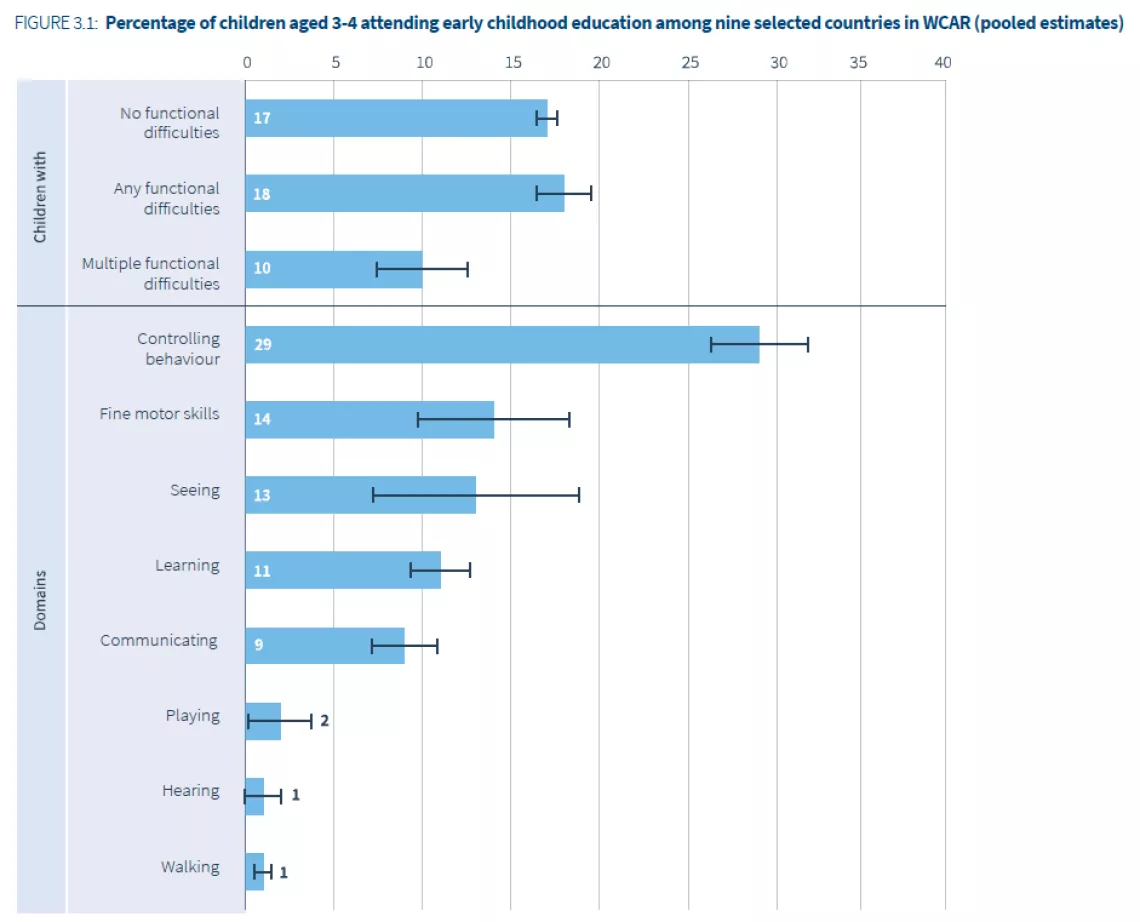
On average, across the nine countries analysed, disadvantages start early and children with multiple disabilities are less likely to attend early childhood education compared to their peers.
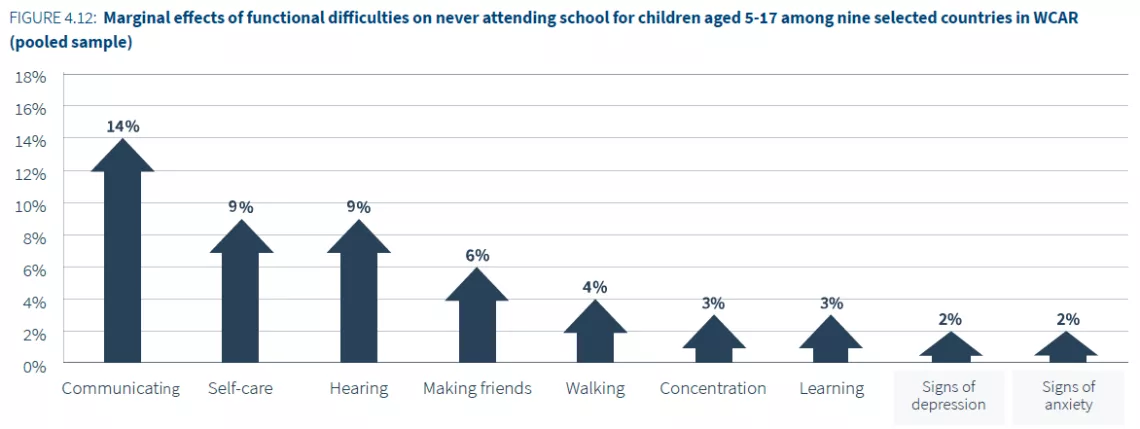
Among older children as well, children with any or multiple functional difficulties are more likely to be out-of-school and not attending school at the right age. Regression analysis shows, holding all else equal, children (5-17 years) with difficulty in communication are 14 percentage points more likely to never attend school than their peers.
The evidence suggests children with disabilities face many challenges in accessing quality education. Moreover, school closures due to COVID-19 have only contributed to increasing inequities.
UNICEF is working with governments, local authorities and partners to help ensure children with disabilities are able to access and learn in accommodating environments.
___
More on global situation on: Education for children with disabilities - UNICEF DATA
More on our vision and work on inclusive education: Inclusive education | UNICEF