47 per cent of Ukrainians report high stress levels
New study outlines who needs extra support and what helps children and adults cope.
- Українська
- English
KYIV, 20 August 2025 – Some 47 per cent of Ukrainians report high stress levels, while 73 per cent have some degree of resilience to adapt and cope with today’s challenges, according to a new study released under the All-Ukrainian mental health programme “How are you?” — an initiative of First Lady Olena Zelenska — together with UNICEF.
At the same time, 20 per cent of people report both high stress and low resilience, indicating a need for additional support.
The findings also reveal that having children helps families build stress resilience, with parents aged 36 to 55 being the most resilient. Employment, stable income, hobbies, and family support are reported by respondents as further factors that strengthen resilience.
The study involved nearly 12,000 adults, adolescents and children and is part of a collaborative effort to create science-based programmes to improve the mental well-being of children and families in Ukraine.
People living near areas of active hostilities, city residents, and those on low incomes are among the most vulnerable. Vulnerable groups also include spouses and partners of military personnel, and children who have a parent on the front lines.
“Mental health is the foundation of every child’s well-being,” said Shameza Abdulla, UNICEF Representative (a.i.) to Ukraine. “This research reveals not only the importance of loving and engaging caregivers but how parenthood can improve adults' resilience, helping the family to better cope with the stress of living through wartime. There is an urgent need to support families through access to quality social services and resources for their mental well-being, regardless of their life circumstances, and wherever they live,” added Abdulla.
Some 34 per cent of children identified exams and tests as a major source of stress — more than the 27 per cent who cited air-raid sirens. The findings worryingly suggest that war has become part of everyday life for many children.
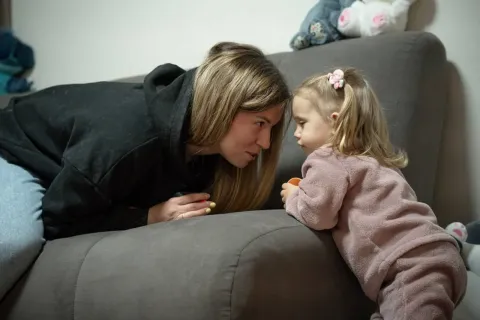
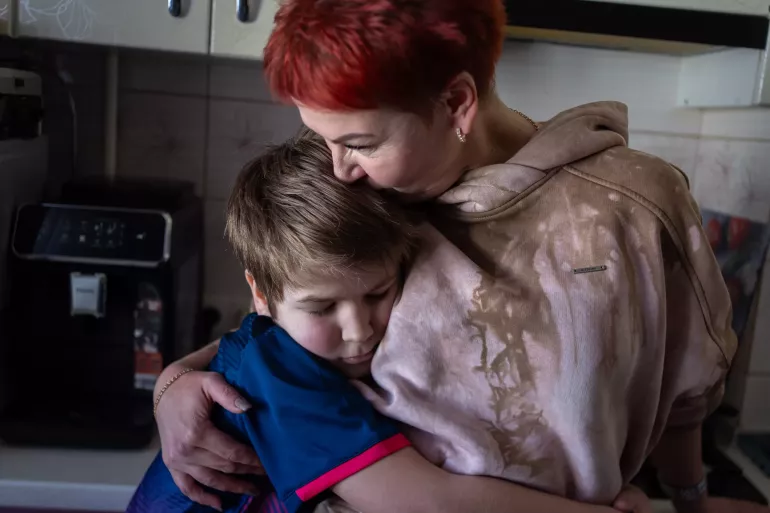
The research showed that children who talk openly about their feelings with parents cope better with stress. Family support, communication with peers and shared hobbies also boost mental health. Physical-activity-related hobbies are the most common and are linked to higher resilience, especially among children, teens and young people. Sharing hobbies between children and caregivers is beneficial too: 57 per cent of children and 64 per cent of parents said this helps them deal with stress.
Top five stress triggers identified by parents:
- Lack of money to purchase life’s necessities – 59 per cent
- Fear sparked by air-raid sirens – 44 per cent
- Arguments with loved ones – 38 per cent
- Exposure to negative news – 32 per cent
- Loud, sudden sounds – 29 per cent
The findings aim to inform parents, educators and community leaders as they create more supportive environments for children, adolescents, young people and families.
UNICEF and the All-Ukrainian mental health programme “How are you?” recently introduced Momental — a friendly guide to building resilience that can be used daily by adults and children. Simple Momental techniques and exercises are also available in the mobile app.
Notes to editors:
The ‘Mindframes’ study is available here in Ukrainian.
Media contacts
About UNICEF
UNICEF works in some of the world’s toughest places, to reach the world’s most disadvantaged children. Across 190 countries and territories, we work for every child, everywhere, to build a better world for everyone. For more information about UNICEF and its work for children, visit www.unicef.org
Follow UNICEF Ukraine on Facebook, Instagram , Twitter та TikTok.