

UNICEF cash transfers help ease the strain on vulnerable families struggling
with the economic crisis in Sri Lanka
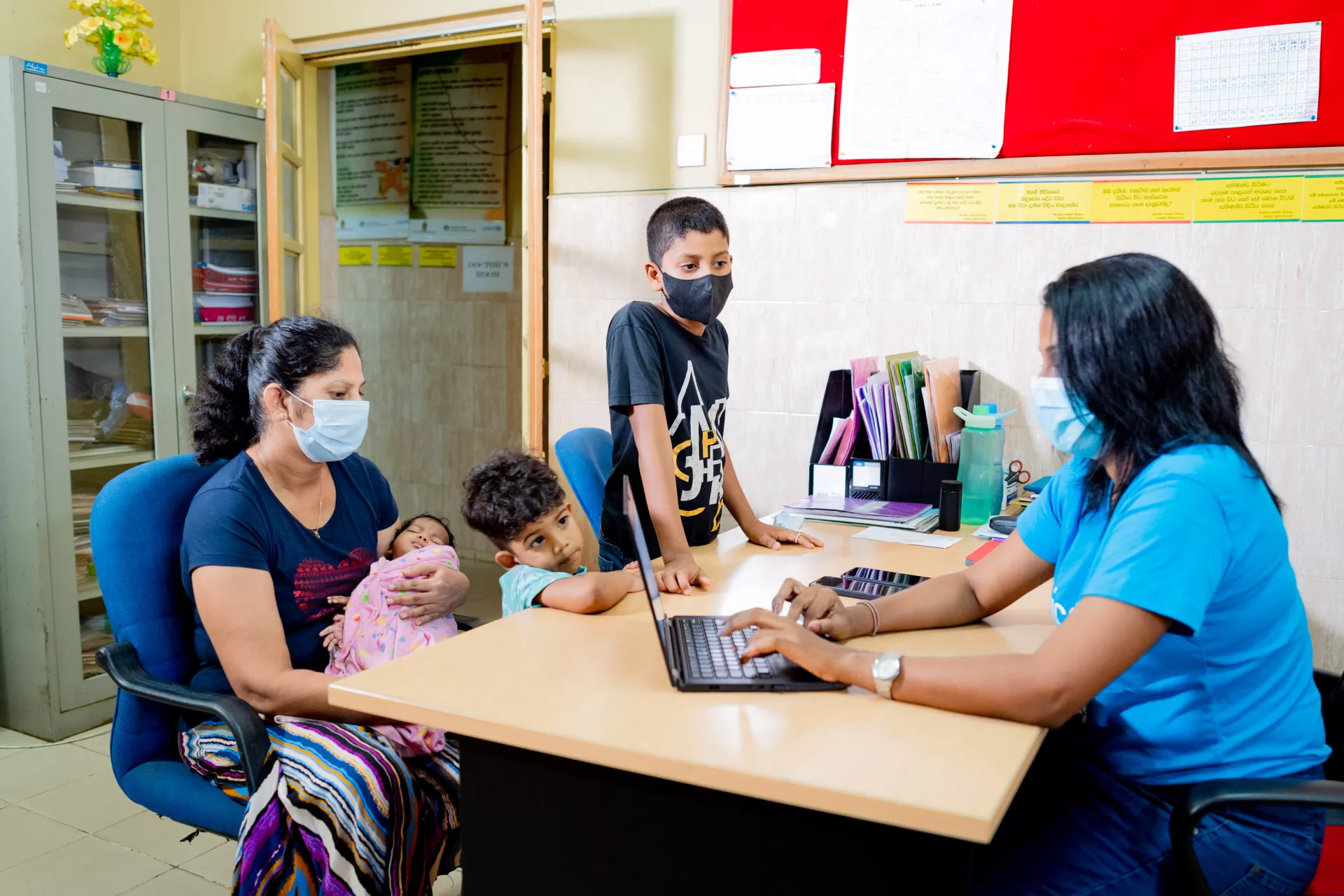
UNICEF cash transfers help ease the strain on vulnerable families struggling with the economic crisis in Sri Lanka
Sugath Nishantha (53) resides at a large, crowded, low-income (affordable) housing complex located just outside Colombo city. The small two-bedroom rented flat is home to his family of seven; his wife, three sons, daughter and the latest addition to his family, a 2-month-old baby girl.
The main income source for Sugath is through three-wheeler taxi driving - once a thriving business for many who embraced the urban informal economy of bustling Colombo. However, the COVID-19 movement restrictions in the country and the economic crisis that followed have had devastating effects on the livelihoods of many, including Sugath. “I have lost my regular income. It is with great difficulty that we make ends meet.” He explains. “Even on a good day I only manage to earn about Rs 2000.00 (USD 5.40) in taxi-hires. I prioritize utility bill payments and give my wife some money for household expenses. This is just enough to provide my family with the basic food.”
When Sugath’s business flourished, he was able to better provide for his family, including a meal out at times. But not anymore. “We have cut down on travel and we can’t afford to buy food from out. We manage with whatever we have and prioritise essentials for the baby. I still haven’t paid my children’s school fees,” he laments referring to his school-aged daughter and son enrolled at private schools – a luxury he could afford before the slump.
To support families with infants in the face of Sri Lanka’s economic crisis, UNICEF, with funding from The Central Emergency Response Fund (CERF), partnered with the Colombo Municipality Council (CMC) and Sarvodaya to initiate a cash transfer programme. Launched in August 2022, the programme supported mothers with new-born babies (0-6 months) and involved up to three monthly tranches of Rs 5000 (USD 13.54) aimed at improving the family’s access to basic health and nutrition.
Fortunately, within a week of giving birth, Sugath’s wife, Tharushi (41) got herself registered for the cash transfer programme at the local maternal and child welfare clinic where she receives maternity and post-delivery care. The health clinic is one of 14 operating under the CMC that provides local communities with maternity and childcare, including regular screening, health and nutrition advice, and care of both the mother and the baby after the delivery.
“We are facing a lot of financial difficulties. I find it really hard to manage household expenses with just 2000 Rupees. So, I registered for the programme as soon as I heard about it. That was just a week after the baby was born,” Tharushi explains.
“Over the past three months we received three tranches of Rs 5000 each. The money made a big difference. This enabled us to afford essentials for the baby and supplementary food for me as I am breastfeeding. I was also able to feed my other children extra servings of rice.”
“I really appreciate this financial assistance. I hope this programme continues. Another mother at the clinic also mentioned what a great support this programme is. It was a great service provided during this financially difficult period,” Tharushi affirms.
During this three-month programme, running from August to October, UNICEF reached over 3,000 families with infants. UNICEF is continuously working to scale up this programme in the coming months to support access to nutritious food for over 100,000 families with young children in the most vulnerable districts in the country.


