Healing Young Minds
With support from UNICEF and UNCERF, children affected by Cyclone Ditwah are finding comfort, stability, and hope again.

“When we went home, I kept thinking to myself, ‘Is this really our house?’”
With these words, 16-year-old Chamalsha Devmini, a student of Kantale Mahavelipura Vidyalaya in eastern Sri Lanka, describes the moment she returned home after the devastating floods caused by Cyclone Ditwah. “Our house was severely damaged by the flood, and there was no way of going back until everything was cleaned.”
Her description mirrors the experience of thousands of children across Sri Lanka who were uprooted from their homes, schools, and familiar spaces. In those difficult days, UNICEF, with support from the United Nations Central Emergency Response Fund (UNCERF), mobilised psychosocial support to help children manage the fear, anxiety, and emotional stress brought on by the floods.
This support was delivered through collaboration with the provincial Departments of Probation and Child Care Services (DPCCS), the National Child Protection Authority (NCPA), counsellors attached to Provincial Education Departments, and civil society partners such as Sarvodaya, along with the necessary training and materials needed to conduct the psychosocial support sessions.
Visible impact in the immediate aftermath
For counsellors working in affected areas, the emotional impact of Cyclone Ditwah was immediately visible in the children.
Rohana Wasantha, Teacher Adviser and Counsellor at the Kantale Zonal Education Office, recalls, “At that time, a great deal of fear and significant instability was quite visible among the children… The need to conduct psychosocial activities for these children was apparent and immediate.”
The disaster did not only destroy homes or belongings; it dismantled the sense of safety children depend on. Rohana and his colleagues quickly began relaxation exercises and activity-based programs because, as he explained, “In order to bring in some sense of normalcy, we had to begin somewhere. So we began with a few relaxation exercises and activity-based interventions.”
These programmes that began in safety centers established in the wake of the heavy rains, have now expanded into schools across the worst-affected areas, in order to continuously reach children even after they returned to their homes.
A key strength of this response was the close collaboration between agencies such as NCPA, DPCCS, and partners such as Sarvodaya, as well as the support provided by strong links between UNICEF’s child protection and education sectors, rendering the psychosocial response both timely and effective.
In the Eastern Province, further east in Mutur, the situation was equally severe. Abdul Cader, Child Rights Promotion Officer attached to the provincial DPCCS, described the scale of the damage, noting, “Mutur was considered an area that was greatly affected… around 13 villages were highly damaged.”
Families fled to relatives’ homes and schools, often overnight. Children who once played freely outdoors suddenly found themselves in overcrowded shelters, surrounded by unfamiliar faces and frightening memories.
“When we visited these displaced areas, we noticed that the children looked lonely and sad because they were separated from their friends and displaced from their homes,” he said, adding, “To uplift the mental well-being of these children, we conducted psychosocial programs… by playing games and sharing stories with them, our aim was to continuously expose them to a cheerful environment.”
Some children needed extra help. Abdul remembers noticing several children who simply kept away during activities. “There were a few children who did not wish to participate in any of the activities as they were severely stressed. But with consistent care, we managed to get them involved as well,” he said. Counsellors gently encouraged them, speaking privately and helping them rejoin their peers.

Gentle transformation
Among the many young voices shaped by this experience is 9-year-old N. Aamina from Hairiya Vidyalaya in Mutur.
“I was in a big school camp after the floods. I missed my friends and my family a lot. I was very worried because I couldn’t go to school,” she said.
For Aamina, the flood swallowed more than her home; it took away pieces of her childhood. “Because of the flood, water came into our house… My school bag, slippers, and uniform were all washed away by the water.”
Her voice grew smaller when she spoke about losing her books: “The books I was studying, notebooks, pens, and pencils were all washed away in the flood. So I had to redo all my notes from the beginning.”
She remembers the fear, isolation, and the worry.
“I did not get the chance to play with my friends, and I could not meet them. I was very worried.”
Even her school, once a safe place, became unfamiliar. “Water entered the school; it even came into my classroom. Many things were lost.”
But her story, like many others, turns toward hope thanks to the psychosocial activities.
“Now I feel relieved. I was very worried before, but now I am happy. We participated in sessions that made us feel happier. We coloured, painted and played games in groups. It made us very happy.”
Her words reflect the gentle transformation that psychosocial support brings through simple moments of care, creativity, and connection.
Back in Kantale, Chamalsha also experienced this shift.
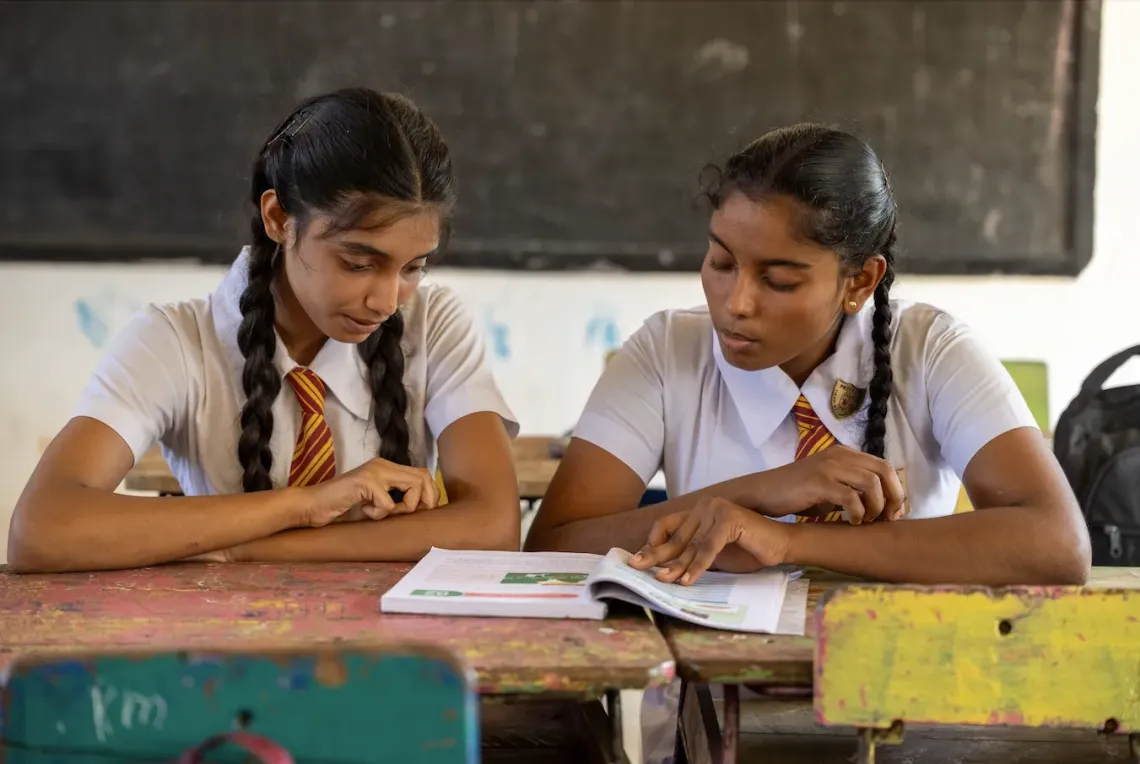
She remembers how school resumed with various activities for children struggling with fear. “Many activities were carried out in the school, and it helped us feel a bit normal and forget the fears. My mind felt at ease after the counselling sessions and the other activities we participated in.”
She says now she feels her confidence returning slowly.
A slow but steady return to normalcy
Even after the floodwaters receded, the emotional recovery has taken time. That is why UNICEF, supported by UNCERF, have continued the work in collaboration with the government agencies and CSO partners.
“As far as Mutur is concerned, we continue to visit children from highly affected areas,” Abdul said. “We also educate parents on how to deal with their children after Cyclone Ditwah.”
This support is not a single session; it is a continuous process of healing, rebuilding routines, and helping children reconnect with hope.
Through relaxation exercises, games, drawing, storytelling, peer groups, and emotional check-ins, children like Chamalsha and Aamina rediscovered what they lost during the disaster and the sense of protection they knew before the disaster.
Aamina now plays again. Chamalsha studies again, and children who once refused to speak now laugh during group games.
These may be small victories, but for a child emerging from disaster, they are everything.