From Despair to Hope: How Compassion Helped One Mother Rebuild Her Life
.

For Ms Pushpika Sujani, a Public Health Midwife attached to the Medical Officer of Health (MOH) Office, Padukka – a suburban town in western Sri Lanka, caring for families extends far beyond providing routine maternal and child health services.
Every home visit is an opportunity to listen, understand and support families through some of the most difficult moments in their lives. One phone call, however, is something she will never forget.
“It was evening when my phone rang,” Pushpika recalls. “On the other end was a young mother of three from Beliatta Wila village. Her voice was trembling.”
The distressed mother had confided in Pushpika that she was facing difficulties feeding her children due to economic constraints and at times she feels the only solution is to leave. She told me, ‘Sometimes I feel it would be better if I just leave everything and go somewhere.”
"For a moment, I was speechless," Pushpika says. "I knew she needed someone to listen to her so I did exactly that." The following morning, Pushpika visited her home in Beliatta Wila.
As they sat together, the mother slowly began sharing her story. With her husband serving time in prison and being forced to face life alone with three children, the young mother was stretched thin.
“I could immediately see how exhausted she was. She looked emotionally and physically drained,” Pushpika remembers.
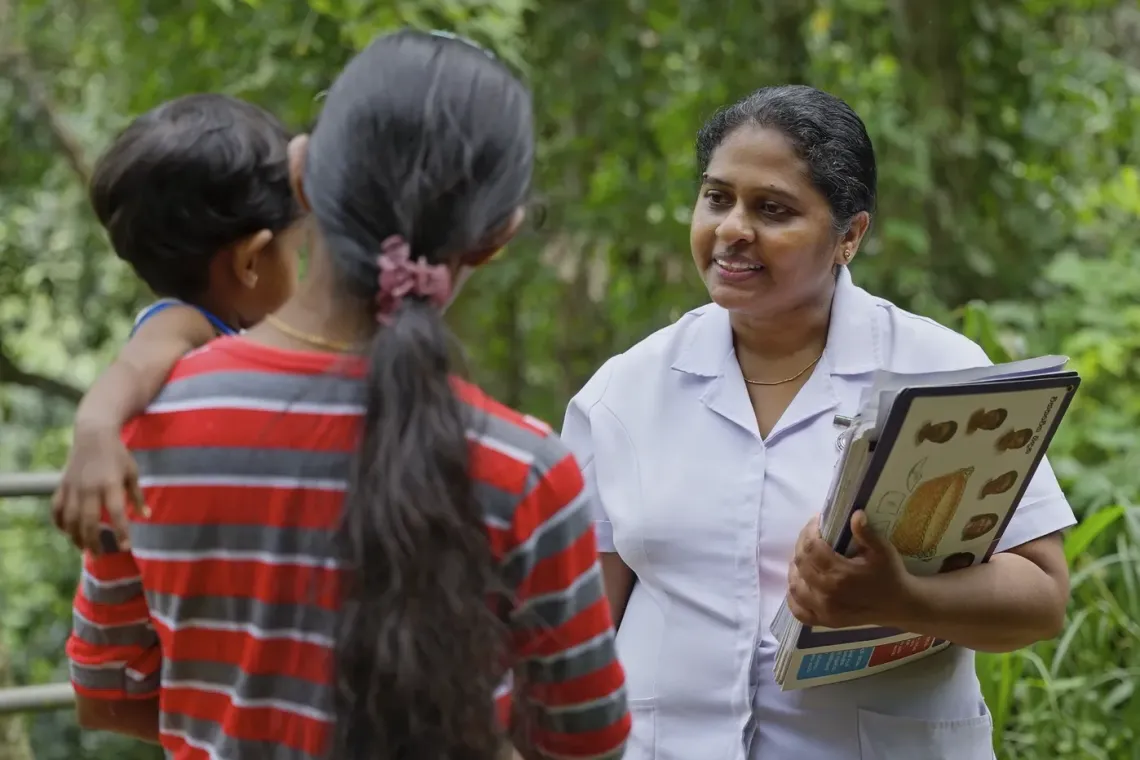
Not long before, Pushpika had completed the Caring for the Caregiver (CFC) training programme supported by the Australian government through the Australian NGO Cooperation Program (ANCP), which equips frontline public health staff with practical skills to recognize emotional distress, provide compassionate support and connect families with appropriate services.
“As I listened, I recognized several warning signs," Pushpika says. "I knew she needed immediate help.”
She referred the young mother and her children to the Mental Health Unit at Padukka Hospital, where they received professional assessment and care. But Pushpika also knew that healing required more than medical treatment.
Over the following weeks, Pushpika visited the family frequently, becoming a confidante and a safe space for the young mother to share her difficult moments, as well as her grief, fear and struggles. Using tools introduced through the CFC programme, such as the “Stress Basket” exercise, Pushpika helped her identify the sources of stress in her life. Through “Daily Routines” exercise she helped her recognise the people, routines and strengths that could support her recovery and bring happiness to her everyday life.
"Rather than giving her solutions, I wanted her to discover that she already had strengths she could build on," Pushpika says.
Together, they explored practical ways to rebuild stability. Today, the family is slowly recovering and rebuilding their lives and the older children are attending school regularly and the young mother has also initiated an entrepreneurial venture - drying and packaging cow dung for agricultural use while also producing products from coconut shells – providing an important source of income for the household.
"The transformation has been incredible," Pushpika reflects.
"When I remember that phone call and see where she is today, I feel deeply grateful," Pushpika says. "Sometimes the most important thing we can do is listen with compassion, recognize when someone needs help and walk beside them as they rebuild their lives."
Through the CFC programme, PHM Pushpika was equipped with the skills and confidence to provide that support, helping one mother and her children move from despair towards hope, resilience and a brighter future.