Healing Young Hearts
With funding from United Kingdom’s FCDO, UNICEF has strengthened Child Protection Units under the Child Protection and Welfare Commission, KP, to safeguard the rights of children
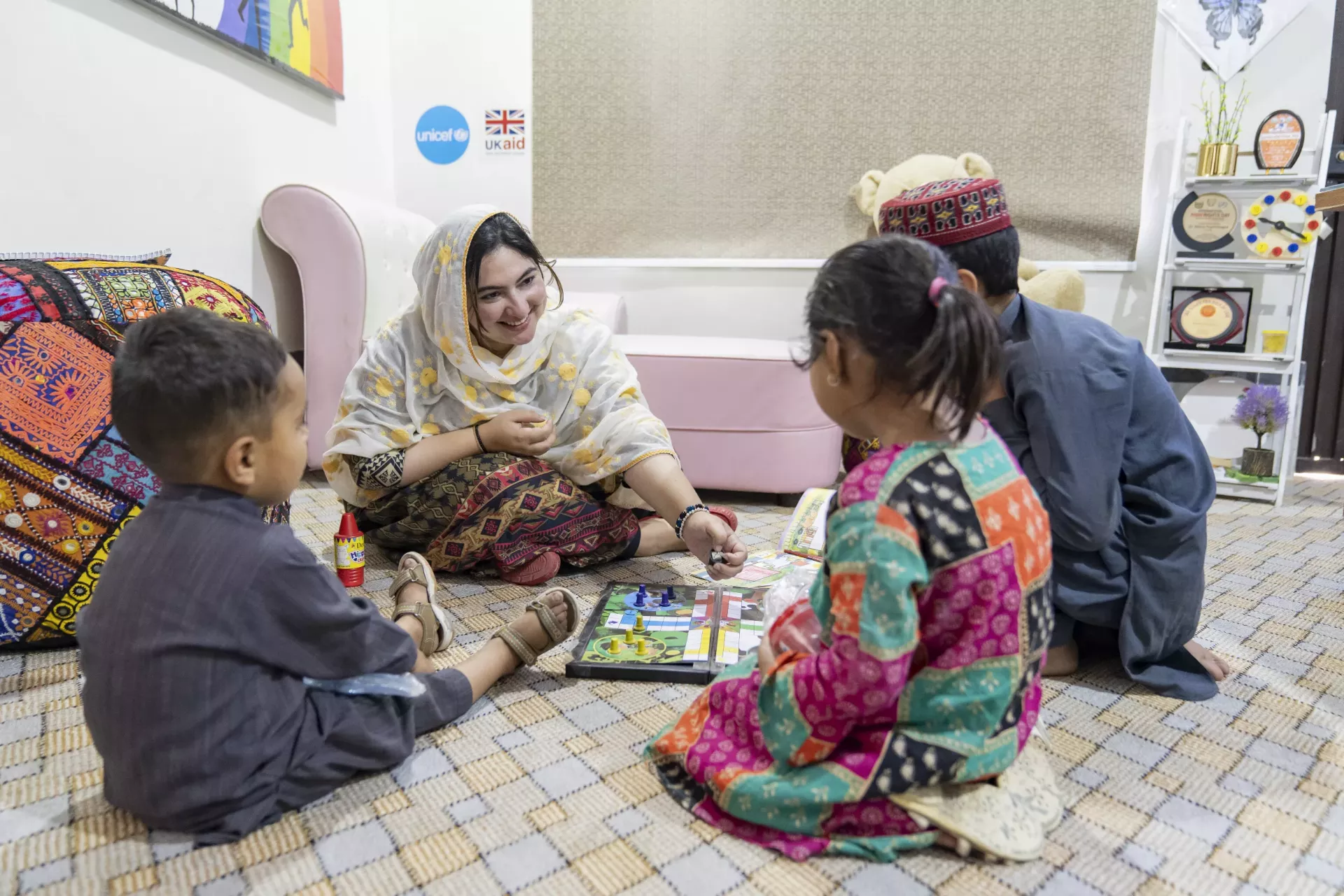
Mingora, Swat district: Walking into the UNICEF-supported Child Protection Unit (CPU) in Khyber Pakhtunkhwa’s scenic Swat valley, one is immediately drawn to the vibrant and welcoming Counselling Room.
Adorned with colorful paintings, the room creates a cheerful atmosphere that contrasts with the harsh realities faced by children who come to this safe space. Water paints, board games, and toys are scattered around the room, inviting the children to play, relax and feel at ease.
This thoughtfully designed environment is where the Psychologist, Maria Sultan, works her magic, helping child survivors of abuse, neglect, exploitation and violence, begin their journey to heal. Her gentle approach and the room's comforting ambiance plays a crucial role in unlocking the silent world of a child's trauma.
This CPU was established by the Child Protection and Welfare Commission, Government of Khyber Pakhtunkhwa (KP), with technical support from UNICEF and funding from the United Kingdom’s Foreign, Commonwealth and Development Office (FCDO) as part of its AAWAZ II programme. This initiative focuses on the prevention and response to abuse, neglect, violence and exploitation of children.
“Unlike adults, children often take much longer to express their feelings and emotions. Building rapport with them is a slow and delicate process, but it's essential for helping them overcome a painful experience,” states Maria Sultan.
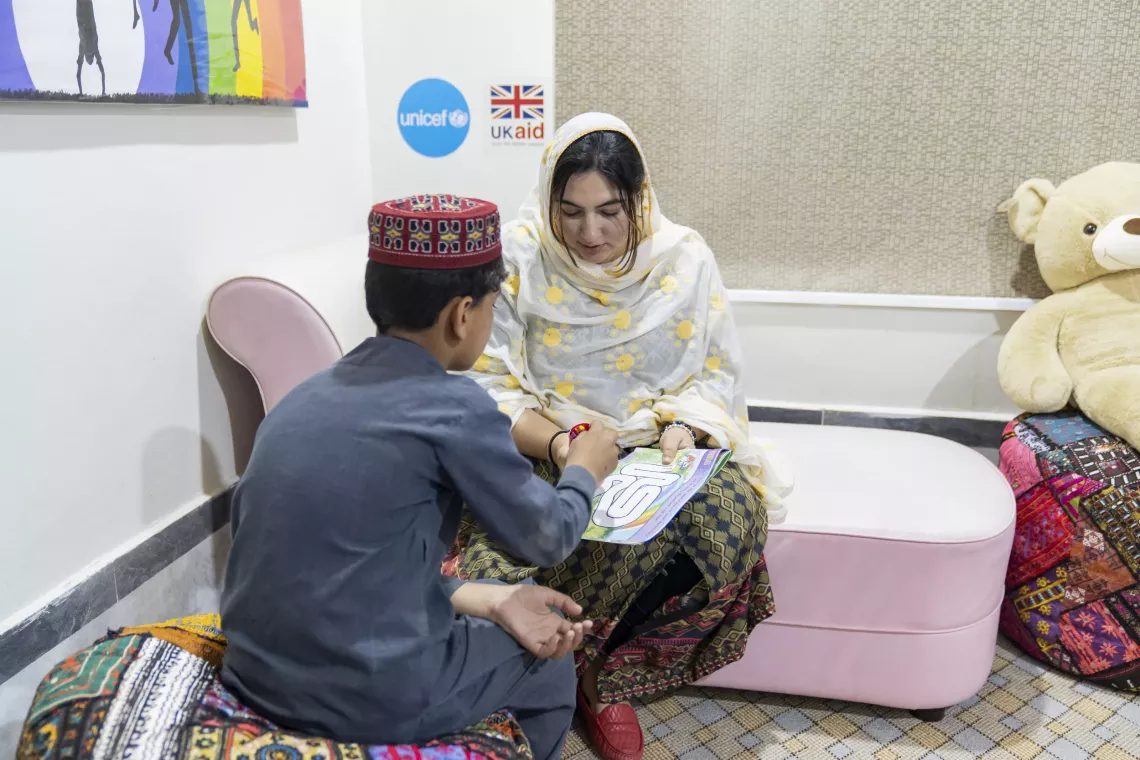
Maria has been working at this CPU for almost two years. She started her career at a government mental health facility where she primarily dealt with adults.
As part of the AAWAZ II programme, Maria and other staff members have received specialized training from child protection experts on enhancing communication with children and effective management of child protection cases.
“To gain children’s trust and befriend them, you need to be at the same level with them. If I ask them to paint, I paint myself too. They need to feel that I’m their friend and not an adult or a doctor.”
Besides Maria, the CPU also has two other professional staff: Kefayatullah, the Social Case Worker, responsible for the initial assessment of cases and determining the required course of action, and Ihsanullah, the Child Protection Officer, who looks after the child protection programme and leads the team.
Cases of child protection violations are mostly referred to the CPU by the toll-free Child Protection Helpline 1121, the district’s police force, service providers and the media. Sometimes the community members also identify cases.
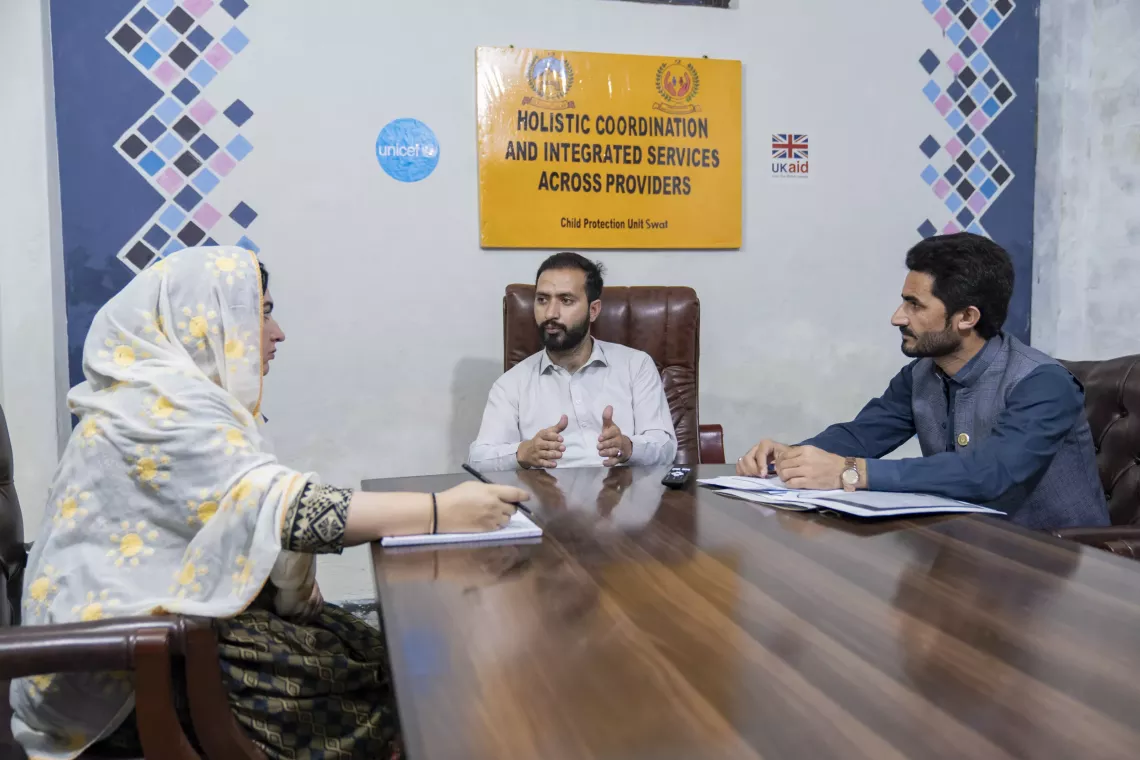
“It is not easy to deal with cases of grave violations against children on a regular basis,” says Kefayatullah. He highlights that a vast majority of the cases involve sexual abuse of minors and children in need of care.
In such situations, the immediate needs of child survivors are assessed, and they are assisted in accessing essential support such as medical and legal services. Child survivors, together with their caregivers, can also receive psychosocial support at the CPU, aimed at assisting children in their healing and recovery process.
The nature of these cases can affect the mental health of the child protection staff, as well. When asked what keeps him motivated, Kefayatullah replies that it’s the sense of accomplishment he feels when vulnerable children are rescued and rehabilitated.
Narrating one of the most challenging cases he had handled, Kefayatullah says that he learned about the plight of a young boy and his sister living on the streets of Mingora for almost seven months with their drug-addicted father. Their mother had passed away, and they had no extended family to take care of them. The young siblings were unwilling to part with their father.
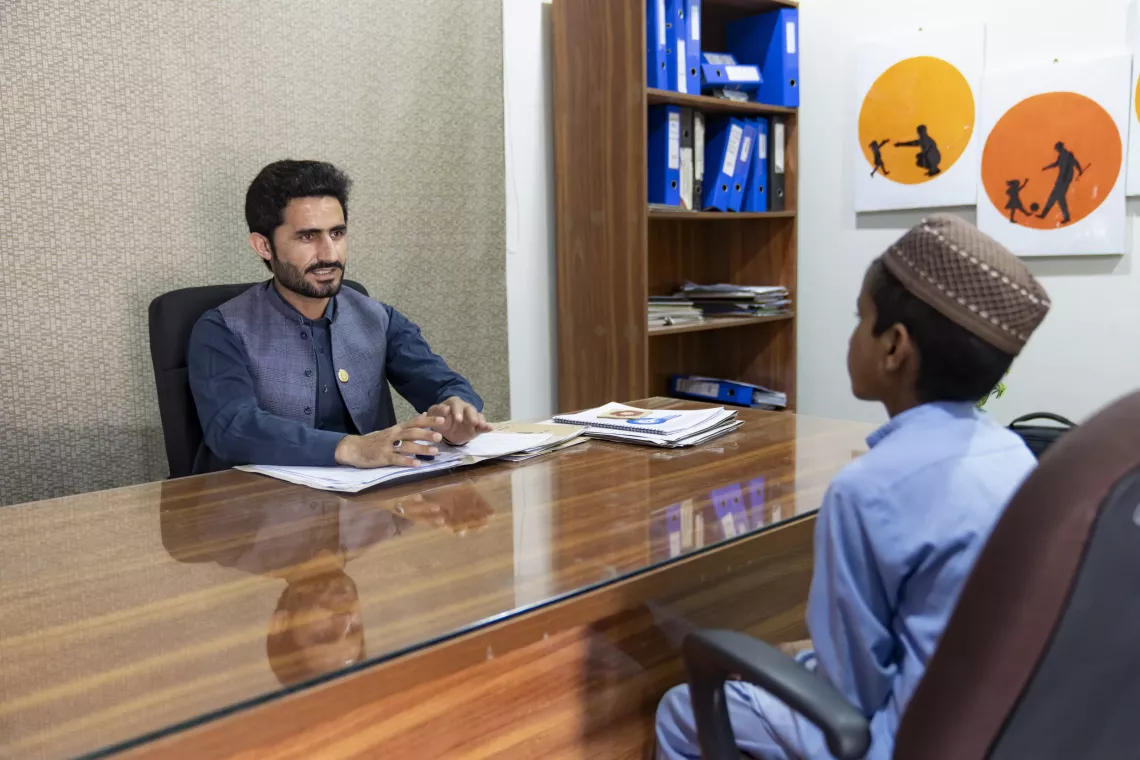
Kefayatullah rescued the children and, with the help of the District Court, arranged their interim stay at a rehabilitation facility where their father was admitted. However, while at the facility, the father was indicted for previous drug-related offenses and arrested. The children were left alone.
The CPU then arranged for the children to live temporarily at a local orphanage, from where they regularly visit the Unit for psychological counselling while the Unit continues to look for community-based care options more appropriate than the orphanage.
Today, the children are growing up in a caring environment and attending school while their father is in rehabilitation, after release from the jail.
KP Government has established Child Protection Units in 21 districts of the province with the technical support from UNICEF. Out Of these, 5 get financial contributions under the AAWAZ II programme. Child protection professionals of these Units regularly receives training and supervision from experts arranged by UNICEF.
“Every child deserves to grow up in a safe and nurturing environment, yet thousands of children, including children of registered Afghan refugees, are still being denied their fundamental rights,” says Sohail Ahmad, UNICEF’s Child Protection Specialist.
“Over the past two years, under this programme, the CPUs have provided comprehensive case management services to more than 1,800 children, ensuring their rights to protection and family care rather than institutionalization. To secure a safer and brighter future for every child in the province, UNICEF is supporting the KP Child Protection and Welfare Commission to scale up the presence of CPUs in all districts and invest in educating and empowering parents, children, and duty bearers in local communities.”