Building a learning pathway for 30,000 children
The Sindh Learning Programme supported by the Global Partnership for Education and UNICEF is reaching the youngest learners
Hyderabad, Sindh: Parveen Arain still keeps the photograph close. It was taken years ago at a village school in rural Sindh. The walls were bare, the floor uneven, and the children sat too quietly. For Parveen, the photograph reminds her why she begins every training session with the same question: “What do we believe a four‑year‑old is capable of?”
In Sindh, that question matters deeply. Many children miss out on strong foundations in their earliest years. Fewer than half of children aged 3-4 are developmentally on track, and learning gaps persist as they move through school. By Grade 4, pupil school students answer fewer than half of basic mathematics questions correctly on average.
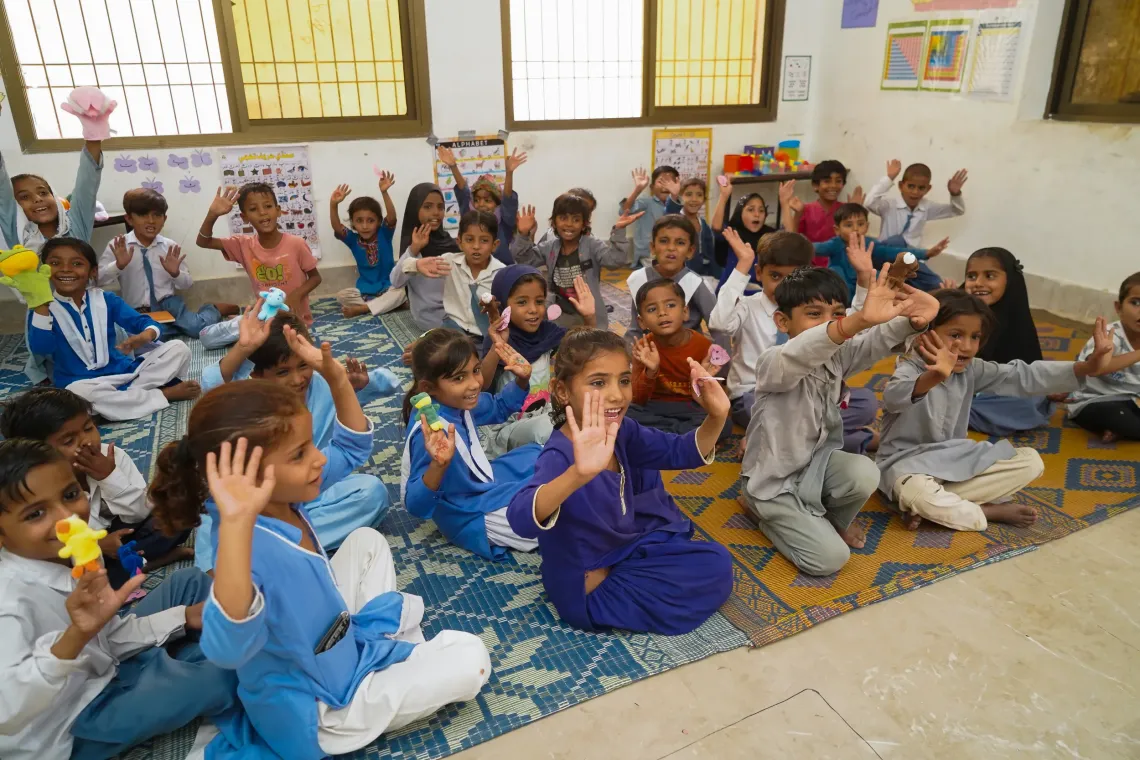
Sindh runs one of the largest public school systems in Pakistan, with more than 41,000 schools. Yet that scale has not always translated into strong learning opportunities. Many classrooms remain under-resourced and multi-grade, and early childhood education has only recently moved towards the centre of policy.
Strengthening this foundation is the goal of the Sindh Learning Programme—a four-year initiative launched in April 2025 by the School Education and Literacy Department (SELD), with support from the Global Partnership for Education (GPE) and UNICEF and implemented in partnership with the Reform Support Unit across Umerkot, Dadu, Tharparkar and Tando Allahyar districts.
Today, Parveen is an Assistant Director at SELD and one of the programme’s key champions.
From training rooms to classrooms
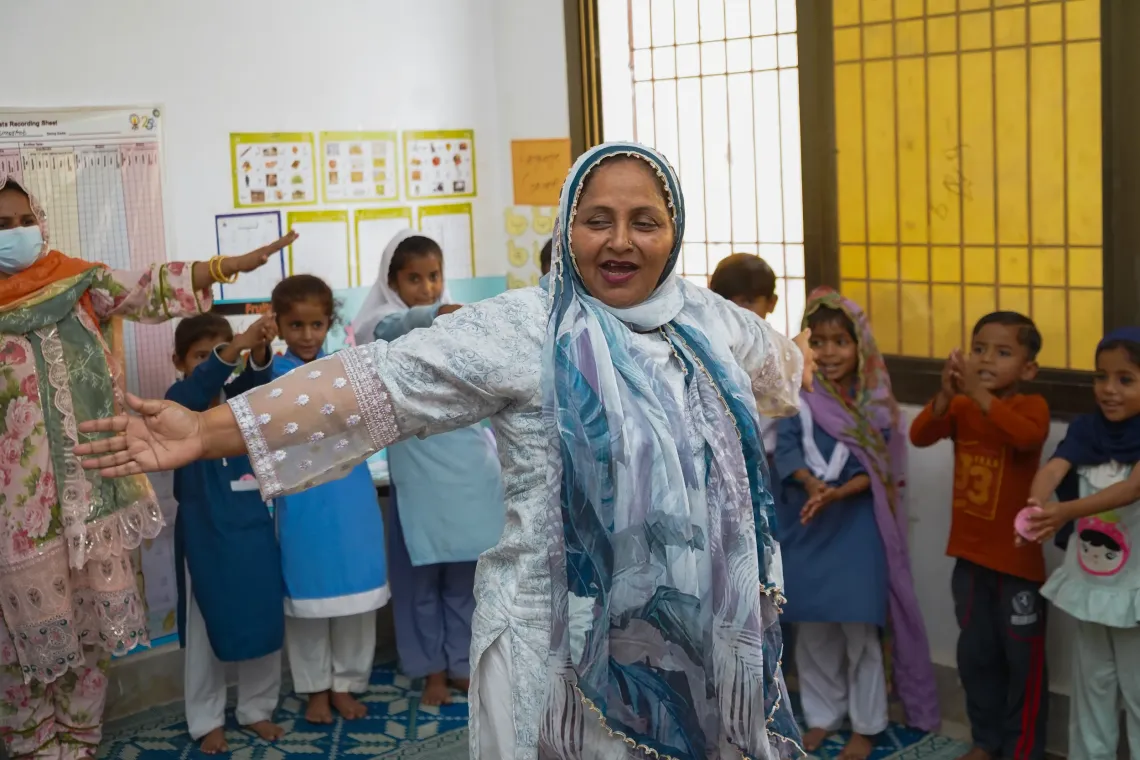
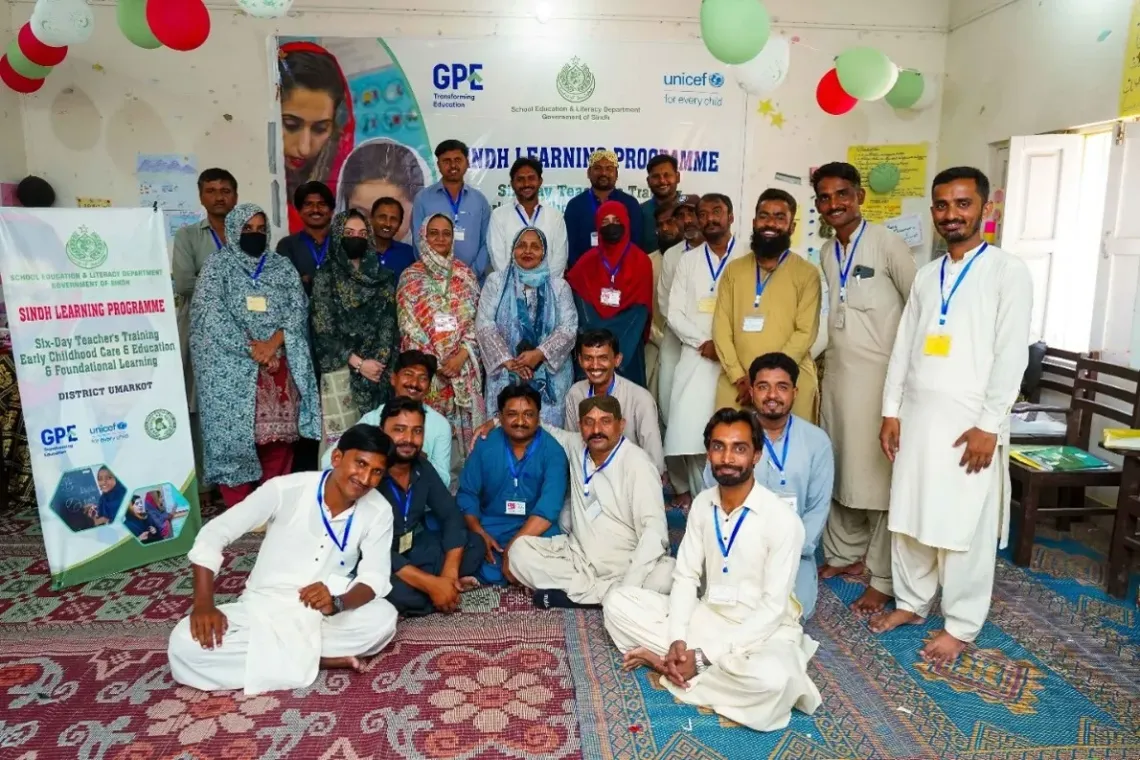
In a training room in Hyderabad, Parveen does not stand at the front. She kneels on the floor, beside a cardboard box, a handful of smooth stones, and a fistful of beads. Around her sit twenty‑four Master Trainers for Early Childhood Care and Education, each a government official or department staff member, watching closely.
“If this is what your classroom has, then this is what you teach with,” she says, demonstrating how everyday materials can become powerful learning tools.
These master trainers will go on to train over 750 teachers, who will in turn support over 30,000 young children across the four districts.
By strengthening existing government structures rather than creating parallel systems, the programme is building lasting institutional capacity within the School Education and Literacy Department, helping ensure that improved early learning practices can be sustained and expanded beyond the programme districts.
Materials travel down the same chain. During the first year, the programme’s Early Childhood Care and Education materials were printed and placed in the hands of the Master Trainers. From the second year onward, those resources will continue further along the line: ECD kits and student workbooks reaching teachers, and on to the children they will teach.
For many participants with 15–20 years of experience in education, the training is not about learning entirely new techniques—it is about rethinking how young children learn.
“The early years are not a waiting period before ‘real’ learning starts,” Parveen explains. “They are when the foundation of every later year is built. A four‑year‑old who learns to count using stones picked up from the schoolyard, or to tell a story using a piece of fabric, is doing the most serious work of education there is.”
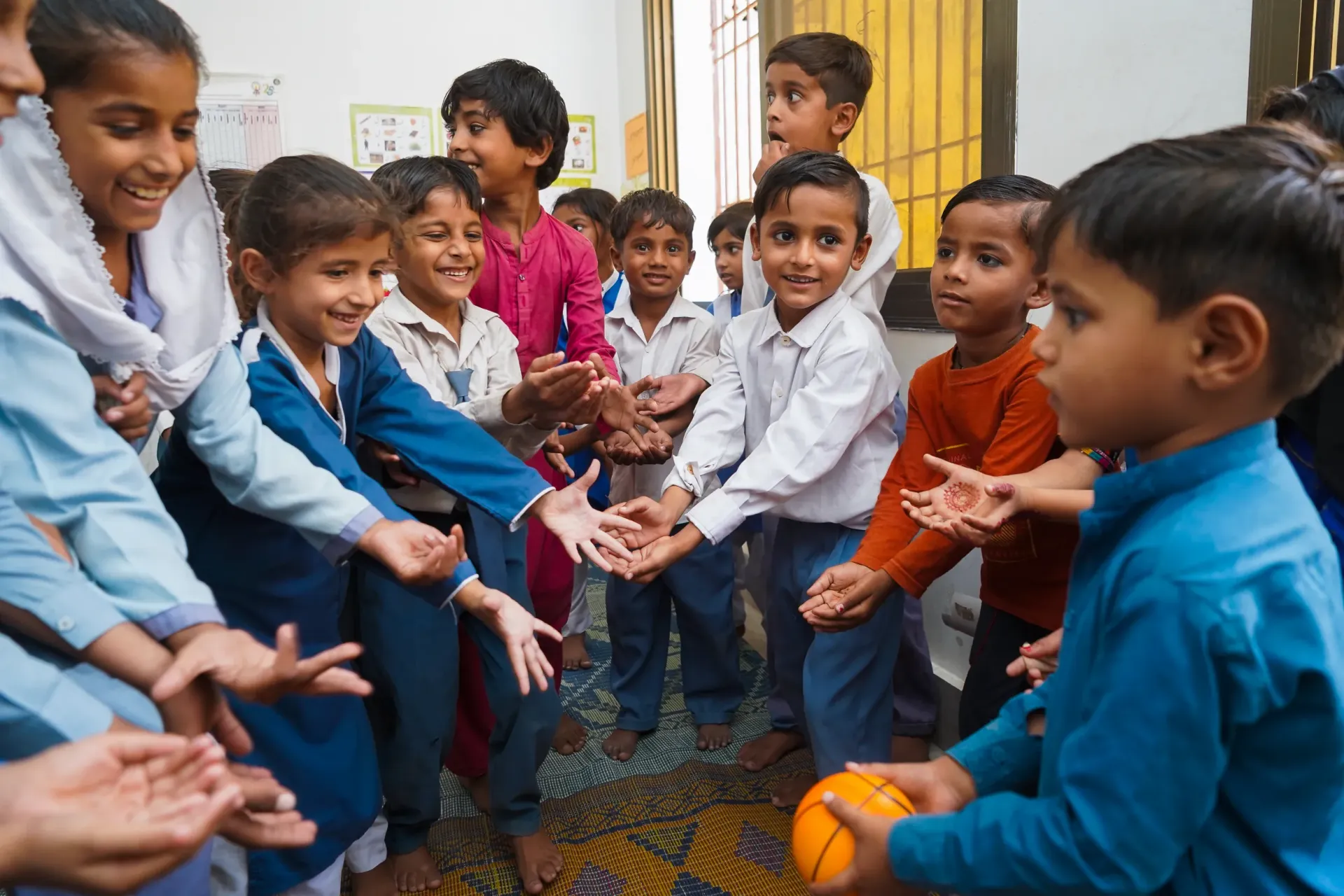
In classrooms where resources are limited, teachers are encouraged to use what is available around them, cardboard boxes become puzzles, bottle caps become counting tools, and learning begins through everyday objects and experiences.
“We are not building model classrooms. We are strengthening the ones we already have,” she says.
Beyond the training rooms, the programme is also working with School Management Committees to embed early learning priorities into school improvement plans, strengthening the role of parents, communities and local administration in supporting children’s education. This community engagement helps create a supportive environment for children’s learning both inside and outside the classroom.
Building the foundation for the future
The Sindh Learning Programme is still in its early stages. The first cohort of master trainers has only recently been prepared, and the teachers and classrooms they will support are just beginning to be reached.
But a shift is already underway, in how educators think about early learning, and in how children are beginning to experience it.
Over four years, the programme aims to prepare 24 ECCE Master Trainers, 150 Guide Teachers, 500 Subject Coordinators, and over 750 teachers, ultimately reaching more than 30,000 children with improved early childhood education.
For Parveen, the change begins with something simple but profound: how adults see children. And in classrooms across Sindh, that shift is already beginning to take shape-one stone, one story, and one child at a time.