

Becoming the change
With funding from the Deutsche Gesellschaft für Internationale Zusammenarbeit (GIZ), UNICEF is empowering women and communities across Pakistan

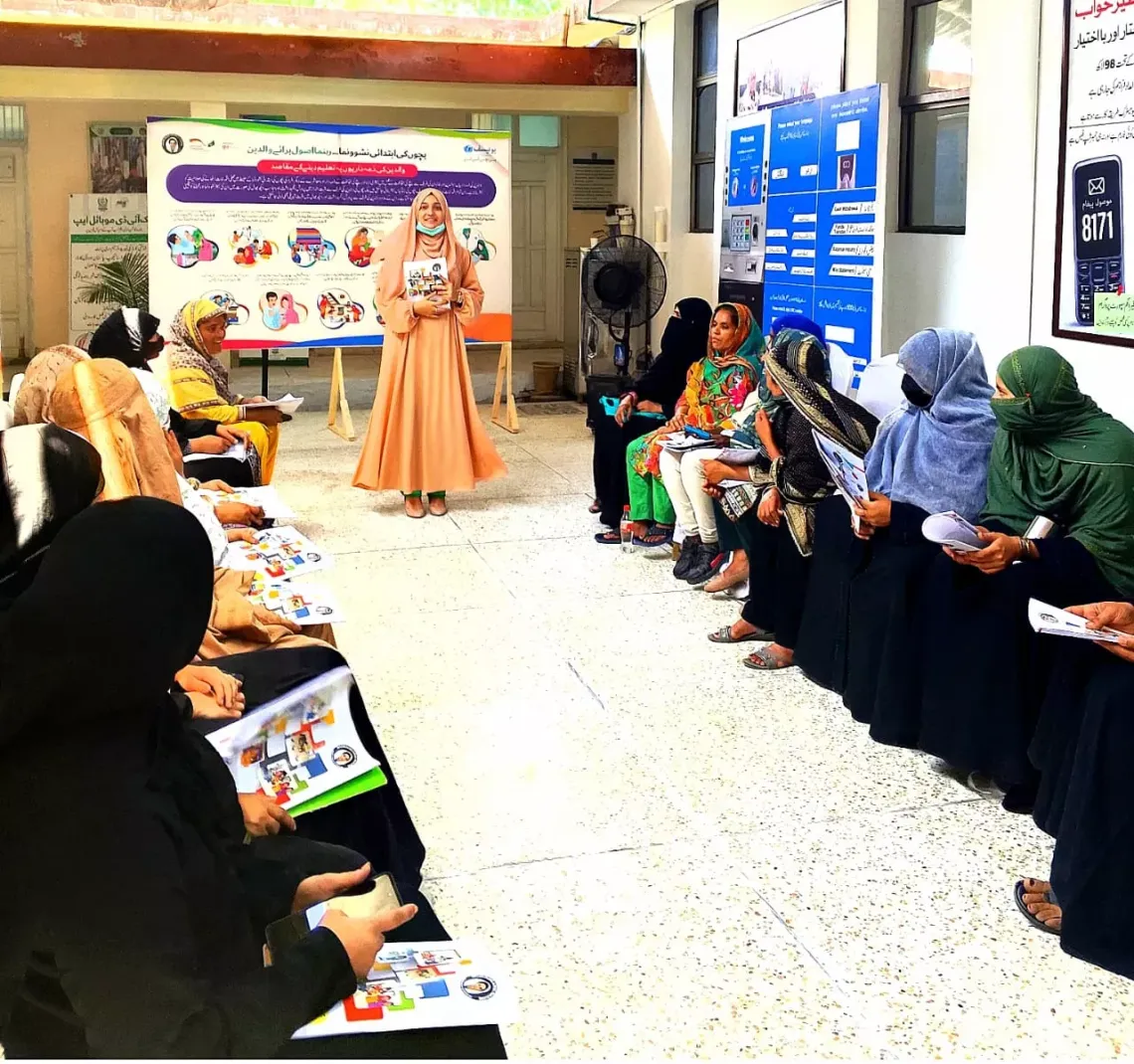
Havelian, Khyber Pakhtunkhwa: In a quiet community hall in Havelian, Khyber Pakhtunkhwa, Sundas, Sumaira, Rabia and Asiya sit together in animated conversation with other women—not about household chores or rising expenses, but about savings, budgeting, and digital banking. For many of them, this is the first time they’ve truly taken charge of their finances. These women, all beneficiaries of the Benazir Income Support Programme (BISP), are participating in a Digital and Financial Literacy training programme supported by UNICEF with funding from the Deutsche Gesellschaft für Internationale Zusammenarbeit (GIZ) and BISP.
The initiative is part of a broader social protection approach aimed at building the financial resilience of Pakistan’s most vulnerable communities. At its heart lies a powerful mission: to empower the most vulnerable community members with essential digital and financial skills, helping them achieve greater financial independence and resilience.
One of the most powerful takeaways for the women was learning how to open a bank account and use an ATM. This knowledge gave them a newfound sense of independence. “Now,” shared Asiya, “no one can take our money without our permission. We feel safe and in control.”
Sundas
For 35-year-old Sundas Bibi, a mother of five, the training was nothing short of a life-changing experience. Her husband, a house painter, earned just enough to scrape by. With no financial planning skills and constant debt, Sundas often found herself struggling to put food on the table or pay for her children’s education.
“I didn’t know how to manage the little money we had. Everything seemed like a crisis,” Sundas says. “But the training opened my eyes. I learned how to budget, how to save—even small amounts—and how to prioritize our needs.”
Initially, her husband resisted the idea of her attending the sessions. “He told me I was wasting my time,” she recalls. But after she began applying her new knowledge at home, even he noticed the difference. “Now, he trusts me completely with our finances. I’ve become the finance manager of our home.”
“I still remember my first two-day training. It was interactive, simple, and so empowering. If I had this knowledge a few years ago, I might have had my own home by now.”
Sumaira
Sumaira had similar struggles. Her husband, a carpenter, often went without work, and their children’s simple wishes remained out of reach. But after attending the training, her perspective changed.
“I learned that both parents have a role in raising children. I learned about equality, budgeting, and why early marriage harms girls,” she says. “Now I dream of seeing my daughters’ become doctors or teachers. I’ve promised myself I won’t marry them before they turn 25.”
Today, Sumaira's home tells a different story. Her children are happier when they wear new clothes, attend school, and enjoy nutritious meals. “I dream of seeing them grow up to become doctors and teachers. I believe that educating a girl gives her the ability to live a better life.”
Asiya
For Asiya, the training gave her the confidence to start a small livelihood venture.
“I saved some money and bought two goats,” she says. “We use the milk at home, and I plan to sell the goats for profit and buy more. This income will go toward my daughters’ education—something my husband doesn’t support, but now I can do it on my own.”
Learning how to open a bank account and use an ATM card was another milestone. “Now, no one can take our money without our permission.We feel safe and in control.”
The sessions are designed to be engaging and accessible, especially for women who may have little or no formal education. They use storytelling, hands-on activities, colorful visuals, and even a model ATM to make complex financial concepts easy to understand.
Rabia
Rabia Bibi’s unemployed husband battles with a life-threatening kidney disease placed a heavy burden on her shoulders. The constant need to depend on others for financial support has been a source of ongoing stress and worry. With her BISP stipend and the savings mindset she gained from the training, Rabia bought a sewing machine. She began stitching clothes at home and even trained her daughter, turning their small initiative into a growing family enterprise.
Beyond economic gains, Rabia says the training changed how she interacts with her children. “I learned how to talk to them with kindness and respect, and how to teach other women in my neighborhood to do the same.”
The ripple effect - women empowering women
The impact of this learning extended beyond financial skills. Rabia, Asiya, Sundas, and Sumaira also learned about gender equality, parenting and climate-friendly practices.
UNICEF’s partnership with GIZ and BISP demonstrates that when women are given the tools and opportunities to learn, they unlock the potential to break cycles of poverty for generations. These are not just financial lessons—they are life lessons, creating a pathway from dependency to dignity. Almost 250,000 BISP beneficiaries are gaining the knowledge and skills needed to achieve financial independence and enhance their financial resilience.
Sundas had a powerful message, “Many women still don’t know about these valuable services. The program has the potential to transform lives. This learning process should not end. This training gave us hope. It gave us a voice. And now, we’re not waiting for change—we are the change.”