Vanuatu Field Office
UNICEF Pacific Field Office
Children in Vanuatu
Comprising 83 islands and atolls, Vanuatu is home to 294,700 people, most of whom live in rural areas. Over a third of the country's population are children and adolescents.
Cash crops, subsistence farming and fishing, tourism, and construction account for the country’s main industries – all of which remain vulnerable to the effects of natural disasters.
The World Risk Report 2020 affords Vanuatu the highest disaster risk in the world because of its high exposure to natural hazards, with the likelihood of a disaster in any given year estimated at almost 57 per cent.
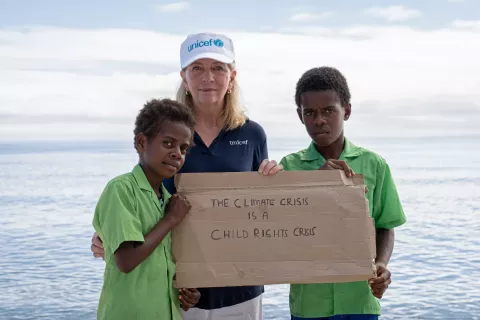
Climate change is likely to increase the incidence and severity of natural disasters.
Emerging Issues
The occurrence and intensity of natural disasters is expected to increase as climate change worsens. The impact of increased environmental vulnerability would adversely affect Vanuatu's population, particularly children, whose health and wellbeing are most at risk.
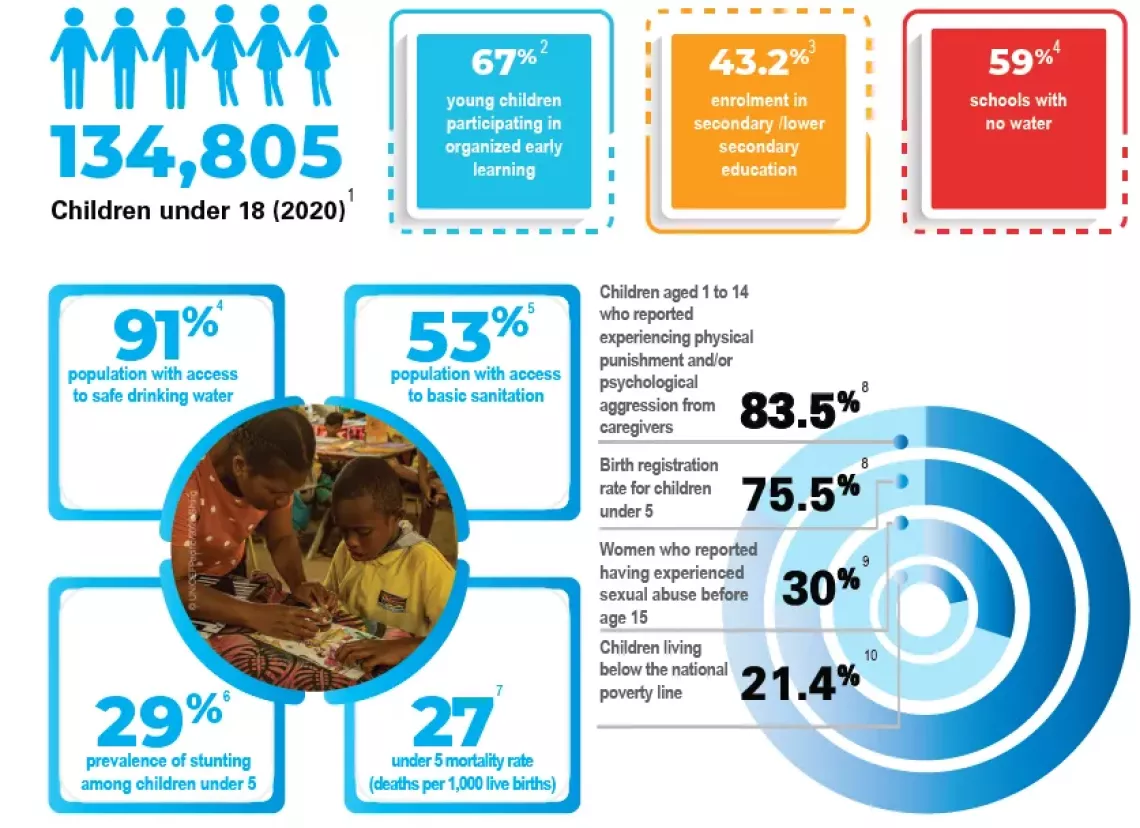
Efforts to further gender equality in Vanuatu are constrained by cultural norms, among other factors. The rate of violence against women and children remains high, with 72 per cent of women having experienced some form of physical or sexual violence.
In addition to the direct and indirect effects of climate change on food systems, Vanuatu’s increased population and limited availability of land for agriculture has implications for food security, nutrition, and health.