Braving Flooded Waters
It is our normal, but should it be?

Imagine this:
One rainy day you are finishing off from school ready to go back home. You are picked up by the school bus and half-way through, you are told that the road to your village is flooded, and you will be dropped about 2km away from home.
Tired and hungry from school you just want to get back home, you have no choice but to swim across the flooded road and walk home.
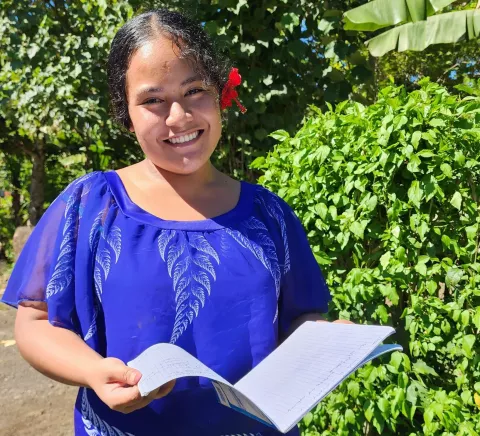
Bula! My name is Joni Waqavolau and this is a norm for children in my village. I live in Fiji’s largest island Viti Levu, and my village is located approximately 6.6km from Nausori town located in the country’s central division. The only road from the main road that leads to my village is a 3km-feeder road and after about a kilometre of travel, a portion of the road gets flooded following heavy rainfall which blocks vehicles from crossing.
The only public transport that we have access to from the village is a van that has a daily schedule of 7am and 4.30pm. This is mostly to pick and drop school students and those who are working. If anybody wants to go to the town or hospital at any other time other than this, then they have to call a taxi (which costs around $10) or they walk for 2km before they can catch the public transport.
I used to work in Suva, which is located 19 kilometres away from Nausori. In March this year, after a heavy rainfall which caused the access road to get flooded, I was laid off work. This part of the island is known for its frequent rainfall. My former employer was not convinced that I am off work because of repeated flooding episodes, and sadly I lost my job. Now I work in the farm, while searching for new jobs.


But the situation was worse last year when we nearly lost a child to floodwaters. One day, children were in school when it started to rain very heavily around midday. After school, the van dropped them on the other side of the road and about fifteen children had to swim across.
While they were crossing, Jackson, a little boy almost got carried away by the flood and the other children had to hold onto him and drag him away from the current. They told us the story when they reached the village.

Sometimes with very heavy rainfall, the roads are underwater for a week or two. As a result, children miss out on schoolwork and have a lot of catching up to do when they return. Sometimes they even miss their exams, and parents have to make special requests for their children to sit for their exams.
We also came across situations when people got really sick in the middle of the heavy rainfall and they had to wait for the floodwaters to recede to be taken to the hospital. They would take painkillers while waiting for the water to go down, but I am worried that they could be taking the wrong medication. Sometimes we have to calm people down till we wait for the water to go down at a level we can wade through, then we call a taxi to wait on the other side and we carry the sick.
While we may have incidences of villagers getting sick during such times, I am worried that if the road situation is not improved, a pregnant mother may find herself in need of urgent medical attention while leaving us helpless in the merciless grip of the flood.
For us in the village, braving flooded roads is normal, missing on days of school and later scrambling to catch up with schoolwork is normal. For us, walking 2km only to find out that the road is blocked by the flood and trekking the same distance back is normal.
Our resilience over the years have normalized our struggles, but my question is to what extent? How much longer should we endure this tiring cycle? How many jobs should we lose, how many students must drop out, how many lives are endangered by severe illness before we reach our breaking point?