Micronesia Field Office
UNICEF Field Office
UNICEF has a field office in Pohnpei, Federated States of Micronesia, which also supports our programmes in Palau and the Marshall Islands (RMI)
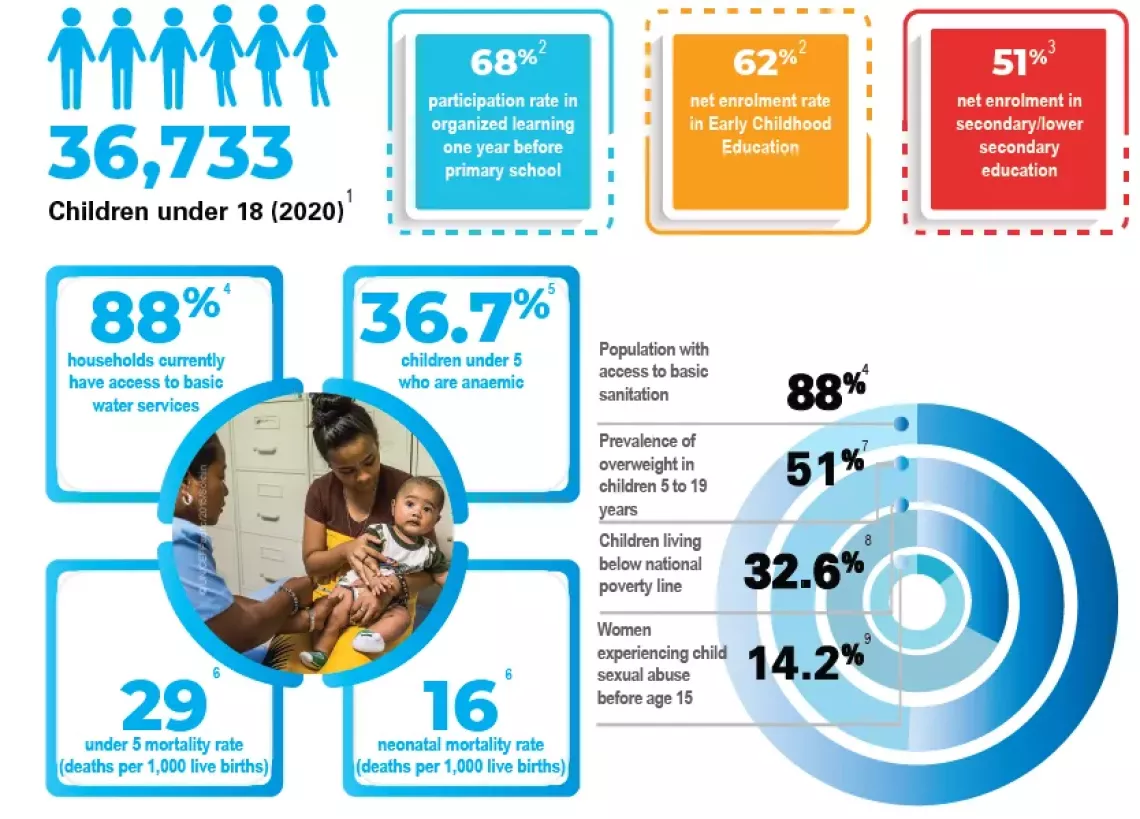
Of the 607 small islands that make up the Federated States of Micronesia (FSM), only 65 are inhabited. A lower middle-income country, approximately 41 per cent of the population live below the national poverty line. The country is home to 36,733 children with a total population of 105,500.
The services sector accounts for almost 67 per cent of FSM’s GDP, followed by agriculture and industry. Although agriculture is a notable sector, the intensifying impacts of climate change have seen a growing reliance on imported food.
At 35 per cent, FSM has one of the lowest rates of internet access in the Pacific region and was among the last few countries in the world to remain COVID-19 free. However, COVID-19 infections were detected from July 2022.
Emerging Issues
FSM lies within the Pacific Ring of Fire, where 90 per cent of the world’s earthquakes occur, and is vulnerable to climate-related risks including coastal erosion, rising sea levels, cyclones, floods, droughts and landslides. As the main sources of fresh water are rainwater, groundwater and surface water, FSM is also vulnerable to food security issues.
Child abuse, trafficking, sexual exploitation of girls, child marriage and violence against children and women are prevalent, often exaggerated by harmful social norms and practices.
The quality of education and child health services are issues that impact the sustainable development of the country. A World Bank study found that when one factors in what children actually learn in school, the learning-adjusted period of education for children in FSM is only 7.2 years – compared to 13 years of actual primary and secondary schooling. Similar gaps exist in child health and survival.
The high incidence of non-communicable diseases poses a risk to learning and the lives of children. Diets low in nutritional value and high levels of anaemia and obesity are common in FSM, with a 50 per cent rate of overweight amongst adolescents.