Childhood immunization in Sudan sinks to its lowest in almost 40 years
Conflict across the Middle East and North Africa sets back progress in Sudan, Yemen and the State of Palestine
- English
- العربية
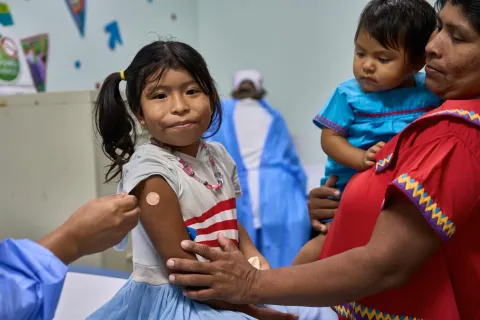
AMMAN, 15 July 2025 – The conflict in Sudan has pushed immunization rates in the country back almost 40 years, putting children at grave risk of deadly but preventable diseases.
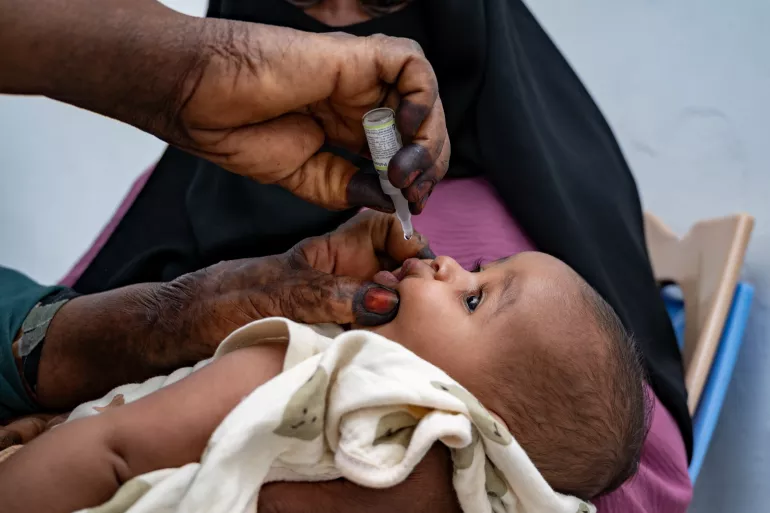
According to data published today by the World Health Organization (WHO) and UNICEF, more than half of the infants – at least 880,000 children - due to receive their first dose of the diphtheria, tetanus and pertussis (DTP1) vaccine in Sudan last year missed out. The DTP vaccine is used as the global marker for immunization coverage. Infants who do not receive a single dose of DPT are identified as ‘zero-dose children’ and face life-threatening risks. Sudan now has the lowest DTP1 coverage in the world.
Vaccination coverage in Sudan has plummeted since the conflict in the country erupted in April 2023, with DTP1 coverage dropping from 94 per cent in 2022 to 48 per cent in 2024, the lowest coverage in Sudan since 1987. This decline has resulted in polio, measles and other vaccine preventable disease outbreaks in Sudan which have cost children their lives.
Across the region, the number of zero dose children has doubled to 1.8 million in 2024, from 800,000 in 2019 before the COVID-19 pandemic disrupted childhood vaccination efforts, presenting serious risks of outbreaks as well as diseases spreading across borders, especially due to conflict-related displacement.
“This conflict has undone almost 40 years of progress protecting vulnerable children in Sudan from dangerous diseases,” said UNICEF Middle East and North Africa Regional Director Edouard Beigbeder. “And Sudan is not alone. Without urgent action, communities across the region are at risk of suffering from multiple disease outbreaks, putting children’s lives at risk. This tragedy could easily be prevented by vaccines - the most cost-effective public health intervention.”
Globally, 89 per cent of infants received at least one dose of the DTP vaccine, and 85 per cent completed all three doses. That’s 171,000 more children receiving at least one vaccine and one million more children fully vaccinated in 2024 compared to 2023 – modest progress amid growing global challenges. Yet this global picture masks stark setbacks in conflict-affected countries, where decades of hard-won gains are unravelling.
In Yemen, DTP1 coverage fell from 70 per cent in 2022 to 53 per cent in 2024 while in State of Palestine coverage fell from 99 per cent to 88 per cent over the same period. With vaccination coverage declining, outbreaks of measles, polio, diphtheria and other vaccine preventable diseases have erupted in several countries in the region.
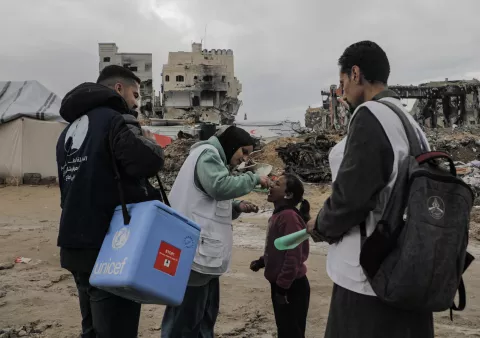
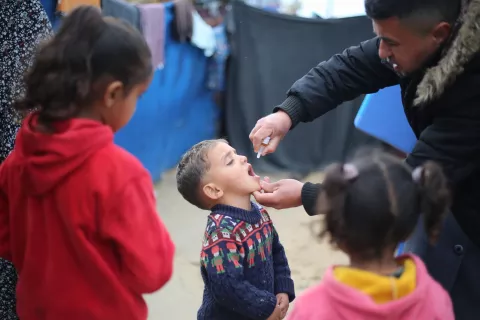
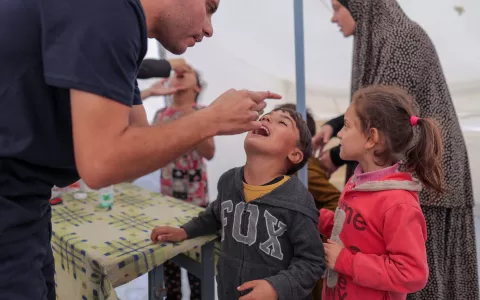
UNICEF is continuing to vaccinate children despite the challenges. In Sudan, UNICEF delivered 16 million doses of 11 vaccines, targeting over 630,000 children under the age of one, across the country between January and June 2025. Of these vaccines, over 3.5 million routine vaccines were delivered to Darfur where they will benefit more than 250,000 children, across the five states. In the Gaza Strip, UNICEF, WHO and partners carried out multiple rounds of polio vaccination in one of the most dangerous conflicts in the world, reaching more than 600,000 children under 10 years of age.
“We will persist, across vast countries and through dangerous zones to reach every child with routine immunization,” said Beigbeder. “But unprecedented conflicts are making this harder than ever and children are bearing the brunt. We need conflicts to cease but failing that, we need to ensure lifesaving primary healthcare services continue, supplies reach all corners of the region and health workers and civilians have the safety needed for vaccination campaigns to protect children, wherever they are.”
UNICEF is calling on governments and relevant partners to:
- Strengthen immunization systems to optimize vaccination of zero-dose children and prevent deadly disease outbreaks, especially in conflict and fragile settings;
- Prioritize local-led strategies and domestic investment, embedding immunization firmly within primary healthcare systems to close equity gaps;
- Counter misinformation and further increase vaccine uptake through evidence-based approaches;
- Close the funding gap for Gavi’s next strategic cycle (2026–2030) to protect millions of children in lower-income countries and global health security;
- Invest in stronger data and disease surveillance systems to guide high-impact immunization programmes.
###
Media contacts
Additional resources
About UNICEF
UNICEF promotes the rights and wellbeing of every child, in everything we do. Together with our partners, we work in 190 countries and territories to translate that commitment into practical action, focusing special effort on reaching the most vulnerable and excluded children, to the benefit of all children, everywhere.
For more information about UNICEF and its work for children, visit www.unicef.org/mena
Follow UNICEF on Twitter Facebook Instagram LinkedIn Youtube
Join our UNICEF MENA WhatsApp group to get the latest news. Send us a text message at the following number and we'll add you to our list: 00962790082531