Polio vaccination leaves no child behind
UNICEF is working partners to prevent the further spread of polio

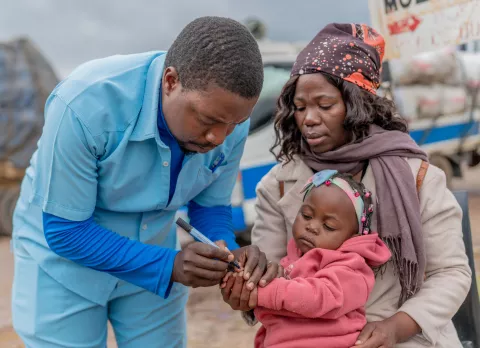
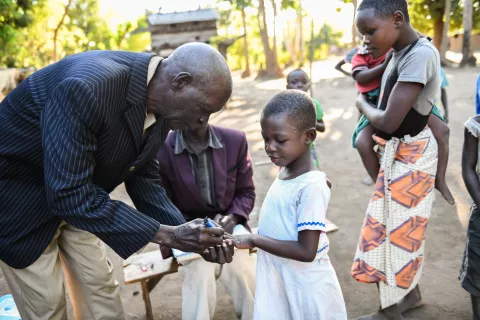
When two community health workers and a volunteer arrived in Chimayimba Village to vaccinate children against polio, Maria Banda was not surprised.
"For a week, our community volunteer, the village chief and religious leaders had been telling us to get every child vaccinated since Malawi has a confirmed polio case," she says.
Maria’s two-year-old son Blessings was one of the 106 children immunised that Sunday. The vaccinators came all the way to her home in the clustered village, located almost 26km north of Ntchisi District Hospital in the country's central region.
"This is a huge relief. I have saved time and money spent travelling to the hospital. Prevention is the only option because the paralysis caused by polio is not curable," said Maria .
Every second Tuesday of the month, Maria and her neighbours walk about four kilometres to have their children aged below five vaccinated at an outreach clinic held in Masokole Village.
"Receiving the vaccine at home also created a safe space for me to ask the health workers how polio spreads, why I should be concerned about the single case found in Lilongwe and how I can protect my only child."

In 1992, Malawi eradicated the paralysing disease that spreads through ingestion of food and water contaminated by faeces from an infected person.
The vaccine is the most trusted preventive weapon in the war to end polio globally.
The new case in Malawi triggered a regional campaign to vaccinate 9.4 million children in Malawi, Zambia, Mozambique and Tanzania.
UNICEF is working closely with the four governments to stop the possible outbreak following the discovery of Africa's first wild poliovirus case since 2016.
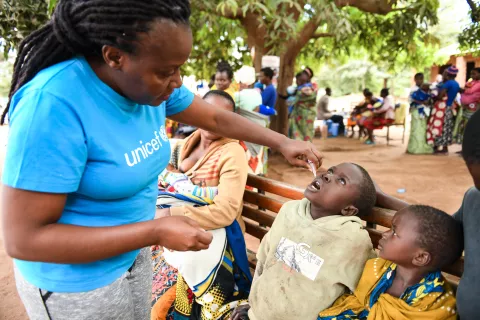
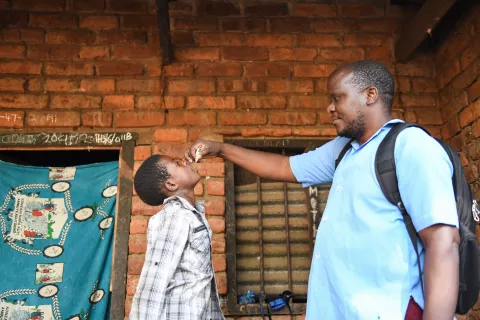
Masautso Ganizani, one of the 16 community health workers at Chinguluwe Health Centre, says the door-to-door vaccination helped them immunise all 106 children in the rural setting where just about 30 to 40 children get vaccinated during routine immunisation.
He narrated: "Normally, children receive the first polio vaccine doses shortly after birth, then the second shot after six weeks and two more after every four weeks.
"However, some default because of long distances and competing tasks. So far, we have been able to trace 14 children who skipped their routine polio shot in March."
Masautso and his teammate Winston Maseko are among 13 500 health workers trained by the Ministry of Health in partnership with UNICEF to effectively immunise children against polio. Together, they met their target to immunise 310 children in Ganizani's Msambaifa zone before reaching 106 in Maseko's Chimbiya side.

The community warns that skipping vaccines increases the risk of catching polio and fueling possible mutations as is the case with resurgent waves of COVID-19 variants.
Apart from the training, procurement of doses and delivery of doses to all health facilities, UNICEF supported the Ministry of Health to install 170 vaccine refrigerators and repair 135 old ones for safe storage of the delicate oral shots. It also seconded its staff to all 29 districts, which have dedicated expert teams on standby. The teams speedily mobilise and sensitise communities where the health workers meet resistance.
Lokesh Sharma, UNICEF Vaccine Management Specialist, says the door-to-door campaign is helping strengthen systems for routine immunisation for every child. It has given us a chance to interact with families once again and sensitize them on importance of routine immunization.
"Since the health workers are going house to house, we are generating evidence whether these areas are covered by routine immunisation or not.If there are any excluded areas, then we will add them to the routine immunisation micro-plan. This will help us improve the national imputation programme."
Sharma is happy that children who missed their scheduled polio vaccine doses are being traced in the regional push to safeguard their health.
"Full immunisation of children is vital so that no one is left out as adequate doses are available in the country.
James Morgan, District Health Officer in Ntchisi, says UNICEF support has eased the challenges faced by vaccinators when taking doses to remotest areas.
"From the provision of new vaccine refrigerators and maintenance of those that broke down to the supply of new vaccine carriers and motorcycles, the assistance is helping us get the polio vaccine doses to children even in tricky terrains before they expire. Ntchisi is hilly, so it is not easy to vaccinate children in every home," he says.
---
UNICEF, WHO and other partners of the Global Polio Eradication Initiative - Gavi, Bill and Melinda Gates Foundation, Rotary and Centers for Disease Control and Prevention, and the The German Federal Ministry for Economic Cooperation and Development (BMZ), are supporting the Ministry of Health to vaccinate all children under the age of five in four mass vaccination campaigns.