Learners call the shots in school management
Giving children a voice

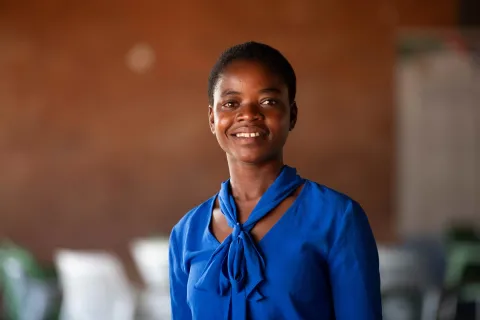
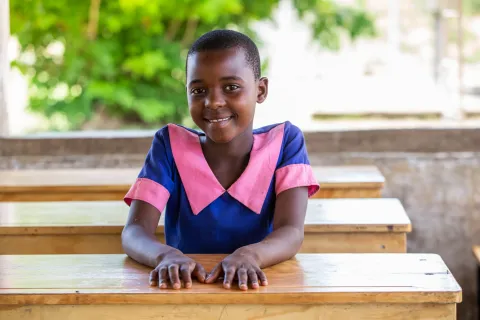
Charity Mseka, from Kati Village in Salima District, is soft-spoken and slow to anger.
The calm demeanour has earned the Standard Seven girl a seat at the helm of Kapila primary school learners' council.
The council of six girls and six boys represents children's interests in its interactions with teachers and the School Management Committee (SMC).
"It was surprising when teachers chose me as a vice-president in January 2023 and promoted me to the top in May when our president Cosmas William had sat primary school leaving examinations. This has made me a voice of the voiceless learners," she says.
Charity ensures that learners respect school rules but also refuse and report child abuse and rights violations.
"Our council mainly protects children's rights and well-being so that we can stay in school and achieve our dreams," she says.
The students’ council reported two teachers for coming to work late and knocking off without showing up in class.
"The teachers were not coming to teach, but for meetings and personal errands. As children’s representatives, we reported them to the headteacher and the SMC," says Charity, who dreams of becoming a "lawyer for the poor".
The learners' concerns about the sneaky teachers flooded a suggestion box placed in an open playground.
"Many children were spending hours without learning because teachers were busy with meetings, so the headteacher had to act," says Enoch Anderson, the boys' head prefect.
The headteacher ordered the teachers, who were absent without official leave, to return to work instantly.
"As children, we need a strong voice to hold teachers to account because they sometimes shield each other at our expense," says Enoch, who wants to become a police officer.

The students’ council is part of the United Nations Joint Programme on Girls Education (UNJPGE) reforms to make schools safe for every child to learn and achieve full potential.
UNICEF supports the initiative under the programme jointly implemented with UNFPA and the World Food Programme with funding from the Royal Norwegian Government.
Charity and Anderson sit on the SMC, where they participate in making big decisions, including making school improvement plans and budgeting school improvement grants.
"The learners’ participation gives children a say on school management and spending, which was once dictated by adults. They tell us children's aspirations and veto decisions that don't serve their interests," says Francis Chautsi, the Headteacher of Kapila Primary School.
SMC chairperson Sitima Lifa explains why learners’ representatives have to be at the decision-making table when topics for the good of children are tabled for debate.
He says: "Advancing the voice of the children in SMC helps the students’ leaders to not only become better leaders but also share learners' concerns about learning conditions, treatment from teachers and parents.
“They also alert us to child abuse by people who are supposed to protect them."
When a speaker, especially the children's representatives, takes a turn, the rest of the committee listens.

"The children speak their mind and we hear them out in silence. They set the agenda and give us feedback. Where necessary, we give them tips to share with their peers to create a better learning environment for all," says the SMC leader.
He salutes the students’ council for tackling teachers' absenteeism without fear or favour.
"The learners' representatives suggest solutions to what children want or are going through. We share insights and find a common ground for the good of the children. They speak freely and we respect their say," Lifa states.
The council’s persistence to hold teachers and parents to account has created a learning environment where children are treated with dignity and their say counts, he says.
"Their demands for fair treatment and accountability remind us that no one is above the law. Through their participation in the SMC, we work together to tackle the challenges faced by children," Lifa explains.
The students’ council rapidly informs school authorities about the hardship of boys and girls at risk of quitting school. They work with teachers and a mothers' group to bring back dropouts, including teen mothers and girls who marry young.
The writing on the staff room wall shows that about four percent of learners at the school with an enrolment of 960 quit, mainly due to teen pregnancies and child marriages.
Nearly half of women in Malawi marry before their 18th birthday and about one in three become mothers before reaching 19, according to the Malawi Demographic and Health Survey of 2015.
"When the learners inform us about dropouts, we work closely with teachers and mothers' groups to bring them back to school. If they are married, we dissolve the illegal marriage involving a boy or girl below 18, counsel the affected child and bring them back to school in line with the national readmission policy," he explains.