Giving young learners ‘a solid foundation’ – Memory’s story
A dedicated volunteer caregiver from Salima shares experiences at a Community-Based Child Care Centre supported by the Malawi Government, UNICEF, and partners.

Hands up if you've ever volunteered?
Hands up if you've volunteered consistently for 13 years?
Although I cannot know for sure - I would imagine the number of hands raised for question two will be very few.
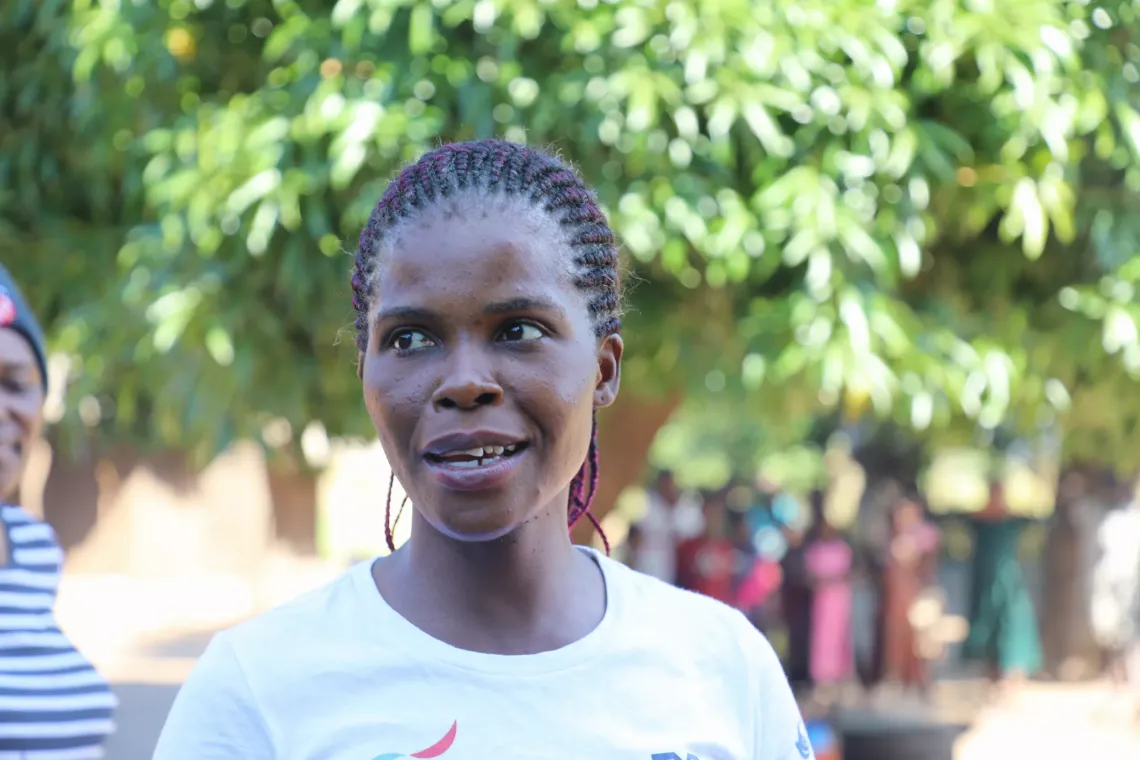
Last week I met an incredibly dedicated and skilled volunteer worker who has done exactly that. Memory Chafotaza has been volunteering since 2012 to care for young children in Traditional Authority (TA) Maganga in Salima district to - in her words - "give them a solid foundation,” and “to enlighten and empower communities.”
Chafotaza is from Salima, in the central region of Malawi. She assiduously runs the Jonasi Community-Based Children’s Centre (CBCC) and supervises three other centres in the area. Jonasi CBCC welcomes approximately 125 children aged between three and five years through their doors every weekday. Most parents drop off their children at the centre at 7 a.m., although ‘class’ doesn't officially begin until 7:45 a.m. and concludes at 11a.m.
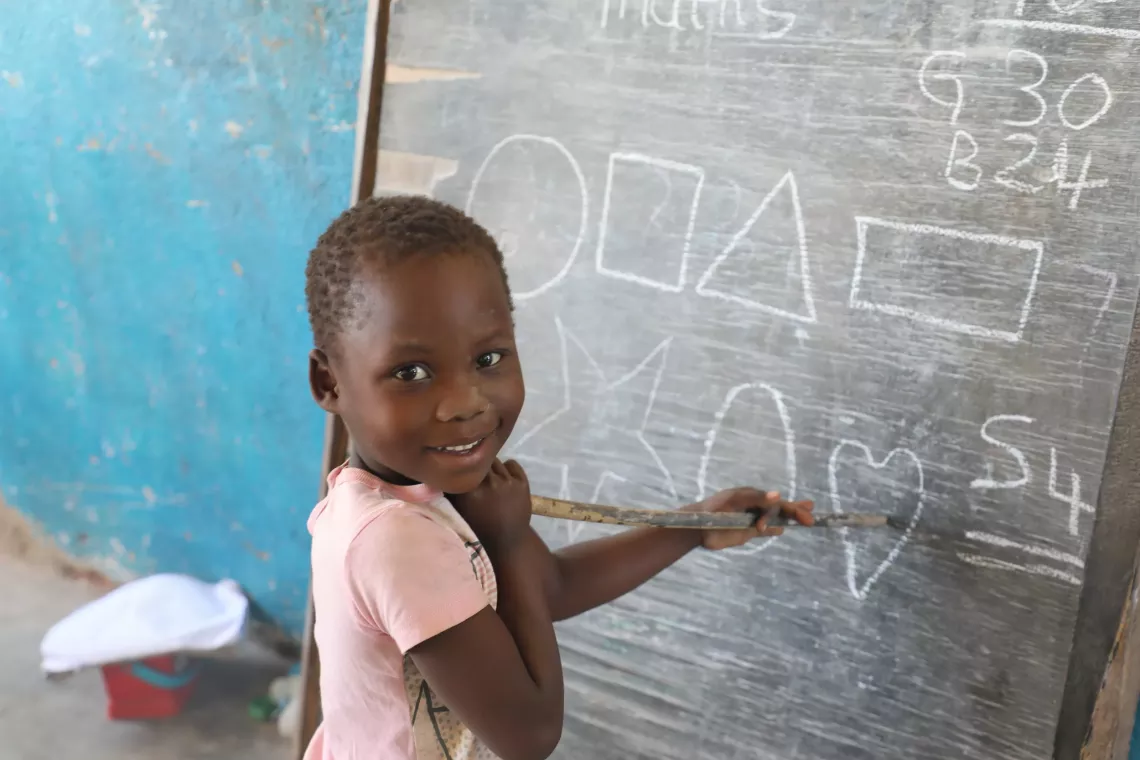
During those four hours, the children learn letters, shapes, how to count, how to speak phrases in English, and how to hold a pencil. The young learners also get a chance to play with their friends - whether it be ‘phada’ (hopscotch), ndado’ (jacks) or football - and the caregiver volunteers do their best to make playtime a time of learning too.
The team at Jonasi CBCC have also created a garden on which they grow maize so they can make porridge or other meals for the young learners.
"It's fine if it's not raining. But when it rains, we are not able to cook because we cook on charcoal outside as we have no kitchen structure," explains Memory.
For the 125 children, there are five caregivers. "There used to be 10 of us," Memory explains. "But because this is a voluntary role, they couldn't stay."
Memory also explains that the space for the CBCC was given by the community, and the building was erected by the community, although the local NGO paid for the construction.
Children aged four- and five-years are in the building while the three-year-olds have their lessons under a tree in the courtyard. "This also presents a challenge, because when it rains, we cannot teach the young ones."
Despite these obstacles, it is clear to see that Memory and the other four caregivers take delight in supporting these young children. The children were animated, playful and eager to demonstrate their learnings.
CBCCs operate under the Ministry of Gender, Community Development and Social Welfare, and UNICEF supports the ministry to oversee and support all the 13,295 CBCCs across Malawi. Through the support of UNICEF and partners, including KFW and the EU [donors], UNICEF supports the ministry to provide training to Memory and other lead supervisory caregivers. UNICEF also provides play and learning materials/equipment, including ECD kits to the ministry for the CBCCs.
Jonasi CBCC is a clear example of the solid foundation that these centres can provide to pre-schoolers. The young children learn how to socialize, how to learn basic foundational skills of learning and how to interact with teachers. Moreover, this is a safe space which supports parents who can then go to work to generate income for their families while their children are under the nurturing care of the volunteers.
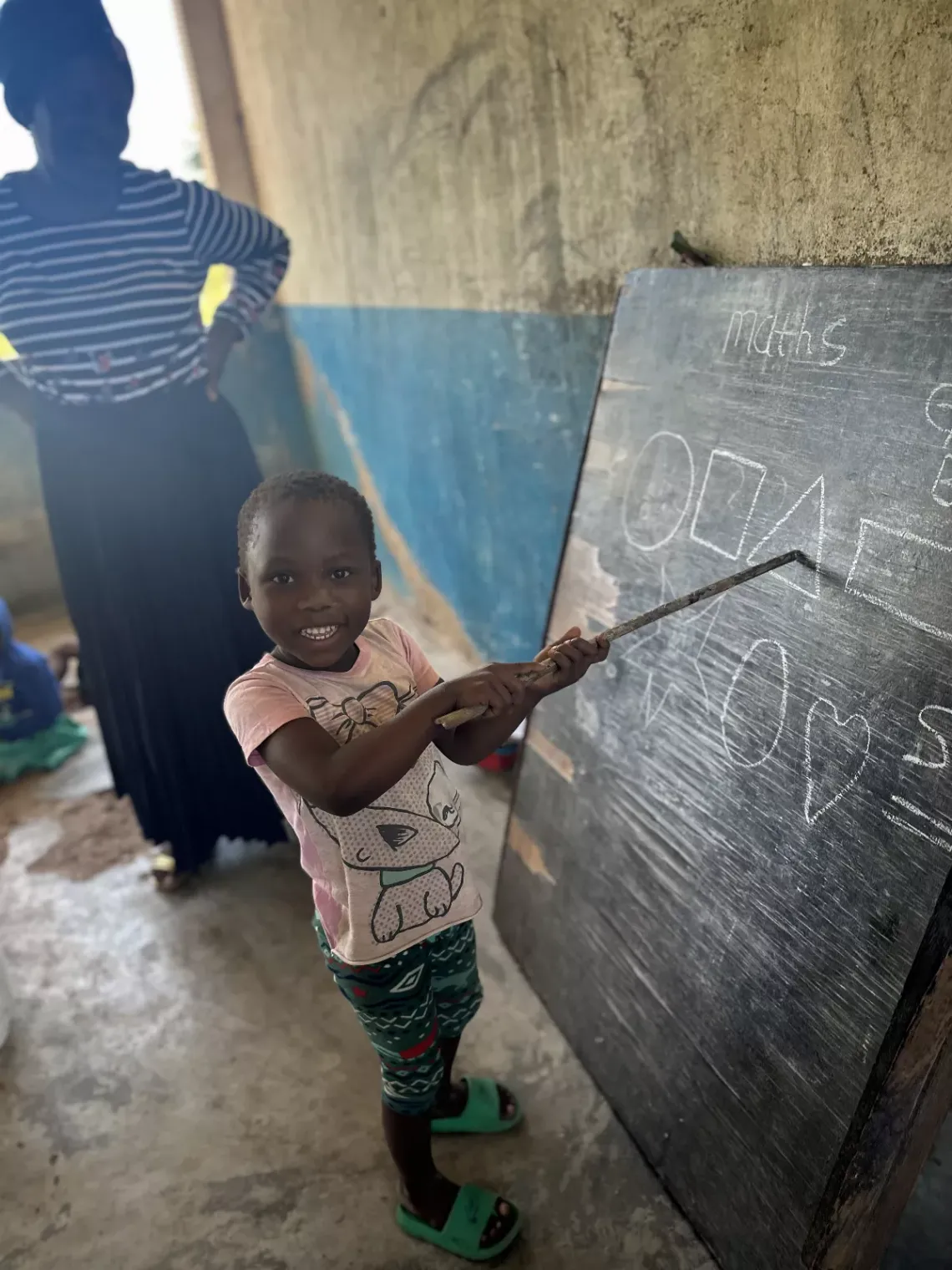
Yet challenges in respect of foundational learning persist. In Malawi, less than 20 per cent of children aged from seven to 13 years have foundational literacy skills. Less than 15 per cent have foundational numeracy skills. Furthermore, 81 per cent of children are in school, but not learning, more than a third are repeating classes in the first year of primary school. To remedy this, the Ministry of Basic and Secondary Education – with the support of partners, including UNICEF - has moved to introduce official pre-school classes to support the work of the CBCCs. The P-class is expected to be rolled out in phases, starting in September 2025. This new class aims to complement the efforts of the CBCC for supporting more children to gain basic foundational skills.
“We know that the foundation is important and this CBCC can help to reduce poverty and hunger for the community,” said Memory confidently.
Memory’s indefatigable commitment to improving the lives of the young learners beams through the smiles of the children. The children who were quick to laugh, play and learn illustrated the safety, assurance and confidence which Memory and her team were providing. Here in this corner of Salima, it’s evident that the dedication of the caregivers in partnership with non-governmental organizations, the Government of Malawi and its partners including UNICEF, children in CBCCs are being given a chance to thrive and to enjoy a better start to life.