

Afick’s dream to help fight climate change takes off
“I want to create solutions that help protect our environment.” Afick

In the rural village of Mpangiwa, under Sub-Traditional Authority Mwembele in Zomba, 17-year-old Afick Pangani is determined to engineer a better future for his community.
A Standard 8 learner and a member of Tigonjetse Youth Club, Afick is one of many young Malawians stepping up to tackle the climate crisis.
“I want to become an innovative engineer,” he says, eyes bright with determination. “I want to create solutions that help protect our environment.”
His journey began when Malawi University of Science and Technology (MUST), through its African Drone and Data Academy (ADDA) Incubation Unit, partnered with UNICEF Malawi to launch the Climate and Green Entrepreneurship Programme in June 2024.
Funded by the United Kingdom National Committee for UNICEF (UNICEF UK), the programme equips young people aged 12 to 25 years with knowledge and skills in climate-smart innovation and green entrepreneurship.
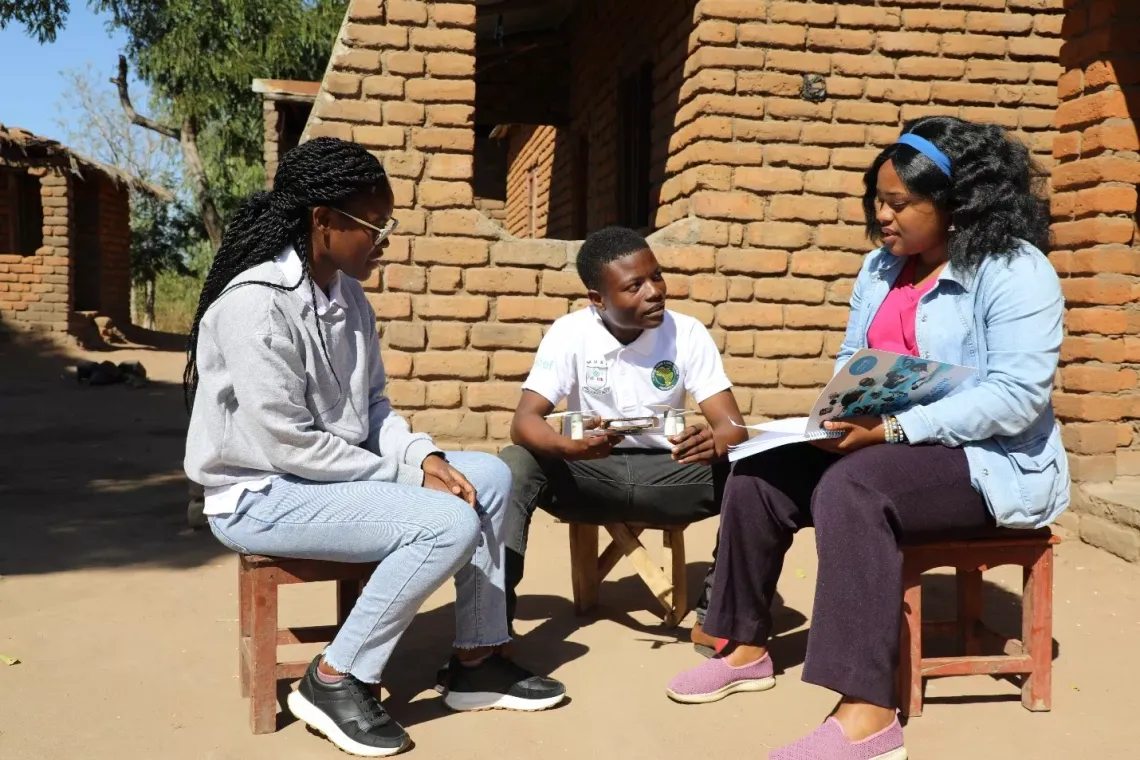
Through his youth club, Afick joined the training and quickly stood out for his creativity. Alongside his peers, he explored ideas like biogas energy, briquette production and drone-powered solutions.
Inspired, he began crafting a drone using locally available materials, a prototype he hopes to refine and use in reforestation efforts in hard-to-reach areas.
“I want to use technology to support my village,” he explains. “With the use of drones, I can help my community to monitor the state of our natural resources to inform actions such as reforestation in the most affected areas.”
Afick hopes the drones will help track the damage from natural disasters and enhance recovery of the impacted households from the disasters.
“We are already feeling the effects of climate change with the floods, droughts and poor harvests. I want to help change that,” he says.
The programme, implemented in two phases, focuses first on building climate literacy, then guiding the youth through co-creation and prototyping of their own solutions. Participants receive mentorship, design tools and hands-on training in engineering, outreach and problem-solving.

According to Ndapile Mkuwu, Project Manager for the ADDA Incubation Unit, the aim is to create a generation of climate leaders who can leverage innovative solutions to address challenges posed by climate change and its impacts in communities.
“We want young people to understand climate change and be part of the solution,” she says.
More than 100 young people have accessed the training under the programme, with some of them developing concepts for innovative recycling machines and drones to enhance agricultural productivity.
For Afick, the training has opened doors he never imagined.
“Before, I didn’t know how I could help. Now I believe I can. With the knowledge I’ve gained and the support around me, I believe nothing can stop me from helping bring about positive change to my community.”


