

Noel Beyard - Malawi
African Drone and Data Academy Students
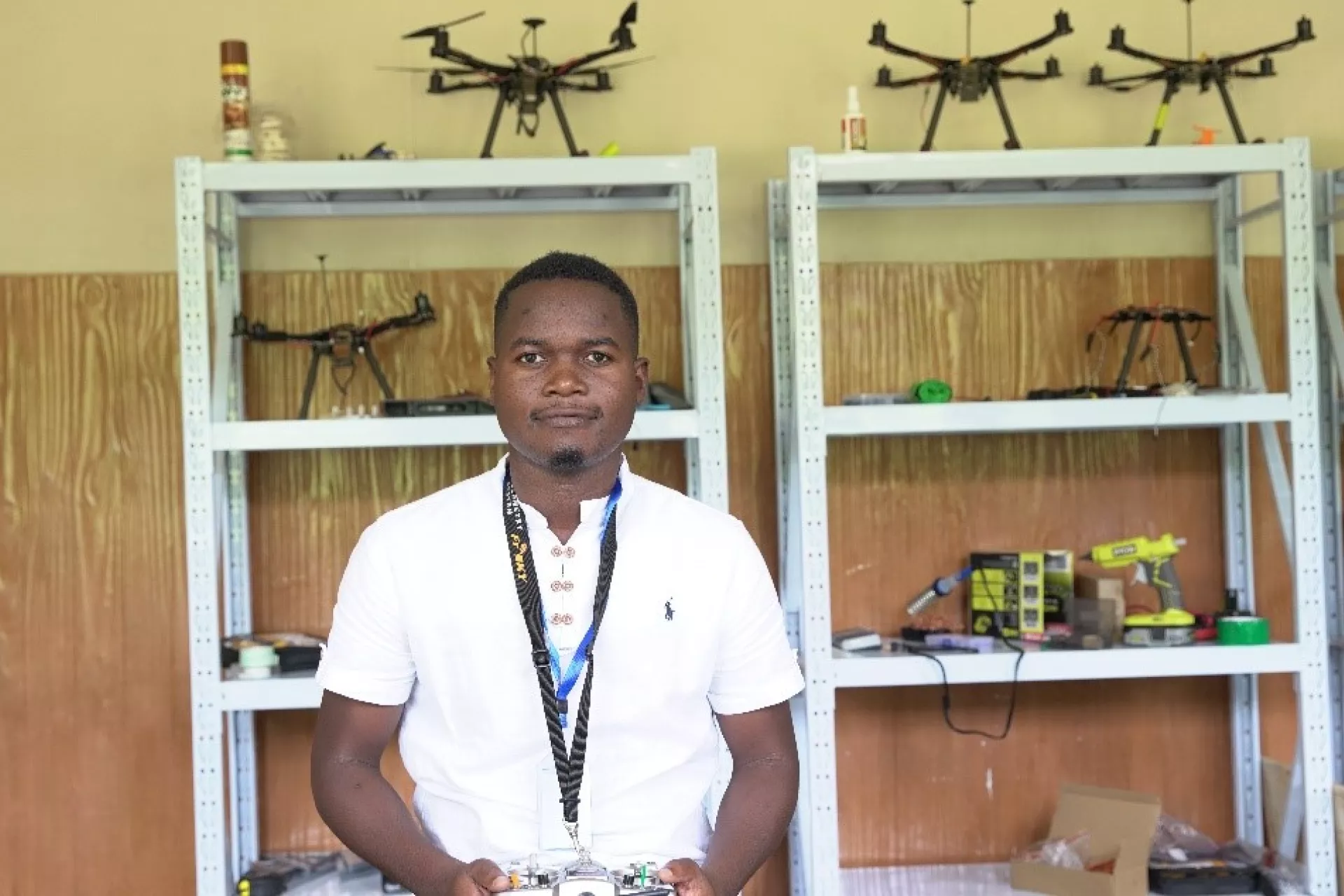
Noel Beyard is the firstborn in a family of six. He is very proud of the fact that he is the first person to have completed secondary school and graduated from college in his family. He has a bachelor’s degree in Applied Quantitative Science (data science and computing) from Arizona State University, the United States of America.
As a college student, I worked as a software developer intern for Edplus, at Arizona State University focusing on designing and delivery of digital teaching and learning models to increase student success and reduce barriers to achievement in higher education.
I was always interested in new solutions to help to solve some of the challenges that the world is facing. When I went to college, this interest accelerated.
I applied to get into ADDA because of the strong background that I have in data analytics, computer programming and aircraft operations. I was particularly interested to learn how drone technology can be leveraged to solve local challenges in healthcare, agriculture and urban planning.
So far, the learning process at the Academy has been comprehensive and collaborative, covering basic aircraft fundamentals such as propeller design, lift, aircraft regulations (both national and international) and operations. We also worked in teams to build a glider drone using computer-aided design software called Solidworks that will help us in the creation, modification, analysis and optimization of low cost, locally-made drone designs.
We have also learned a lot about data collection and analysis. Now I know how drones can be used to collect and analyze data. This is particularly important to me because I would like to use drones to make Malawi food secure by integrating drone technology into the agricultural sector. Drones can be equipped with cameras and sensors that can collect soil data, crop health data which after analysis can be used by farmers and agronomists in their decision making.
My expectations after graduating from ADDA is to get more training in innovation and entrepreneurship that will enable me to help solve humanitarian challenges in our country. I would also like to work as an operator/pilot to accumulate flying hours and experience that will enable me to start and operate a drone social enterprise.
With the majority of people being highly dependent on agriculture, Malawi’s population is highly vulnerable to the negative effects of climate-related disasters on their crops and animals. The knowledge, skills and the experience that I am getting here will help me to empower farmers to be food secure which will in turn help to reduce chronic under-nutrition for children which currently stands at 37 per cent for children under the age of 5.
As I think of how to use drones to benefit children and the community at large, I will adopt the human-centred Design (HCD) approach. This is because I believe that for technological solutions to have any impact and contribute to sustainable development, they must be focused on the end-user.