

Health
Good health, For every child

Our health programme at UNICEF Malawi
Malawi Growth and Development Strategy (MGDS) III is properly linked with regional and global UNICEF priorities (all aligned with the SDGs) UNICEF Malawi therefore, building on previous successes, use a rights-based, equity-focused and life cycle approach to young child survival, growth, development, and protection. Focusing on the first 1,000 days of life, which are crucial to child development, Malawian children often experience poor health care, stimulation, learning, and the absence of a protective environment. The challenges increase when children/mothers are also affected by HIV/AIDS and humanitarian disasters.
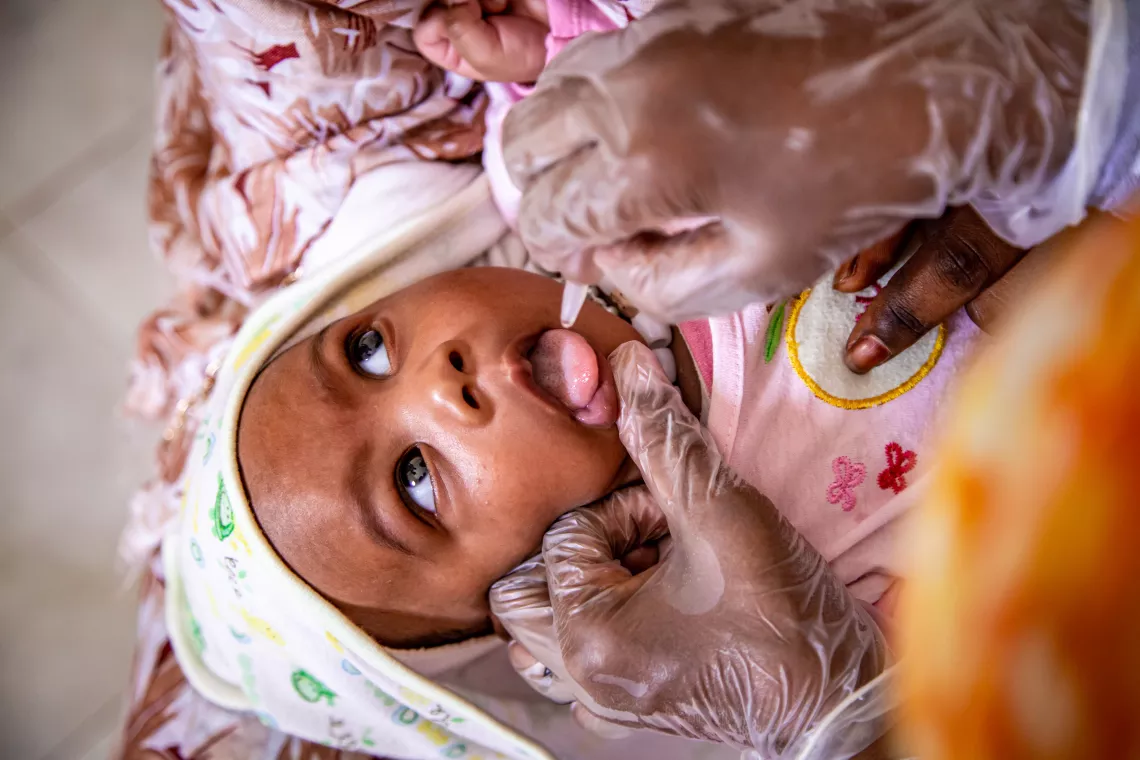
Ensuring every child has access to essential health services and a clean environment, UNICEF continues to invest in maternal and child healthcare, WASH, HIV, community resilience, and capacity building among healthcare workers. Strengthening community structures by providing a platform for key stakeholders and resources to convene at the grassroots level is key to success. By leveraging community platforms, UNICEF continues to support village health workers and provide clinics for children under five years with new vaccines for diseases such as malaria and substitute for vitamin A deficiency. These efforts have helped halved the rates of children who have not been immunized.
In 2019, more than 8,700 children have also commencing early treatment for severe bacterial infections such as meningitis, 95% of HIV exposed infants had access to early infant diagnosis and 76% accessed it within 8 weeks of life. UNICEF is also committed to ensuring improved maternal and newborn care as more than 90 per cent of deliveries are now conducted by skilled birth attendants. Over 95% of pregnant women attend ANC and have their capacity built for positive parenting.
UNICEF is continually leveraging its expertise in innovations and technology to ensure children enjoy their full rights and no child is left behind. For example, UNICEF with its partners advocated with the government to integrate POC testing for HIV in the diagnostic networks to improve turnaround time. In addition, UNICEF in collaboration with its partners tested the integration of drones into the health supply chain system to deliver emergency supplies and blood samples in hard-to-reach areas.
COVID-19 pandemic has a significant strain on health workers' time and resources. Mentorship and supervision activities were delayed or aligned with guidelines to observe social distancing. UNICEF has mobilized resources to ring-fence some of the MNH QoC activities to alleviate the pressure on the health systems. With 346 Health workers infected with COVID-19, UNICEF anticipates a decline in health-seeking behaviour for fear of contracting COVID-19 from health units.
UNICEF in collaboration with its partners is monitoring service continuity across the country to identify any disruption in the provision of essential health packages. Addressing the concern of service disruption due to facility-based infections, UNICEF is working with the department of preventive health through the provision of robust infection prevention and control measures in targeted districts.