A mother’s hope, strengthened by community
Building resilient health and nutrition systems for mothers and children in Lesotho

When Lerato Molamola went into labour at 10 p.m., she did not panic.
Instead, she reached for her phone and called the Village Health Workers she trusted in Ha Lemphane. Within minutes, they were by her side, escorting her to Bethel Health Clinic. By the time they arrived, the nurses were ready.
“When we reached the clinic, they were prepared to assist me,” Lerato recalls. “I felt safe.”
For Lerato, a mother of three, that sense of safety did not begin that night. It had been built over months of consistent follow up, guidance and encouragement from the Village Health Workers in her community.
She had returned home from South Africa during her pregnancy. It was the Village Health Workers who advised her to begin antenatal care at Bethel Clinic. They reminded her of her appointments. They checked on her. They made sure she did not miss critical visits.
In many parts of Lesotho, such follow up can mean the difference between life and death.
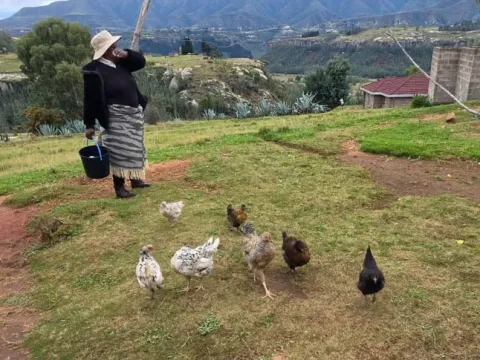
The country continues to face a severe climate driven humanitarian crisis. Prolonged drought, erratic rainfall and extreme temperatures have reduced agricultural production and deepened food insecurity. In districts such as Quthing and Mohale’s Hoek, stunting rates remain alarmingly high, and hundreds of thousands of people are projected to face crisis levels of food insecurity
For families who depend on subsistence farming, drought does not just mean failed crops. It means fewer meals. Less dietary diversity. Greater risk of illness. For young children and pregnant women, it increases vulnerability to malnutrition, which can silently undermine growth, brain development and long-term wellbeing.
Mathabo, who has served as a Village Health Worker since 2003, has witnessed this shift over the years.
“We have been challenged by drought,” she explains. “Because of water scarcity, our plants were dying. Food production was affected, and some children were malnourished.”
In response, communities began communal gardening efforts. Village Health Workers intensified nutrition counselling. Growth monitoring became more urgent. Every child’s weight and development mattered.
With support from the Government of Japan, UNICEF is strengthening nutrition integrated health systems at both community and facility levels to respond to these growing risks
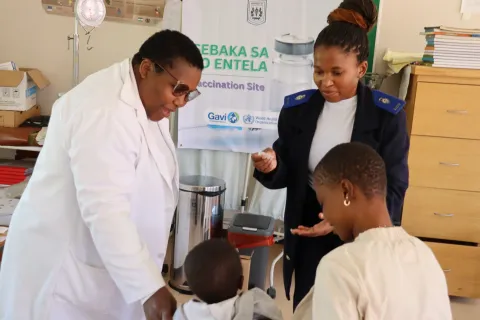
Nearly 1,000 Village Health Workers have been trained to systematically screen children under five and pregnant and lactating women, identify early signs of acute malnutrition, and ensure timely referral and follow up. Standardized case management protocols now guide care. Referral pathways between communities and clinics have been strengthened to reduce delays in treatment.
For Lerato, this support became personal the moment her baby was born.
After delivery, Village Health Workers visited her at home to check on both mother and child.
“They taught me the correct way of breastfeeding,” she says. “They recommended exclusive breastfeeding for six months. During that time, they were also preparing me for what to feed my child afterwards.”
Through a local nutrition club, she learned about dietary diversity, hygiene and how to prepare nutritious meals for her baby once complementary feeding began.
“I learned things I did not know before,” she says. “I found great benefit.”
Her child received all necessary vaccinations because of the guidance and reminders from the health workers. Regular monitoring ensured that growth milestones were tracked closely.
Mapontso, a Village Health Worker since 2014, describes her role as a bittersweet responsibility.
“It demands patience,” she says. “Sometimes people are resistant. Some men are reluctant to come to clinics. But it is good work. We help our community.”

Today, her work is supported by digital tools. Through the Community Health Information System, she records household visits and growth monitoring data using a tablet.
“In the past, we used pen and paper. Sometimes records were lost,” she explains. “Now I capture data in real time.”
The system strengthens accountability, improves data quality and ensures children who are referred to clinics are followed up properly. It reduces the risk that vulnerable children are lost between community and facility care.It also builds credibility.
“I think the community takes us more seriously now,” Mapontso says. “The devices bring professionalism.”
Recently, Lerato noticed that her baby developed a rash that would not disappear. She tried adjusting his diet, but when it persisted, she returned to the clinic.
“I am hopeful it will be cured,” she says. “Because of the attention I am getting.”
That hope reflects something larger.
In a context where climate shocks continue to threaten livelihoods and food security, strengthening community-based nutrition systems is not only about responding to emergencies. It is about building resilience that endures beyond the drought.

Through the support of the Government of Japan, frontline health workers are better trained, referral systems are stronger, data systems are institutionalized, and mothers are more informed and empowered.
Children are being screened earlier. Treated faster. Followed up more consistently.
For Lerato, resilience is not an abstract concept. It is the Village Health Worker who answers her call at night. It is the reminder not to miss an antenatal visit. It is learning how to breastfeed correctly. It is knowing that someone will check on her child’s growth and recovery.
“The Village Health Workers are doing such great work in the communities,” she says. “We appreciate their support.”
In Bethel, that support is helping ensure that even in the face of climate uncertainty, children are not left behind, and that mothers carry not just the weight of responsibility, but the reassurance of a system that stands with them.