Growing health and hope through nutrition clubs in Lesotho
How women are coming together to relearn practical nutrition skills and strengthen the wellbeing of their children and families

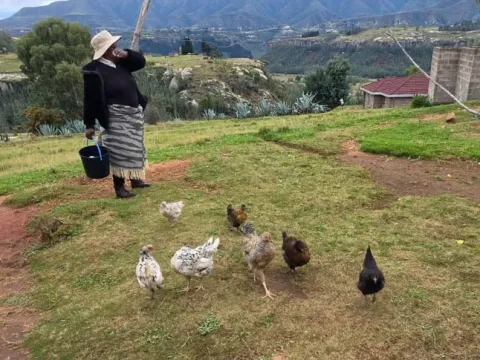
Before joining the Ema le rona Nutrition Club, Mantsebeng Ntomane says many families in her community were no longer actively practicing some of the nutrition and food preservation methods that once helped households maintain balanced diets and healthier lifestyles. Like many caregivers in rural Lesotho, daily priorities focused mainly on putting food on the table with the limited resources available, while some important household nutrition practices had gradually been neglected over time.
When the Ema le rona Nutrition Club was established in January 2025 under the Ntlafatsa Bana programme, it created an opportunity for women in the community to come together, relearn practical nutrition skills and strengthen the wellbeing of their children and families.
Mantsebeng Ntomane, a member of the Ema le rona Nutrition Club, says the initiative has helped women in her community rediscover practical nutrition and food preservation skills that had gradually faded over time.
“Before the establishment of our club, we did not know much about nutrition clubs,” she explains.
Today, the club has become an important space where women come together not only to learn about nutrition, but also to support one another in improving the wellbeing of their children and families. Members meet regularly, contribute small monthly subscriptions and work collectively to strengthen household nutrition practices within their community.
In Quthing, where stunting remains a significant challenge affecting children’s growth and development, nutrition clubs are helping communities strengthen household nutrition and improve children’s diets through practical, community-based solutions. Reitumetse Seboka, an Extension Officer from the Ministry of Agriculture and Nutrition based at Ha Khoali Resource Centre, works closely with nutrition clubs and farming households in the area. According to Seboka, the clubs help empower families to grow their own fresh produce, while also teaching members how to create sustainable livelihoods through activities such as food preservation and the production of foods like bread and motoho, (a fermented, non-alcoholic sorghum beverage) that can be sold within the community.
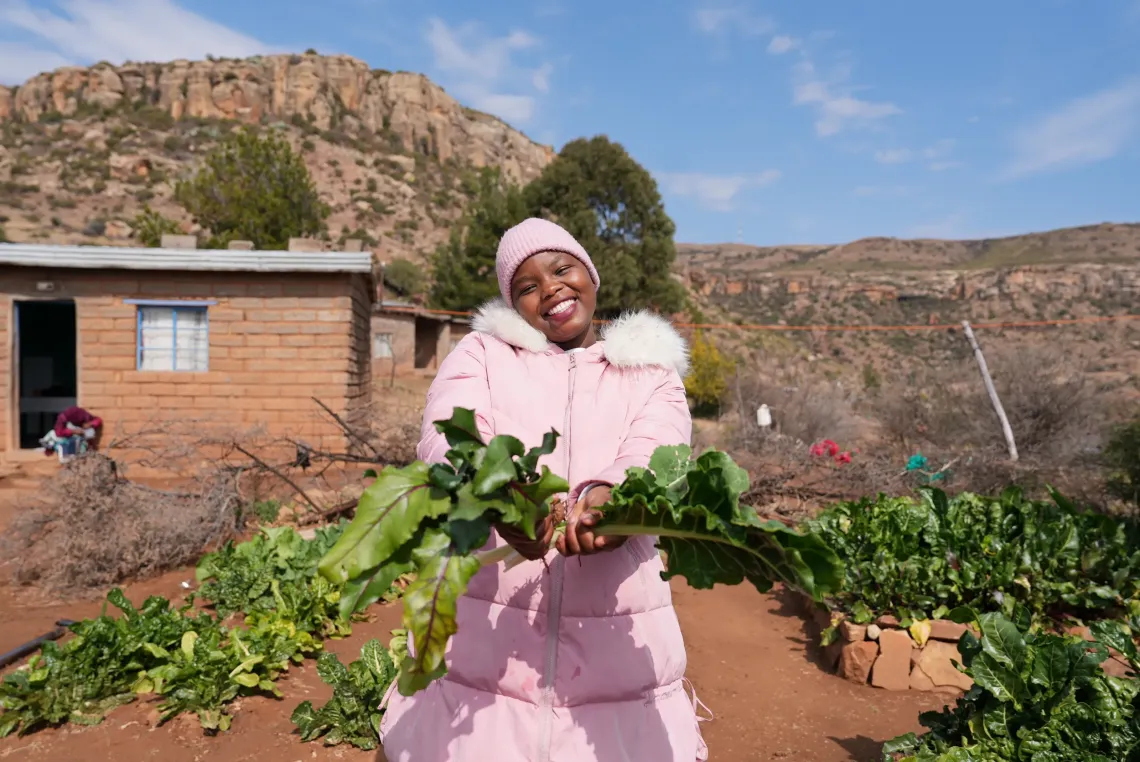
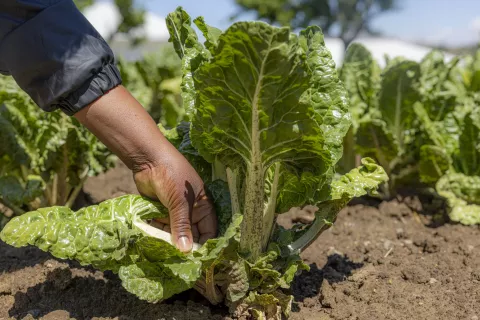
Through the clubs, caregivers receive practical training on household gardening, food preparation, food preservation and child nutrition. Families are learning how to grow vegetables at home, prepare more nutritious meals and preserve food for future use. Children also benefit from regular growth monitoring and vaccinations provided through support from the Ministry of Health.
“We were taught how to improve our household gardens to grow vegetables and how to prepare food using different cooking methods,” says Ntomane. “Our children also receive regular growth monitoring and the necessary vaccinations.”
For many households, the impact is already visible. Families are producing more food at home, improving hygiene around their households and ensuring that young children receive more balanced diets. The additional knowledge and skills are also helping families stretch limited household income further. By selling surplus produce and preserved foods, some members are now able to buy other nutritious foods such as eggs to ensure their children receive balanced diets.
The club has also become a place where women share knowledge and strengthen one another. Members are learning food preservation techniques that help households reduce waste and keep nutritious food available for longer periods, while also passing skills from one member to another within the community.
“I have seen a huge difference since we started,” Ntomane explains. “We no longer buy vegetables because we grow our own. Our young children are now eating well, and with the little income we make from selling surplus produce, we are able to buy other foods like eggs to ensure they get a balanced diet. We are very happy because we have gained so much knowledge we did not have before.”
For Ntomane, the Nutrition Club is no longer simply a community gathering. It has become a source of knowledge, empowerment and resilience that is helping families improve the health and wellbeing of their children.
Ntlafatsa Bana is a collaborative initiative of the Government of Lesotho the European Union and UNICEF Lesotho. The programme aims to improve the wellbeing of children and families supported through the Child Grants Programme by strengthening access to integrated services including nutrition, water, birth registration, social protection and sustainable energy solutions.
Through the programme, 47 nutrition clubs have been established across communities, while 900 children and 1,700 women and adolescents have been reached with nutrition services.
For caregivers like Mantsebeng Ntomane, the impact goes beyond improved meals. The programme is helping communities rebuild knowledge, strengthen resilience and create healthier futures for children, one household at a time.