Voices of Change Help Break the Silence on Menstruation
Improving menstrual health and hygiene for adolescent girls

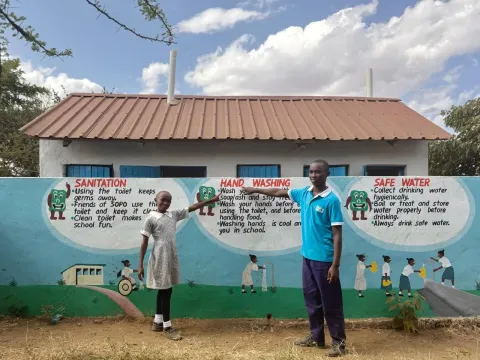
In a Kenyan school, teenagers gather in a classroom for their weekly health club session. The room is filled with laughter and energy. As the facilitator begins, he holds up a reusable sanitary pad, sparking an animated yet thoughtful discussion. Together, the students talk about what menstruation means, share practical hygiene tips, and learn how to support one another through the changes of adolescence.
It’s Thursday afternoon at Ngunyumu Comprehensive School in Korogocho, an informal settlement in Nairobi, the nation’s capital. As the world observed Menstrual Hygiene Day on Thursday, May 28, health clubs like this one are creating open, safe spaces where boys and girls alike learn about their bodies and discuss what it means to become an adult.
Through the weekly health club sessions, the pupils gain valuable knowledge about physical and psychological changes, proper hygiene practices, and important health topics that affect their daily lives. Destiny Blessing, 15, is a member of the health club and looks forward to the weekly informative sessions.
“During the health club meetings on Thursday afternoon, we learn about physical and psychological changes and general body hygiene, including health messages that proper handwashing with soap is crucial before and after using the restroom. We also learn that menstruation is a normal topic that we should be eager to discuss,” said Blessing, a Grade Nine learner.
Vaclinshian Odhiambo, 12, a Grade 7 pupil, says the health club has taught him to act with care and concern, and pledges to support his female peers who need support during this time, emphasizing that menstruation should never be a source of shame or exclusion, but a moment for solidarity, dignity, and shared responsibility among the students.

“I enjoy being a health advocate. Our health club sessions, where we learn about bodies and discuss issues like menstruation, have been eye‑opening, teaching us how to support girls in their time of need. The health club has also shown us, as males, the importance of practicing personal hygiene and standing in solidarity with our female peers,” Odhiambo said.
Kenya has made significant progress in both legal and policy areas surrounding menstruation, including the removal of Value Added Tax on sanitary products in 2004 and the Basic Education Amendment Act (2017). The Menstrual Hygiene Management (MHM) Policy 2019–2030 also outlines Kenya’s forward-thinking approach to the issue. However, implementing these laws and policies remains a challenge.
Eric Inda, Nairobi County’s water, sanitation, and hygiene (WASH) coordinator, says effective menstrual hygiene management requires a multi-sectoral approach that brings together access to sanitary materials, menstrual health education, and the implementation of equitable policies that ensure the dignity, safety, and uninterrupted education for all adolescent girls, especially those from low-income families.
“Menstrual hygiene is an important conversation that we begin at the household level, extend to the community, and further reinforce in schools through the health clubs, to break the silence about menstruation and ensure girls receive support,” said Inda.
Inda adds that the menstrual hygiene management programmes in county schools are supported by 17 sub-counties, with focal persons coordinating efforts to ensure access to clean, safe water and adequate menstrual hygiene support.
In December 2025, the county approved two self-declared flexible menstrual leave days each month for female employees, recognizing menstrual health as a critical human resource policy and acknowledging that a woman’s productivity is influenced by her overall well-being.

UNICEF Kenya WASH officer Winnie Mandela Rakwach says UNICEF Kenya works with the Ministry of Education, Ministry of Health, primary schools, and community-based organizations such as Huru International to improve menstrual health and hygiene for adolescent girls.
"Thousands of girls and women face the painful reality of missing school because they cannot afford sanitary pads. We are committed to changing this narrative by providing menstrual health information through school health clubs and increasing access to affordable sanitary pads. This will help ensure that girls who might otherwise miss school can remain in class, focus on their education, and thrive in a supportive and dignified environment," said Rakwach.
Stephen Irungu, a Huru International facilitator, has created a bold, respectful environment through the school-based health club sessions. He says the goal of the health clubs at the primary schools is to engage boys, girls, and their teachers as “period champions”, fostering a free, accommodating, and inclusive space where positive ideas are shared. Menstrual hygiene discussions are normalized, ensuring bullying or shaming do not take place.
“In the general community, everyday discussions about bodily changes during adolescence for both boys and girls are often difficult. Menstruation is also considered a taboo subject in Kenya, as in many other countries. When girls get their first period, they are often not well-informed about the changes occurring in their bodies,” Irungu says.
He adds that the health clubs have become open spaces where boys become more informed. Involving men and boys in discussions about menstrual health is key to breaking the silence, stigma, and taboo in communities and schools.
“Boys and men play a vital role in supporting menstrual hygiene management. For fathers like me, we become role models, decision-makers, and budget holders, who need to be engaged,” Irungu says.
The taboo around menstruation is more acute In Kenya’s informal settlements, where thousands of girls and women face the painful reality of missing school, work, and community life because they cannot afford sanitary pads and don’t want to go to school without them.
“The lack of sanitary pads leads to absenteeism and to stigma and discrimination stemming from myths and misconceptions that menstruation is socially embarrassing,” says Huru International country director, Wanjiru Kepha.

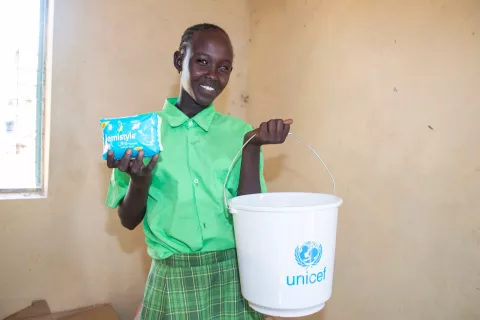
Partnering with UNICEF Kenya, Kepha and her team are working to change the story by providing affordable, reusable sanitary pads to families who would otherwise go without them.
“A sanitary pad is a basic need that every girl and woman should have so that dignity can be maintained during this critical time of the month, ” Kepha says.
She adds that the health clubs create a warm and inviting atmosphere to combat deeply rooted cultural stigmas and embarrassment surrounding menstruation, and they encourage girls to remain in school and eventually pursue their lifelong professional dreams.