Deferred Dreams in Dadaab: A Teen Mother’s Struggle to Balance Education and Care
Providing safe spaces for young mothers

She fled home to seek refuge in an unknown land.
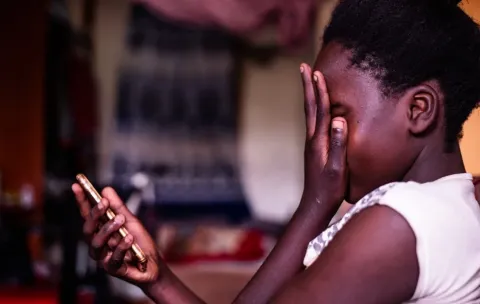
Her uncle’s intervention saved her when he revealed her father’s secret plans to marry her off. Nyala (not her real name) ran away, acknowledging that despite being a teenage mother, she deserved better. As a 16-year-old, Nyala carried the weight of two lives, her own and that of her toddler, when she fled South Sudan for Kenya to seek refuge at the Dadaab refugee complex.
Through dust and danger and with the help of her uncle and his friends, Nyala took the long and uncertain trek from her home to another country. Setting her goal to reach Dadaab refugee complex in Garissa, Northern Kenya, she ran away from a forced child marriage arranged for her. Like all children, Nyala has the right to safety, education and protection from harmful practices such as child marriage. Despite being a young single mother, Nyala longed for a better life, a life in which she would complete her education, enroll her daughter in kindergarten, and build a better future for them.
The journey on foot from South Sudan was long and punishing. Nyala carried her child and walked for days on end, seeking shelter in the night by knocking on doors and telling her story to those who would listen and help. Some doors were opened, and others were shut, but she kept on going.
After five months, she finally reached Dadaab, the world’s largest refugee settlement. Despite the arduous and harsh journey, the young mother arrived in the camp filled with hope that she made it safely, away from a forced child marriage and a future she did not want.
In the early days upon arrival in Dadaab, Nyala was hosted by other refugees from South Sudan, who helped her settle into the camp. She was welcomed by her countrymen and countrywomen who have also fled from South Sudan for various reasons, including the civil war.
With their help and advice, Nyala began to stitch her life back together. She applied for and was able to secure the initial registration pass that recognized her as a refugee. Nyala hoped she could continue her education while caring for her one-year-old daughter.
Two years on, she and her daughter live by themselves in a two-room tin-roofed house within the settlement. Nyala relies on relief support from donors supporting the refugee settlement. Whatever help she gets is supplemented with earnings from casual jobs like washing clothes for the neighbors, and hair plaiting. She uses the supplementary income to buy necessities like food and clothes for herself and her daughter.
In early 2025, Nyala was finally able to enroll in school but childcare was an issue.

“In the past six months, I have only attended school twice because I have no one to care for my daughter, and she is still too young to be in school herself. I cannot wait for the moment when we can both walk into a classroom, and as she learns, I continue with my own education. More than anything, I hope for the support that will allow me not just to go back to school regularly, but to stay in it so that I can build a better future for us both,” she said.
Despite these setbacks, Nyala remains hopeful and looks forward to the time when she could return to full-time learning, complete her secondary education and continue onwards to tertiary learning to pursue a degree in medicine.
“I dream that one day, my daughter can look at me with gratitude, recognising how far we have come together—that I was able to give her a chance for a future, even as I continued to chase my own dreams,” Nyala notes.
Nyala also benefits from a teen mother’s support group at the Ifo Child Friendly Space (CFS) center, which provides safe, nurturing spaces for young mothers and their children. Here, she meets fellow young mothers and adolescent girls, where they gather and receive psychosocial support. At the CFS, Nyala’s daughter also has the opportunity to play with other children who go to the center.
The UNICEF supported CFS is an all-inclusive, comprehensive support hub that integrates various child protection interventions, such as psychosocial support, providing individual and group counseling to enhance emotional well-being, resilience, and social connectedness among vulnerable children and adolescents.
“The community lay counselors use expressive arts and play therapy for survivors of trauma such as Gender Based Violence. We also host life skills education, peer support, recreational activities, parenting support for adolescent mothers, and awareness sessions on child rights, gender-based violence prevention, and positive coping mechanisms. For young mothers such as Nyala, the support groups offer a safe space to share experiences,” said Tukow Nuuh, a programme manager at the CFS center.
The center also provides individual and group counseling for young women to help build their confidence and strengthen their child caregiving skills. In addition, the CFS provides referrals to specialized protection, health, and education services as needed. Nyala’s daughter also benefits from age-appropriate play and early childhood stimulation activities organized by the CFS center, that support children’s healthy growth and development, ensuring they thrive.
Child Friendly Spaces such as the one in Ifo are made possible through the support of various donors and partners, including the Kenya Humanitarian Fund. UNICEF Kenya works together to provide comprehensive child protection services and mental health support for young mothers and adolescents such as Nyala, their children, and children with disabilities in collaboration with the Government, implementing partners and refugee-led organisations.
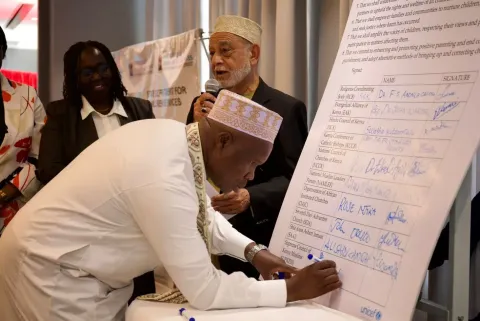
Pauline Akinyi, UNICEF Education and Child Protection Officer, is responsible for ensuring this crucial programme runs in the refugee settlement. “UNICEF, together with our partners, are working together to ensure we can provide a protective environment for refugee and host community children in Dadaab through integrated child protection and mental health and psychosocial support services. We actively engage communities, young people, religious leaders, and other key actors—sharing positive messages on safeguarding children, encouraging proactive identification of protection risks, facilitating safe referrals for refugees, and creating child‑friendly spaces,” said Akinyi.

Akinyi stressed that the funding support from the Kenya Humanitarian Fund, and the strong partnership between humanitarian organizations and the county government in Dadaab make it possible to deliver comprehensive services for the refugees and their host communities. The support includes case management for vulnerable children, establishing and running child-friendly spaces, putting in place community-based protection mechanisms, providing support for unaccompanied and separated children, delivering mental health, psychosocial support, and disability inclusion interventions, and supporting frontline workers to ensure children receive timely, quality, and coordinated protection services.
“Together, these efforts build a culture of safety and resilience for children in the settlement,” said Akinyi. “Without the support of our donors and partners, all of these critical and life-saving interventions would not be possible.”
Amidst this backdrop, Nyala remains full of hope. With the continued support and partnership of many in the humanitarian and development sector, Nyala and many others like her have a chance to dream and look forward to what the future holds.