From Abandoned to Adored
In Dadaab refugee settlement, a newborn left alone behind a stranger’s house has found a family and a neighborhood determined to protect him

Halima stands at the doorway of her house, watching tenderly as baby Mohamed sleeps under a mosquito net. The chatter of children playing outside and a radio from a neighbor’s house do not disturb his daytime nap. The baby sleeps with the serenity of a child who has no memory of the cold ground where he was found five months ago.
One cool and windy evening in May 2026, Halima heard a faint cry coming from behind her house. Upon checking, she found a newborn baby, barely a week old, wrapped in a blanket and left on the ground. Without hesitation, Halima picked him up, held him close, and carried him inside her house, where her children were having their evening meal.
“That night, I heard a faint cry behind my house, and I ran to check whether one of my neighbor’s children was still outside. I saw a well-wrapped bundle, with tiny hands in the air. With no adult in sight, I picked him up and took him into the house and called my husband to inform him of our newest guest,” Halima said.
Her husband immediately alerted a child protection officer living nearby, who advised that the family take the newborn to the health facility for a check-up with the paperwork to follow.
Efforts to trace the baby’s mother were unsuccessful, so Halima became the baby’s foster parent, a responsibility she describes as a blessing.
Today, Mohamed is about six months old. He is healthy and growing well under the love and care of his foster family. Everyone pitches in to take care of Mohamed, with the older children taking turns to feed him and watching over him while Halima tends to other household chores. Baby Mohamed has also become a source of joy for the neighborhood, where everyone has taken it upon themselves to look out for him.
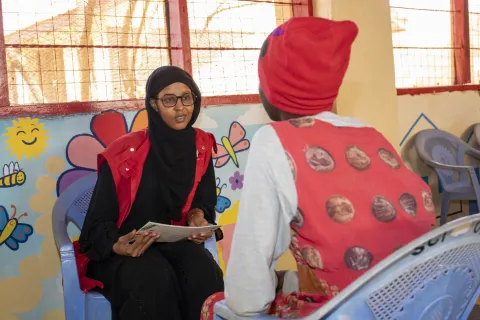
After finding baby Mohamed, Halima and her husband took part in the Positive Parenting Programme sessions which take place at the Child Friendly Space (CFS) Center in the Dadaab refugee settlement. In the CFS, both mothers and fathers learn child-centered parenting practices and how to raise children in a safe, healthy and nurturing environment.
Hassan, a child protection volunteer who facilitates the positive parenting sessions at the CFS Centre, draws real-life examples to show that parenting is not without challenges that husbands and wives must face together during their journey. To make his point, he often turns to a Swahili proverb. “A family is like a palm tree - it bends in the wind but never breaks. It’s very important for both parents to work together and support each other as they raise their children,” Hassan says.
For any family, fostering is a big responsibility as it shapes the course of a child’s life. In another homestead, about a 20-minute walk away in the same neighborhood, a family took in a baby boy close to 20 years ago. Today, that baby boy is a grown man who dreams to be a computer scientist.
According to Pauline Akinyi, Child Protection Officer at UNICEF Kenya, the CFS centre established by UNICEF and partners works as a one-stop centre, offering a range of child protection services, and a safe and supportive environment for children and their caregivers in the refugee settlement.
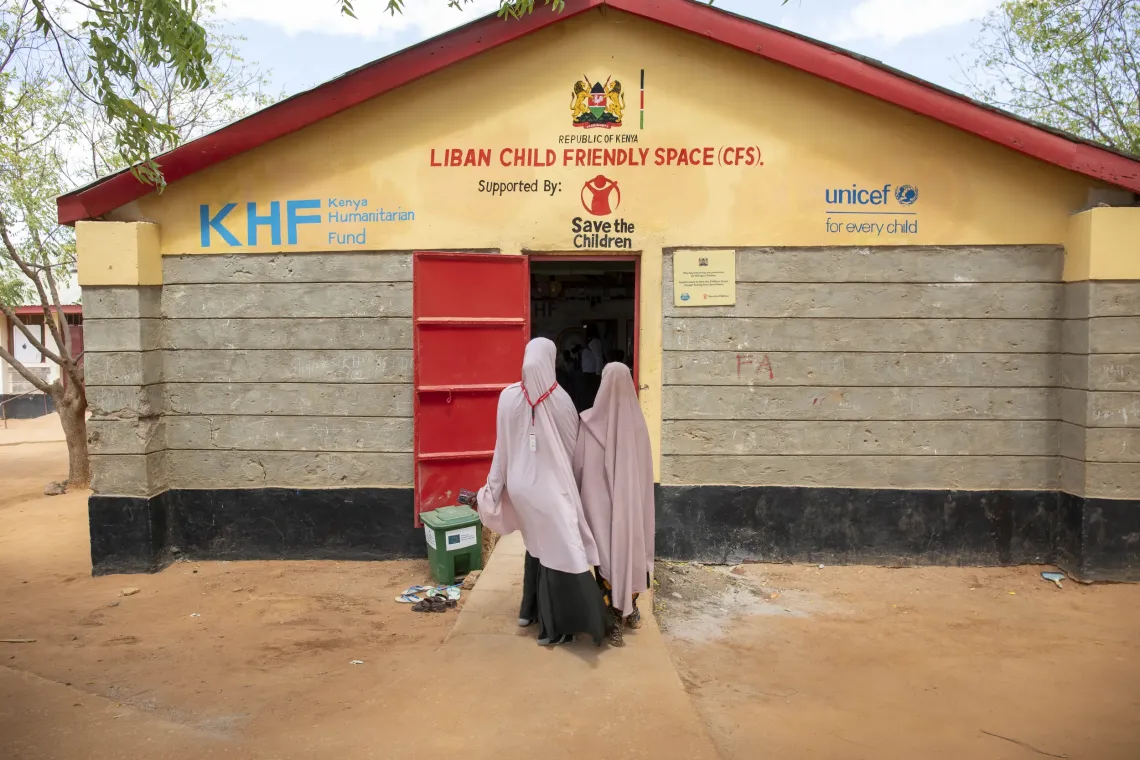
“At the CFS center here in Dadaab, foster parents receive training that equips them with the skills to provide safe, nurturing and supportive homes for the children in their care,” says Pauline. It empowers them to become advocates for child protection, helping vulnerable children integrate into their families and the wider community,” Akinyi said.
Back in Halima’s home, Mohamed wakes from his nap.
“My friends used to tease me that it had been a long time since I had a baby to care for,” Halima says. “But I believe this little one arrived at exactly the right moment. I am grateful for the chance to raise him and watch him grow alongside my other children in our family and community.”