Community Protection Volunteers offer a safety network for refugee children
Providing a support system to keep girls safe

Life in Kakuma refugee camp, in Turkana, northern Kenya, is a bustling hub of activities and can often get quite busy. There are over 288,206 refugees living in Kakuma camp and Kalobeyei settlement, alongside the surrounding hosting communities. Residents must get used to the sound of neighbours, mosques, children and domestic livestock.
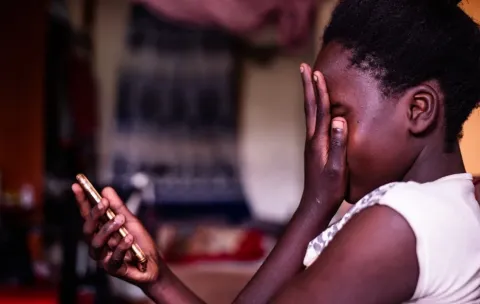
Sirat is a 14-year-old girl who takes both her school homework and helping with house chores seriously. She has a hearing impairment, which means that she is not disturbed by the loud environment. But for any girl, living in a crowded camp carries a risk. This is why UNICEF has established a network of child protection volunteers, to help ensure girls like Sirat remain safe and well.
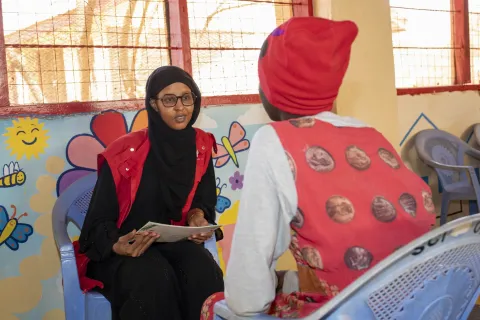
279 child protection volunteers (CPVs) have been trained using the 5 days CPVs and Other Paraprofessionals curriculum anchored at the Directorate of children services (DCS) including sensitization of 263 CPVs on the supportive supervision guide. Both the training curriculum and the supportive supervision guide were through UNICEF, with the European Union (EU) Humanitarian Aid support. Every volunteer is a refugee themself, living within Kakuma and Kalobeyei. They are the eyes and ears of the community and are trained to complement the work of the professional workforce to provide services to children, families and communities.
This means they know which legal rights every single resident of the camp has and understand how best to access the myriad services that refugees may need. They act as a mobile referral unit, conduct door to door follow-ups, and are trained to spot urgent cases of need and escalate them for assistance.

From registering for asylum or food rations to enrolling in schools, the daily bureaucracy of being a refugee can be daunting. Add to that the trauma that families often experience when fleeing their homelands because of conflict or poverty, facing destitution, losing loved ones and adjusting to a new country - life can be overwhelming. The community volunteers speak the local languages and know the various cultures, they have lived experience of harrowing journeys and unnerving adjustments. They are able to advise their peers on how to make a life, build a community and look to the future.
The counselling they provided to Sirat’s mother, Hamdi, helped her with finding a school placement for Sirat, one that catered for her specific communication needs. This has helped improve Sirat’s grades and ensured she is safe daily, because school is one of the most protective environments for a girl.
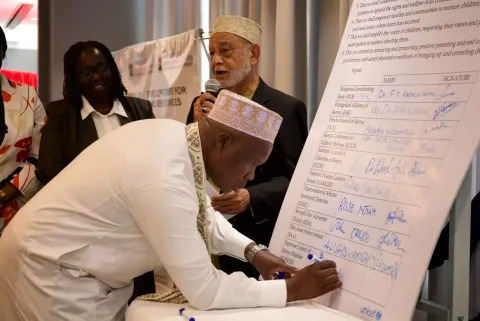
The volunteers are coordinated by a network of professional social workers, who have also received bespoke training and support from EU Humanitarian support. The initiative delivered child protection training to 80 frontline case workers, all of whom attended a 10-day Management of Child Protection Services Course anchored at the Kenya School of Government and gained a certificate validating their learning and skills. 99.8% of the cohort passed the final exam. Some of the refugee graduates of the 5 days training curriculum have since self- repatriated to their home countries and have taken their knowledge home. This has enabled them to acquire paid jobs assisting in the child protection sector.
Elijah Jakait the Turkana West sub-county Children’s Officer responsible for refugee operation also joined the course and said “The curriculum of the course is anchored in our national standards of protection. Any child found within our borders has the same rights. The community protection volunteers provide a support system which helps with financial aid, emotional support and in addressing the raft of challenges which refugees and the host community face.”

The integration of refugees and the host community is evident nowhere more strongly than in the integrated schools in Kalobeyei. Schools in this area enroll both local Turkana children and refugee children. Most of the refugee children come from South Sudan and Africa’s Great Lakes region and many arrive not speaking Swahili or English, having missed years of school. Some have reached teenhood without ever holding a pen.
By getting Sirat into school, her mother Hamdi has given her the chance for a better future.
Thanks to EU Humanitarian aid, UNICEF has partnered with the Directorate of Children Services, UNHCR and partners in both Kakuma and Dadaab refugee camps in Kenya and reached 625 social service workers with capacity building on child protection and supportive supervision. More than 20,000 learners like Sirat have benefitted from the programme’s ability to support children’s transition back to school.