A Colourful Arm Tape, a Weekly Walk and Peanut Paste
How One Turkana Family Is Dealing with Child Malnutrition

Four-year-old Melvin is the fifth of six children in a pastoralist family in Lokichar, Turkana, Northwest Kenya. With the help of a simple coloured arm measuring tape, Melvin’s mother knew it was time to seek help from the nearest health centre for her child.
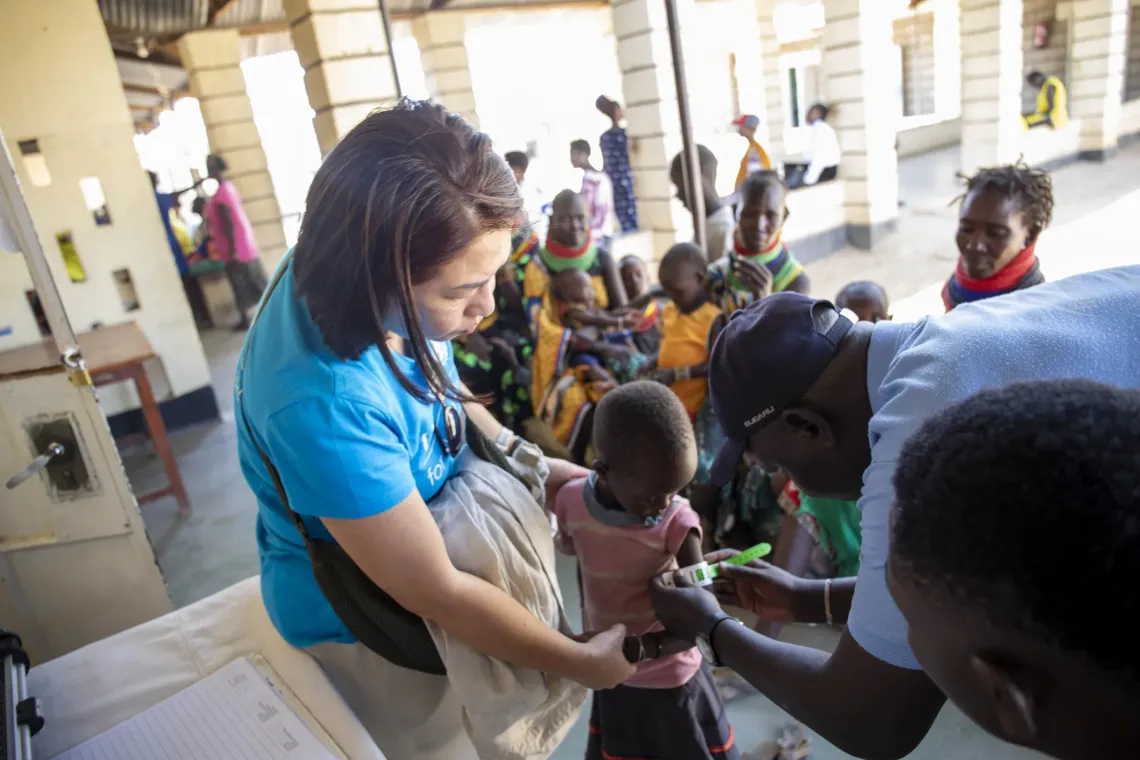
The tape is called a family MUAC — a Mid-Upper Arm Circumference band that measures a child's nutritional status quickly and can be read by anyone trained to use it, without needing a proper weighing scale. When Elizabeth, 43, Melvin’s mother measured Melvin, the band showed yellow: a warning sign. A few months ago, a Community Health Promoter gave Elizabeth the MUAC tape and taught her how to use it to monitor Melvin’s health. Elizabeth’s community is regularly visited by a Community Health Promoter who does home visits to check on expectant mothers, babies and young children to monitor their health and nutrition status. That home visit, part of routine outreach activities that bring health workers into remote pastoralist settlements, was what prompted Elizabeth to seek help for Melvin.
Melvin and her family lives in Lokichar, Turkana County, located in Northwestern Kenya. The landscape in Lokichar is hot and dry, with sparse vegetation all around. Here, families like Melvin’s are pastoralists – people who herd goats and cattle.
Elizabeth’s husband moves with the family’s livestock in search of pasture and water, often for months at a time – sometimes away for as long as six months. Their eldest son, aged 16, accompanies his father and helps pasture the animals. He does not attend school.
“I take care of the family while my husband takes care of the livestock - caring for the children, tending to the smaller animals kept near the homestead for milk, collecting firewood, and finding food. I sell surplus milk to help cover firewood and daily meals,” says Elizabeth.
The family's diet reflects that pressure.
‘In the morning, I give the children milk mixed with goat’s blood, or tea. The next meal is supper, and I usually serve ugali (corn meal). Sometimes, I add some spinach or cabbage when it’s available,’ Elizabeth adds.
With below average rainfall affecting their area, Elizabeth’s husband and son had to travel far from their home in search of pasture and water for their herd. Elizabeth and the younger children, ages between 14 and 6 months old, are left tending to a few goats that they rely on for milk. Aside from caring for their young children, Elizabeth needs to tend to the animals, fetch water and firewood for cooking. Her 10-year-old daughter helps Elizabeth around the house with these chores and caring for the younger children, Melvin and Emui, aged 4 years and 6 months, respectively. Sadly, she is not attending school.
With the harsh conditions, Elizabeth constantly monitors Melvin’s and Emui’s health conditions, using the MUAC to watch for signs of malnutrition. The MUAC has three colors, green, yellow and red. Green means a child has normal weight, yellow indicates moderate malnutrition, and red means severe acute malnutrition. When Melvin’s MUAC measurement showed yellow, Elizabeth knew Melvin needed help.
With the help of her older children, they walked for almost two hours, bringing Melvin to the health centre to be seen by health workers, who assessed Melvin. They confirmed she was moderately malnourished.
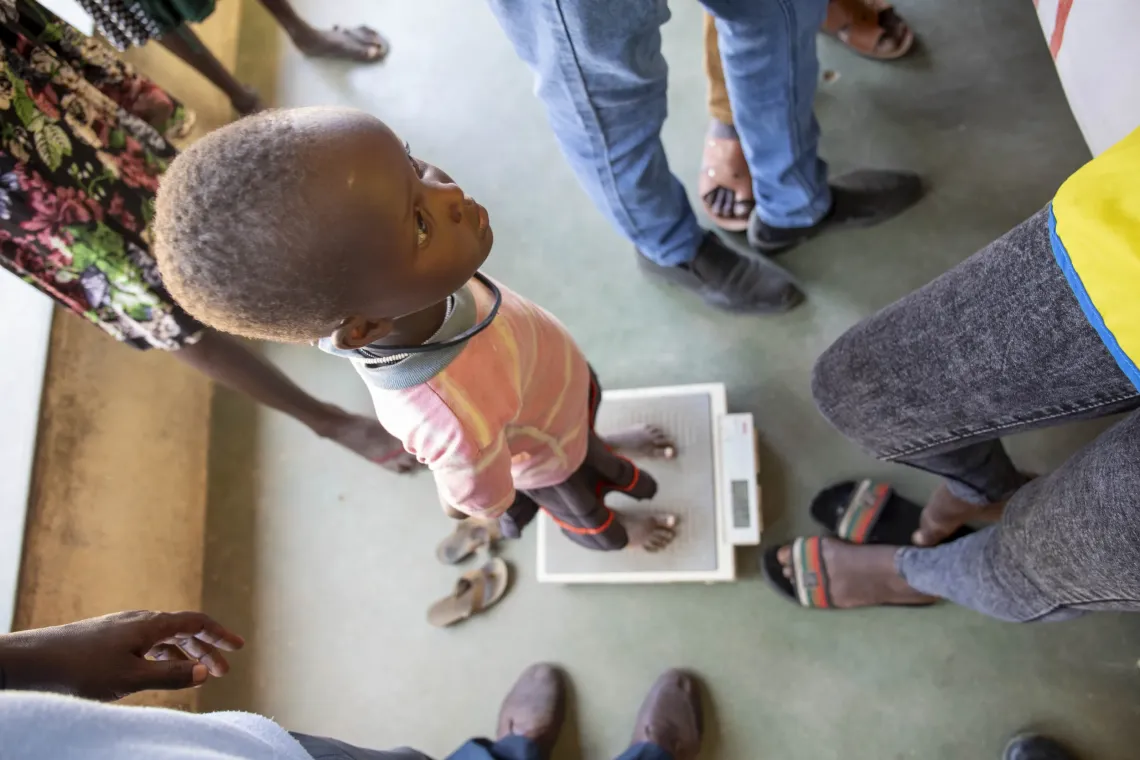
Immediately, Melvin was enrolled in the outpatient treatment programme and given a week’s supply of Ready-to-Use Therapeutic Food (RUTF) — a fortified peanut paste designed to help children recover from moderate and acute malnutrition without needing to be admitted to hospital, if caught in time.
Melvin needs to consume three packets of peanut paste every day, which will give her the daily calorie intake to gain the weight needed. A child suffering from malnutrition needs to gain between one to two kilograms of weight per week, under the treatment programme using peanut paste.
‘I visit the centre every week so they can check Melvin’s weight and get the next week’s supply of peanut paste. We walk for two hours to get here. It’s not easy since I also have a six-month old baby to take care of and bring with me,’ Elizabeth shares.
The family lives about four kilometers from the nearest health centre. Once a week, Elizabeth takes at least two of her older children with Melvin and Emui, on the two-hour walk for Melvin’s weekly health monitoring.
‘Turkana has the highest incidence of child wasting in Kenya, accounting for around 100,000 children including children in Kakuma and Kalobeyei refugee settlements, who are suffering from malnutrition. In total, around 880,000 children under five years of age require treatment for acute malnutrition across Kenya, including those living in refugee settlements. 6 out of 10 of these children live in the arid or semi-arid lands of the country,’ says Francis Kidake, UNICEF Kenya’s Nutrition Specialist.
‘UNICEF’s Nutrition Programme in Turkana also supports Community Health Promoters who provide nutrition counselling that advises families on feeding practices for young children,” adds Francis.
But Melvin's mother is candid about the limits of advice alone in a place where resources are scarce: as she put it, the guidance is only as useful as what a family has access to — “you use what you have.”
That same scarcity shapes decisions about school. Of Melvin's four older siblings, two attend school — the 14-year-old second born son and one younger brother. The third, a 10 year-old daughter, does not go to school; Elizabeth keeps her home to help with cooking, household chores, and taking care of the younger children and the small animals they keep in the homestead. When her husband and eldest son take the family's herds out for months of grazing, it is this daughter's labour at home that helps hold the household together.
‘I hope that all my children can study and go to school, but that is not possible. My husband said we will send two boys to school. I need someone to help with childcare and household chores, so my daughter is not able to go to school like her brothers,’ Elizabeth narrates. Her hope is that if her older children can complete school and find stable work, they can in turn help support their younger siblings, including their sister, into having a better life.
What comes next
Melvin is recovering. But her mother Elizabeth is thinking beyond the treatment with peanut paste. Her plan, for now, is to keep supporting her at home with whatever the family has and hope it is enough to keep Melvin from slipping back into malnutrition.
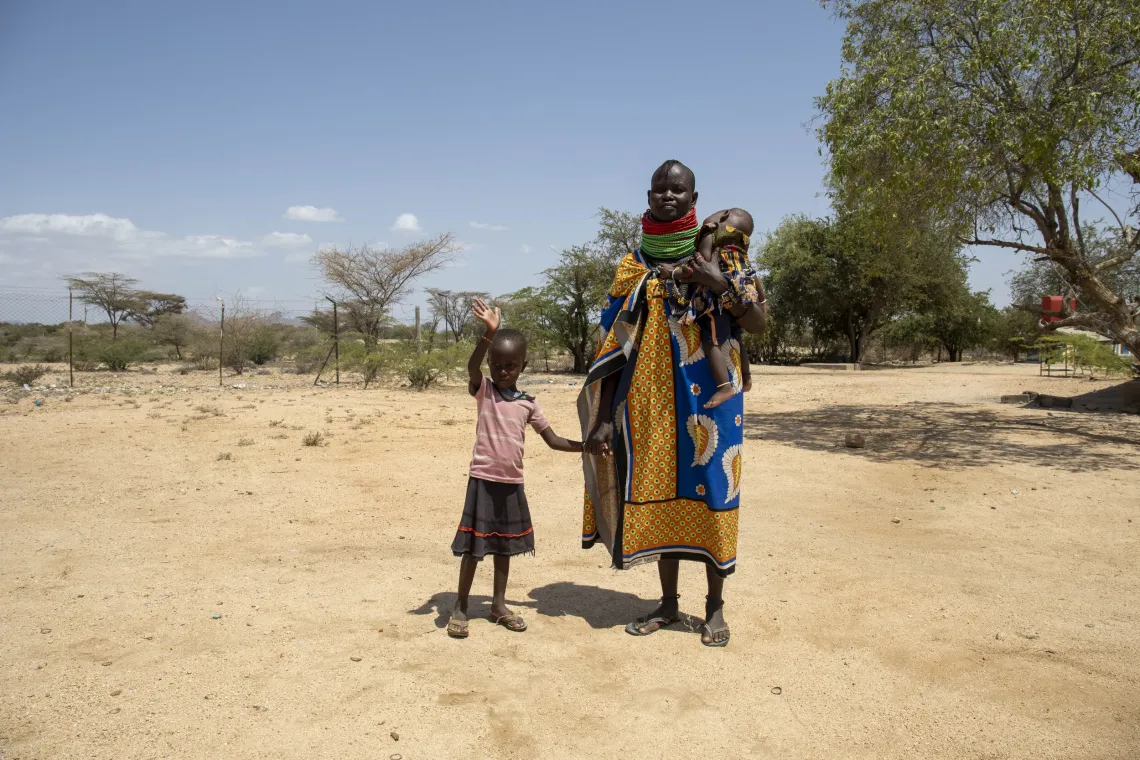
When asked what additional support would help her keep all her children healthy, fed and in school, Elizabeth says she would like to start a small business — a shop selling staples like sugar, maize meal and beans — so that a steady income could help her provide for her family, including feeding her children well enough so that Melvin and the baby do not slip into malnutrition.
Her story reflects what community health teams are seeing across Turkana's pastoralist settlements: early detection through household MUAC screening and Community Health Promoter visits is catching malnutrition before it becomes severe, and RUTF is helping children recover close to home. But treatment alone does not resolve what pushes families like Melvin's to the edge in the first place — long distances to health services, the seasonal absence of fathers grazing livestock far from home, climatic shocks such as droughts, and the hard trade-offs pastoralist families make between school, chores and survival. For lasting change, mothers like Elizabeth are asking for what any parent would: the means to build a more stable life for their children, on their own terms.