The Kenya Sub - National Children’s Climate and Disaster Risk Model launched
Interactive model to provide data and insights on Kenyan children's Exposure and vulnerability to climate change, empowering action at county level
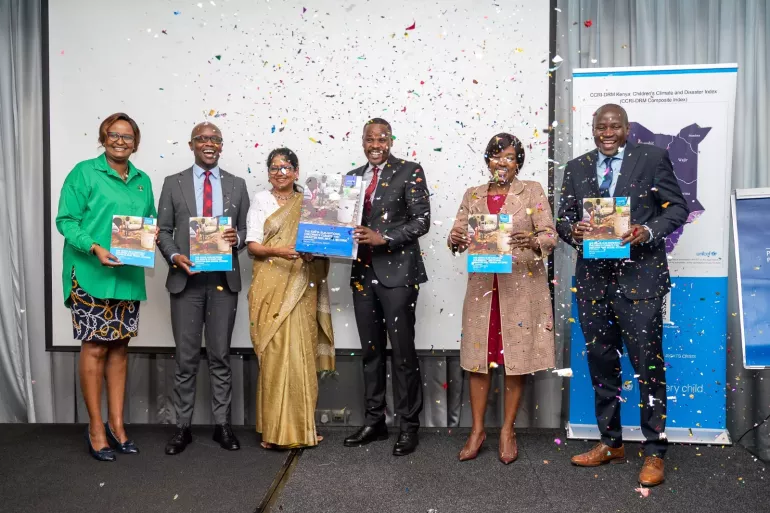
Nairobi, 6th August 2024: UNICEF in collaboration with the Ministry of Environment, Climate Change and Forestry has launched the Children’s Climate and Disaster Risk Model (CCDRM), which serves as an interactive online platform. The model enables stakeholders to understand the climate and disaster risk levels faced by children and their communities at the county level in Kenya. The Kenya Sub-National Children’s Climate and Disaster Risk Model analytical report further highlights that children in Kenya are particularly vulnerable to climate and environmental disasters due to high exposure to multiple hazards and underlying vulnerabilities in the systems they rely on for growth and development.
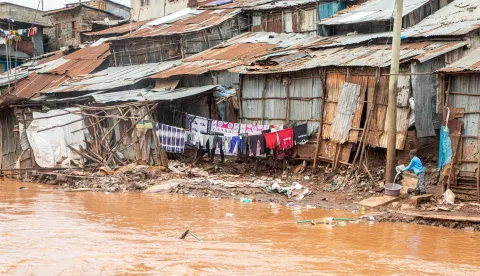
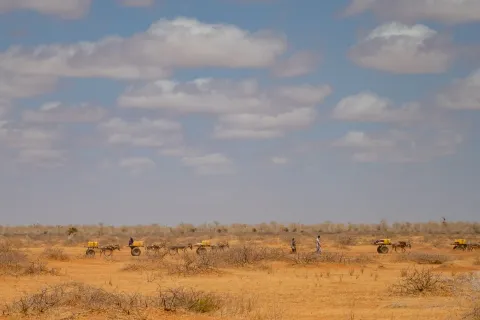
Despite Kenya's minimal contribution to global greenhouse gas emissions, the country experiences significant impacts from climate change, including more frequent and intense droughts and flooding. Unfortunately, fewer resources are allocated to child-centered climate adaptation and resilience-building compared to climate mitigation efforts.
“In recent months, we have witnessed the severe consequences of climate change, ranging from the worst drought in 40 years and the ravaging floods,” Eng. Festus K. Ng'eno, Principal Secretary, State Department for Environment and Climate Change. “The CCDRM is a powerful example of how national stakeholders can work together to create a decision-making tool in climate change adaptation and disaster risk reduction with a strong focus on children and their communities. This tool will support the unpacking and implementation of the National Climate Change Action Plan III and help stakeholders target interventions and ensure that all children in Kenya have an equal and fair opportunity to reach their full potential.”
The CCDRM highlights that while most children in Kenya are at risk from climate change and environmental hazards, those in the seven counties of Turkana, Samburu, Marsabit, Wajir, Mandera, Tana River, and Garissa are worst off and grouped in the “Very high” level of risk category. An estimated 2.4 million children reside in these counties facing very high-risk levels of climate and disasters. Additionally, the four counties of West Pokot, Kilifi, Isiolo, and Kwale are classified as "high-risk."
“Children are more vulnerable to the effects of climate change, as it threatens their development and well-being," said Shaheen Nilofer, UNICEF Kenya Representative. "The climate crisis is a child rights crisis, and the CCDRM reveals the varying risk levels in each county, highlighting the urgent need for targeted action. This model is a vital tool for stakeholders to prioritize investment on climate action and disaster risk reduction efforts, building long-term resilience and sustainability for children and communities."
The launch of the CCDRM aligns with Kenya's commitment to protecting children and youth from climate change impacts, as highlighted in the new National Climate Change Action Plan 2023-2027. The plan's focus on children and young people underscores the importance of empowering them to actively participate in both national and local climate action initiatives. In Turkana, for example, simple solutions like rainwater harvesting and increased access to groundwater can significantly improve children's health and well-being, reduce school drop-out rates, and enhance community resilience to climate and disaster risks. A more sustainable future for children and communities can be secured by prioritizing climate action at every level.
Highlights of the Children’s Climate and Disaster Risk Model
- About 12 million children face climate and disaster risk in Kenya (moderate to very high-risk levels).
- Children in 7 counties (Turkana, Samburu, Marsabit, Wajir, Mandera, Garissa & Tana River) are at a very high-risk category to climate and environmental shocks.
- Children in an additional 4 counties (West Pokot, Kilifi, Isiolo, and Kwale) are in the high-risk category.
- About 2.4 million children live in counties with very high levels of risk to climate and environmental shocks.
- Approximately 9 million children in Kenya are exposed to droughts and water scarcity.
- Over 1.3 million are exposed to flood risks, and over 10 million are exposed to Malaria risks.
- Unfortunately, less than 2.4% of climate financing globally is channeled to children-centered interventions according to the Children’s Environmental Rights Initiative (CERI) coalition 2023 Report “Falling short: Addressing the climate finance gap for children”.
Access more information:
The Kenya Children’s Climate and Disaster Risk Model Analytical Report
The Children’s Climate and Disaster Risk Model
The Children’s Climate and Disaster Risk Model Animation Video
Media contacts
About UNICEF
UNICEF works in some of the world's toughest places to reach the world's most disadvantaged children. Across more than 190 countries and territories, we work for every child, everywhere, to build a better world for everyone.
For more information about UNICEF and its work for children, visit www.unicef.org.