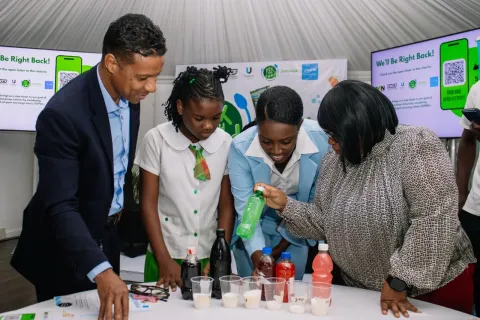
UNICEF Urges Stronger Support for Breastfeeding
Call to action highlights breastfeeding's vital role in protecting children's health

Breastfeeding is a child’s foundation as it shapes a child’s health, growth, and future. By supporting and investing in mothers and babies, we can give every child the best chance to thrive from day one.
This year’s theme for National Breastfeeding Week, Prioritize Breastfeeding: Create Sustainable Support Systems emphasizes the need for an all-of-society approach to ensure that every mother has the support and resources to ensure exclusive breastfeeding which means, feeding infants only breast milk until the age of six months. It calls on families, communities, governments, civil society, and the private sector to create a cohesive, enabling environment that ensures consistent and inclusive support for breastfeeding.
Breast milk contains all the nutrients an infant requires in the first six months, and its composition adapts to the baby's changing needs. Breast milk is rich in antibodies, especially colostrum (the first milk), which helps protect against viruses, bacteria, and infections like pneumonia and diarrhea. Breastfed babies have reduced risks of obesity, asthma, Type 1 and Type 2 diabetes, sudden infant death syndrome (SIDS), ear infections and gastrointestinal illnesses, allergic conditions like eczema and childhood leukemia. Breastfeeding promotes healthy weight and helps prevent childhood obesity, supports mother-infant bonding and is environmentally friendly. Studies suggest breastfed babies may have higher IQ scores and better cognitive development, especially in preterm infants.
Breastfeeding also benefits mothers by lowering their risk of breast and ovarian cancers, Type 2 diabetes, high blood pressure and heart disease. Mothers who breastfeed are less likely to experience postpartum depression. Exclusive breastfeeding can also delay the return of menstruation and ovulation. Compared to formula feeding, breast milk is always available, at the right temperature, and free, saving time and money.
However, breastfeeding can be challenging if mothers and families are not supported. Exclusive breastfeeding in Jamaica is only 33% which is lower than 43% in the Latin America and Caribbean region. However, to meet the global target of 70% by 2030, more support for mothers is needed.
Breastfeeding is not a one-woman job but a shared responsibility, requiring sustainable supportive environments across homes, communities, health systems, and workplaces such as breastfeeding rooms for lactating mothers. For many years, UNICEF has partnered with the Ministry of Health and Wellness, and the Pan American Health Organization (PAHO/WHO) to promote, protect and support breastfeeding in Jamaica.
UNICEF remains steadfast in its commitment to Jamaica’s mothers and children, and we call on government, private sector, communities, and families to join forces in building a breastfeeding-friendly nation where every child gets the best start in life. By working together to prioritize breastfeeding, we will continue to ensure equal access to consistent breastfeeding support for all mothers, for the health of generations to come.