UNICEF urges Jamaica to embrace positive discipline at OCA’s National Dialogue
KINGSTON, February 24, 2026: UNICEF is calling for a national shift toward positive, nurturing approaches to child-rearing, emphasizing that “discipline should teach not traumatize”.
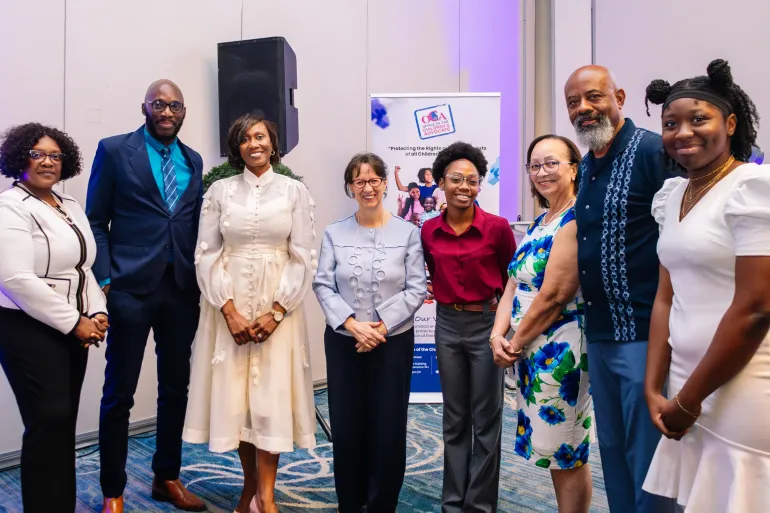
Addressing a diverse group, at a “Dinner and Conversation” hosted by the Office of the Children’s Advocate (OCA) on Monday (February 23), Olga Isaza, UNICEF Representative underscored that the moment represents a turning point for Jamaica as the country confronts the deep-rooted cultural norms that have sustained corporal punishment across generations
The gathering, which looked at Discipline that Teaches: Corporal Punishment vs. Alternative Discipline, brought together leaders from government, civil society, academia, faith-based groups and students for an in-depth dialogue on shifting Jamaican parenting toward positive, non-violent approaches to discipline.
Ms Isaza commended the OCA for convening such a timely and courageous conversation. She noted that data from recent national surveys highlight both the persistence of violence against children and encouraging shifts in public attitudes.
She referenced findings from the 2023 Violence Against Children Survey which show that more than three in four Jamaican young people have experienced some form of violence in their lifetime. She also pointed to the 2022 Multiple Indicator Cluster Survey which reveals that only 16 per cent of mothers and caregivers now believe physical punishment is necessary to raise a child, signaling evolving norms and greater openness to positive parenting approaches.
“Attitudes are shifting. Many Jamaican parents already understand that discipline does not have to involve pain to be effective,” she said, adding that young people in a recent U-Report poll continue to affirm that calm communication, clear boundaries, and removal of privileges are far more constructive than fear‑based discipline.
She underscored that corporal punishment violates a child’s inherent right to dignity and protection from violence, and encouraged participants to embrace evidence-based, nurturing approaches that strengthen relationships and help children develop empathy, self-control, and problem‑solving skills.
Setting the tone and context for the discussions, Children’s Advocate Diahann Gordon Harrison stressed that the evening was not about judging anyone; rather, it was an opportunity to create a space where diverse views could contend, guided by evidence on the psychological impact of corporal punishment versus positive discipline.
The evening featured an engaging panel discussion with members of the Christian, Jewish and Rastafarian communities along with a teacher and student. This was complemented by two presentations that framed corporal punishment within historical, cultural, and developmental contexts:
- Ms. Samelia Sybblis, a fourth-year Illustrator at the Edna Manley College of the Visual and Performing Arts, explored the historical and Biblical underpinnings of corporal punishment. Her presentation encouraged participants to interrogate long‑standing cultural interpretations that have shaped discipline practices across generations.
- Professor Maureen Samms‑Vaughn, pediatrician and child development specialist, delivered an insightful session on Positive Discipline, offering practical strategies that caregivers can use in homes, schools, and communities.
Professor Samms‑Vaughn clarified that she prefers the term positive discipline rather than alternative discipline, emphasizing that corporal punishment does not constitute discipline. Discipline, she explained, must guide and teach, never harm.
Participants engaged deeply with the presentations, reflecting on how cultural traditions, religious teachings, and social norms intersect with parenting practices. Faith leaders also contributed perspectives on compassion, dignity, and non‑violence as guiding principles within their respective traditions.
Ms. Isaza urged partners to continue building momentum toward systemic change:
“If we want a Jamaica that is less violent, we must begin in homes, classrooms, and communities.” She reaffirmed UNICEF’s commitment to strengthening positive parenting programmes, supporting evidence‑based policy reforms, and collaborating with the OCA to ensure that every child’s right to safety, dignity, and protection is upheld.
Media contacts
About UNICEF
UNICEF promotes the rights and wellbeing of every child, in everything we do. Together with our partners, we work in 190 countries and territories to translate that commitment into practical action, focusing special effort on reaching the most vulnerable and excluded children, to the benefit of all children, everywhere.
For more information about UNICEF and its work for children in Jamaica, visit www.unicef.org/jamaica.