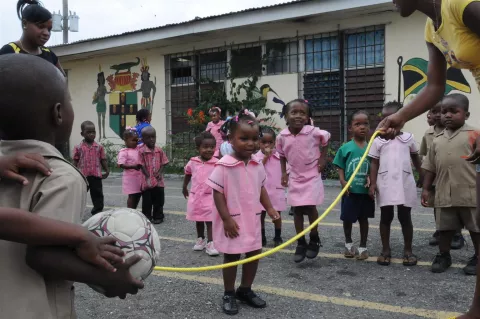
Jamaica Celebrates the Power of Play

KINGSTON February 4, 2026: Jamaica will come alive with laughter, movement and creativity as schools, communities, families and partners celebrate Play Day JA on February 4.
The island’s national observance of Global School Play Day highlights the critical role of play as a teaching, learning and therapeutic tool. Play is not “extra”. It is foundational to healthy development, resilience, well-being and lifelong learning for people of all ages.
Organised jointly through a partnership involving UNICEF Jamaica, the Ministry of Education, Youth, Skills and Information (MOESYI), the Early Childhood Commission and a growing network of corporate and non-government partners, Play Day JA is more than a one-day event. It is part of an ongoing effort to bring play-based approaches that are backed by evidence, into classrooms, family life and community spaces across Jamaica. Global research and local experience show that play enhances cognitive, social, emotional and physical development, builds creativity and problem-solving skills, and is critical in supporting mental health.
In the aftermath of Hurricane Melissa, play has taken on renewed importance as part of ongoing Psychological First Aid (PFA) efforts to support children, families and caregivers. In times of crisis and recovery, play, which is easily accessible, free and appropriate for all ages, can facilitate a sense of safety, normalcy and emotional expression, helping children process stress, loss and disruption in ways that words often cannot.
Free play along with simple, guided play activities can reduce anxiety, strengthen coping skills and restore connection, not only for children, but also for adults who are supporting them. Integrating play into community spaces, schools and family routines is therefore a vital, component of Jamaica’s recovery efforts, reinforcing resilience and promoting healing as communities rebuild together.
Education Specialist, Dr Rebecca Tortello, remains a strong voice for this movement, sharing play resources on UNICEF Jamaica’s Instagram page that help teachers and caregivers bring intentional play into everyday life.
One exciting initiative within the last two years has been a partnership with Sherwin-Williams Jamaica to paint colourful hopscotch courts in 35 early childhood institutions and infant schools across the island. This was in recognition of the 35th anniversary of the Convention on the Rights of the Child. These vibrant play spaces are designed not just for fun but to embed foundational literacy and numeracy skills and promote core values through joyful moments that strengthen school communities.
“As Jamaica continues to elevate the importance of play, the call is simple but powerful: Make time to play, not just on Play Day JA, but every day,” Dr Tortello says. “Whether through traditional games, imaginative outdoor fun, or playful learning activities at home and in schools, play unlocks learning, strengthens bonds and nurtures healthier, happier communities for generations to come,” she explains.
“Play spaces are not optional add-ons to schools and communities. They are essential infrastructure. Well-designed play environments support learning, emotional regulation, social connection and resilience. When children have safe, inclusive places to play, they are better able to learn, recover from stress and build the skills they need for life. Investing in play spaces is therefore an investment in stronger schools, healthier communities and more resilient societies,” Dr Tortello says.
Media contacts
About UNICEF
We support government and non-governmental partners to promote and fulfil the rights of children, especially the most disadvantaged. Across more than 190 countries and territories, we work for every child, everywhere, to build a better world for everyone.
For information about UNICEF and its work, visit www.unicef.org/jamaica.