

AstraZeneca Investment Boosts UNICEF Partnership to Improve Adolescent Health in Jamaica
KINGSTON, October 12, 2026: More Jamaican children and adolescents will benefit from health and nutrition support under an expanded partnership between AstraZeneca's Young Health Programme (YHP) and UNICEF Jamaica, backed by a global investment that will exceed US$100 million by 2030. This investment reflects a 20-year commitment to advancing health equity in more than 60 countries.
It comes at a time of growing urgency in global health. In Jamaica, children and adolescents face growing non-communicable disease (NCD) risk factors, including overweight and obesity. Many young people continue to face barriers to accessing the information, services and environments that support healthy living. Through the YHP, AstraZeneca and UNICEF are working to address these gaps and ensure that all youth have a fair opportunity to live healthy lives.
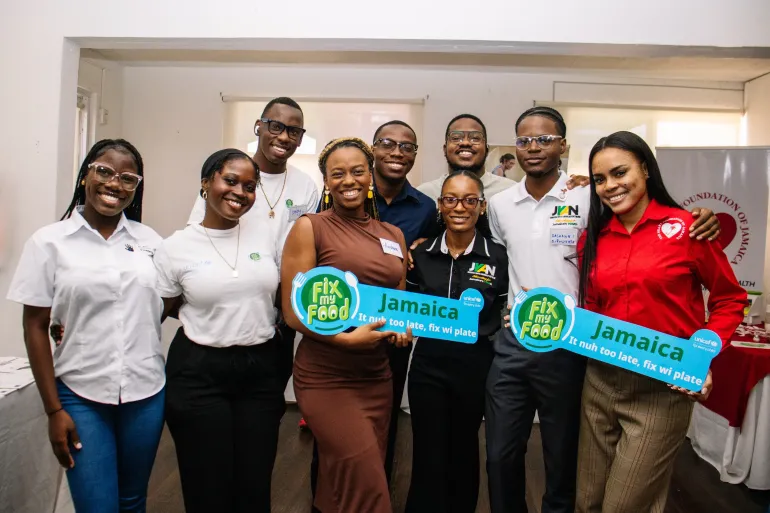
Since 2020, the partnership has reached more than 65,000 Jamaican adolescents and young people aged 10 to 24 through education on NCD prevention with particular emphasis on nutrition, and healthy lifestyle interventions, and has strengthened adolescent-friendly services for nearly 20,000 young people across Kingston and St. Thomas through the Teen Hubs. The initiative has also empowered youth leadership by training 34 youth advocates and supporting the Fix My Food Jamaica movement, which has advanced youth-led advocacy for the National School Nutrition Policy. In addition, the partnership successfully launched the U-Matter text-based mental health chatline, and this has expanded access to critical mental health support for young people.
"Every young person deserves a fair chance to lead a healthy, productive life,” said Mohammad Mohiuddin, Representative (Officer-in-Charge) UNICEF Jamaica. “This partnership is helping to remove challenges that prevent children and adolescents from accessing the support they need, while creating more opportunities for them to shape healthier futures for themselves and their communities. By investing in youth, we are investing in the nation’s social and economic development.”
In Jamaica, the investment will support the next phase of AstraZeneca’s partnership with UNICEF to expand youth-led action and strengthen supportive school, community and health systems, helping children and adolescents prevent NCDs and take action on the growing health impacts of climate change.
NCDs are the leading cause of death worldwide, and 70% of premature adult deaths are linked to behaviours that begin in adolescence. By 2050, a staggering 86% of all annual deaths are expected to be caused by NCDs, representing a 90% increase from 2019 levels. Through the YHP, AstraZeneca and UNICEF Jamaica are helping address these challenges by expanding access to prevention information and early support, building the capacity of those who work with adolescents, and creating more opportunities for young people to take an active role in protecting their health.
The next phase of the programme, which supports young people in underserved communities aims to reach an additional 10 million young people globally, train 800,000 youth advocates and help shape 17 public policies worldwide by 2030.
“Young people have the potential to drive meaningful change in their communities, but they need equitable access to the resources and support that enable them to thrive. Through our long-standing partnership with UNICEF, AstraZeneca is committed to advancing adolescent health, empowering youth-led action, and helping create healthier environments where young people can reach their full potential”, said Marcela Fernández, Country President, AstraZeneca Central America & Caribbean.
Locally, the partnership will expand healthy lifestyle and sport-for-development programmes, strengthen adolescent-friendly health services, support youth-led advocacy initiatives and work with the Ministries of Health and Wellness and Education to accelerate implementation of the National School Nutrition Policy.
At the global level, YHP has directly reached 23 million young people across 60 countries over the past 15 years. The programme has also trained more than one million people and supported youth advocates to positively influence 29 laws and policies.
Through partnering with UNICEF and a wider global network of more than 60 non-governmental organisations (NGOs), including One Young World and YHP founding partner Plan International, the YHP will support young people to build healthier habits, strengthen the environments and services that shape their health, and advocate for policy change in their communities and countries. The next phase of YHP from 2026 to 2030 will place particular emphasis on youth-led action, health equity and climate responsiveness, recognising that young people are not only disproportionately affected by these challenges, but are also powerful agents of change.
##
Note to Editors:
*UNICEF does not endorse any company, brand, product, or service.
About AstraZeneca
AstraZeneca (LSE/STO/NYSE: AZN) is a global, science-led biopharmaceutical company that focuses on the discovery, development, and commercialisation of prescription medicines in Oncology, Rare Disease, and BioPharmaceuticals, including Cardiovascular, Renal & Metabolism, and Respiratory & Immunology. Based in Cambridge, UK, AstraZeneca’s innovative medicines are sold in more than 125 countries and used by millions of patients worldwide.
Please visit astrazeneca.com and follow the Company on Social Media @AstraZeneca.
For Media contacts, click here.
Media contacts
About UNICEF
UNICEF promotes the rights and wellbeing of every child, in everything we do. Together with our partners, we work in 190 countries and territories to translate that commitment into practical action, focusing special effort on reaching the most vulnerable and excluded children, to the benefit of all children, everywhere.
For more information about UNICEF and its work for children in Jamaica, visit www.unicef.org/jamaica.


