Young Social Innovators Driving Change in Ukraine
UNICEF partners with young people to create innovative solutions that positively impact communities in the face of conflict and adversity

In February 2022, the lives of many Ukrainians changed forever. The war has drastically worsened living conditions for millions of people for over two years, with significant electricity, heating, water and telecommunications disruptions across the country. Countless families have been forced to flee their homes, hiding in bomb shelters for weeks or seeking refuge in other cities and countries.
The lives of children and young people in Ukraine have been irrevocably altered. The conflict has impacted every facet of their lives. From disrupted education to compromised mental health, millions of children have been stripped of the stability and safety essential for their development.
Against this backdrop, young Ukrainians have demonstrated remarkable resilience and willingness to take action, emerging as both beneficiaries and active partners in the humanitarian relief efforts. Figures show 30 per cent of young people aged 15 to 24 volunteered for the first time in 2022, compared to 6 per cent in 2021.
Recognizing the pivotal role of youth in driving societal change, UNICEF enlisted the expertise of young people to create innovative solutions and approaches to address emerging challenges. That same year, 40 teams of UPSHIFT graduates who had previously undergone training led new projects that, with proper funding and support, could make a difference in the lives of thousands.

MedHub
A new, youth-led medical training centre has been set up in the city of Kropyvnytskyi in central Ukraine. Founded by medical college students, Maria, 16, Oleksandr, 19, Angelina, 19, Sasha, 17, and Valeria, 16, MedHub teams up with experienced doctors to provide first-aid training sessions to anyone wishing to learn.
More than 800 health facilities in Ukraine are reported to have been damaged or destroyed by shelling and airstrikes. Daily missile attacks across the country pose a constant threat, with any city at risk of becoming the next target. These attacks result in serious and often fatal injuries to civilians and medical personnel who struggle to access the healthcare they need. In this context, even basic first-aid knowledge can make a difference in saving lives.
The MedHub centre is equipped with everything doctors need to teach including mannequins, tourniquets and air ducts. “During the training, participants learn how to apply tourniquets and stop critical bleeding, tamponade wounds, and put a person in a stable lateral position to free their airways,” says Maria. These fundamental first-aid skills can save lives in many remote towns and villages in Ukraine that don’t have access to hospitals and immediate ambulance services. “It’s important in peacetime, but it’s more than just needed in times of war,” says Oleksandr.

Red Dog
In Northeast Ukraine, Daryna, 18, is working to feed and find homes for pets who could not be evacuated with the families forced to relocate due to the war. “The number of abandoned and stray dogs in Kharkiv has almost tripled since the beginning of the war,” says Daryna. “I couldn’t let them die.”
Through the Red Dog project, Daryna partners with local businesses to set up dog feeding stations in coffee shops, stores, and beauty salons across the city. Red Dog also works to find new homes for Daryna’s furred friends, including providing supply boxes for new pet owners with food, a leash, a collar and tips on caring for dogs for first-timers.

Teenage Island
The impact of war on young people’s mental health is far-reaching, with 82 per cent of them reporting losses due to the war. An estimated 1.5 million children are at risk of depression, anxiety, post-traumatic stress disorder and other mental health issues, with potential long-term effects and implications.
Moved to support their peers, the Teenage Island team created a safe virtual space on Discord, a popular social platform, for teenagers who want to connect with others going through similar challenges. “This is a safe place where you can get away from unwanted reality. At the moment, for us, that is the war,” says Oleksii, 22, a team member of Teenage Island.
Through the online platform, adolescents and young people can participate in group consultations with a psychologist, take creative writing classes or embark on a fantasy role-playing game Dungeons and Dragons Adventure. The team also recorded a podcast series in which Sofia, 17, reflected on issues like grief, mental health, and war with a psychologist.

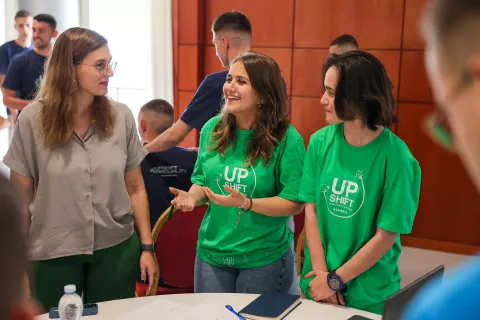
Throughout the hard years of war, UPSHIFT has empowered these young social innovators and many others with the skills, mindset and funding to tackle war-related issues they feel most passionate about. Rather than remaining passive observers of the war, they’ve become active problem-solvers and embraced a fundamental role in their communities. While UPSHIFT might have made the start possible, MedHub, Red Dog and Teenage Island continue to thrive today thanks to the commitment of young people to drive social impact.
UNICEF’s social innovator accelerator UPSHIFT supports young people in 47 countries in harnessing their creativity and determination to create real and tangible change in their communities. By equipping them with 21st-century skills like problem-solving, creativity, collaboration, leadership, and communication, UPSHIFT prepares the next generation to take charge of their present and future as entrepreneurs, employees, and global citizens.
Five years into its implementation in Ukraine, UPSHIFT has equipped over 3,000 young people across the country to channel their energies into social innovation. In 2023 alone, 459 teams comprising over 2,000 young people aged 14 to 24 underwent the UPSHIFT learning journey.
The war in Ukraine is still unfolding as a grave humanitarian crisis. But amid conflict and adversity, young people have emerged as champions of resilience and innovation, defying the role of victims to drive change in their communities and beyond.