When inclusion fuels innovation
Young people with disabilities are turning barriers into breakthroughs through UPSHIFT’s inclusive approach to innovation
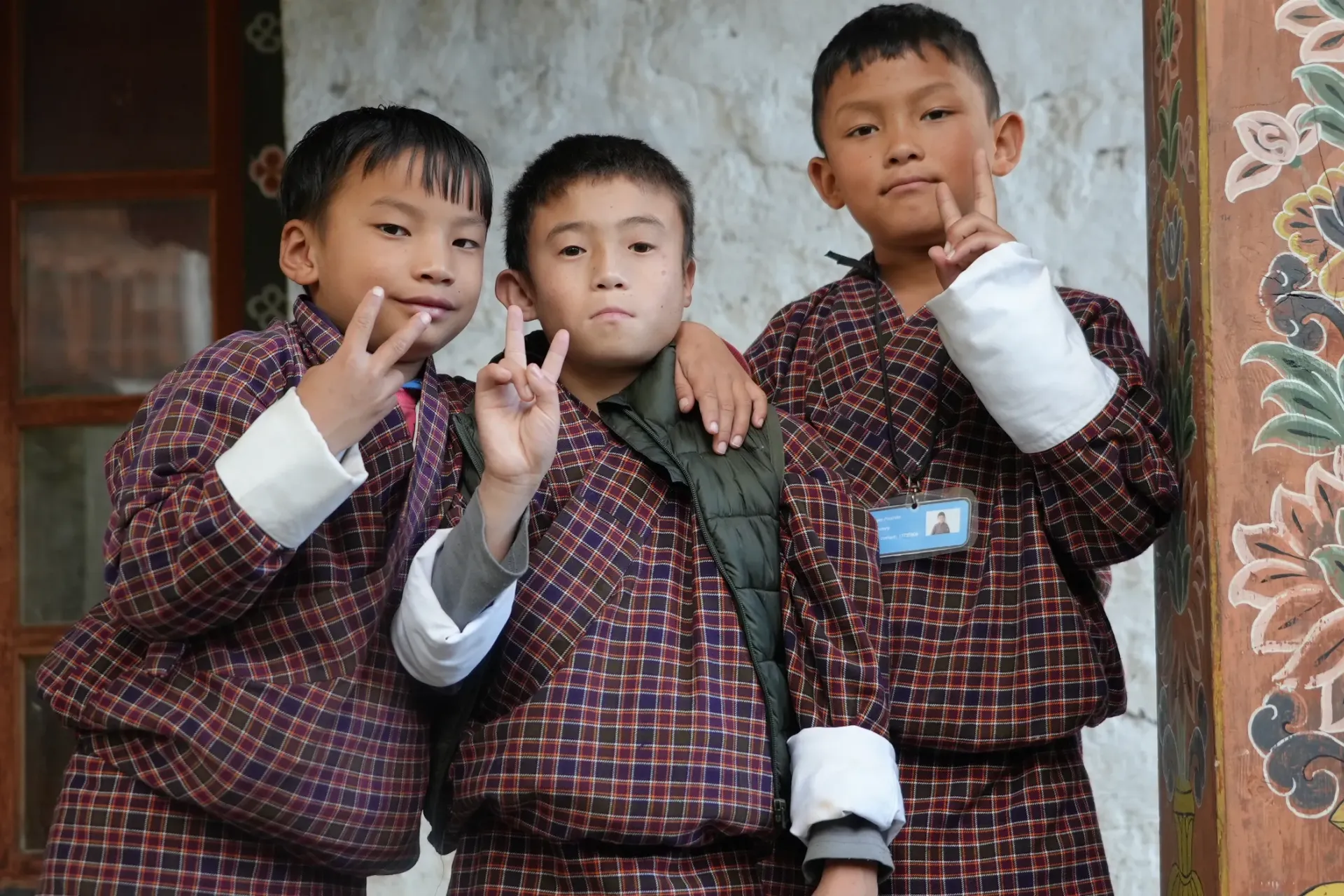
When a teacher in Bolivia explains the UPSHIFT methodology to her deaf students in sign language, and a deaf teenager in Bhutan signs the newly created word for “UPSHIFT” on the other side of the world, it’s clear: innovation travels faster when it’s inclusive.
Yet globally, children with disabilities are 47 per cent more likely to be out of school, and fifty per cent more likely to never attend one. Not because they lack talent or interest, but because the world isn’t built with them in mind. Physical barriers, stigma, and the absence of accessible digital tools quietly shut them out of opportunity.
Breaking these barriers takes innovation that adapts — to people, places, and possibilities. For over a decade, UPSHIFT, UNICEF’s flagship social innovation accelerator, has been challenging assumptions about what young people are capable of, equipping millions across 58 countries with the skills, mindset, and confidence to turn ideas into action.
UPSHIFT’s strength lies in its flexibility, adapting across ages, contexts, and models. Each country builds its own approach to the UPSHIFT methodology, meeting young people where they are. In doing so, UPSHIFT has been tailored to the needs of young people with disabilities worldwide, ensuring they are not just champions of innovation, but co-designers and social entrepreneurs driving impact in their communities.
In Ghana, UPSHIFT launched in 2021 to complement school curricula for deaf and hard-of-hearing students in two schools: Tetteh Ocloo in Tema and the Demonstration School in Mampong.
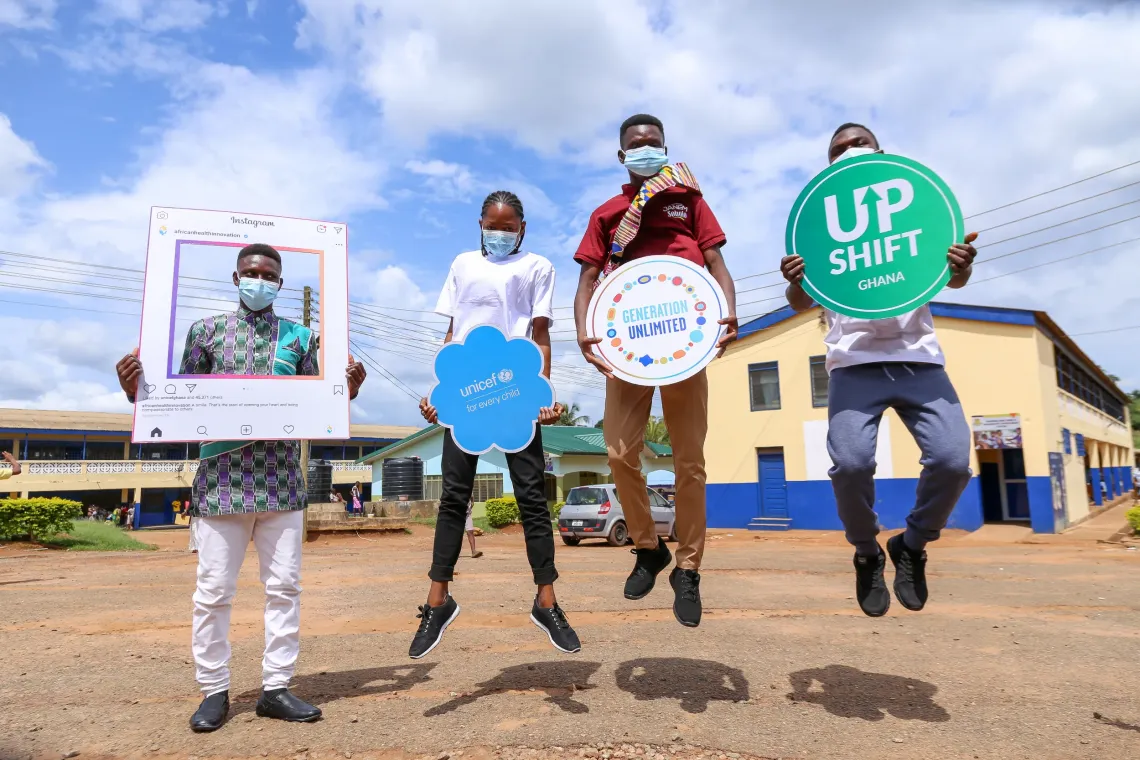
Deaf mentors, including a carpenter, a fashion designer, and a university student, led sessions and served as role models, helping participants build confidence and reimagine what success looks like in their lives. By the end of the programme, 100 per cent of participating students reported higher confidence, with nearly two-thirds describing the change as “very high.”


“Through the programme we have learned to be leaders, share ideas, and express ourselves more — taking charge when no one wants to, and focusing not on what we can’t do, but on our unique abilities.”
— Student from the Tetteh Ocloo School for the Deaf

In 2021, UPSHIFT was integrated into RobóTICas, a programme in Bolivia teaching robotics and coding to girls, including those with disabilities. Delivered in Bolivian Sign Language also, RobóTICas ensures that deaf and hard-of-hearing girls can fully participate in STEM and social innovation learning.
Among the participants is Dalia, a 15-year-old who designed a simple but powerful solution for people with hearing impairments like herself:
“I wanted to find a way for deaf people to know if a bathroom is occupied or not. So, I created a system with lights: green means it’s free, and red means it’s occupied.”
— Dalia, 15, RobóTICas participant (Bolivia, 2024)
In Uzbekistan, UPSHIFT was launched in 2019 to support vulnerable and marginalized youth and to tackle long-standing barriers in remote areas such as the Surkhandarya and Karakalpakstan regions, which have been historically hit by poverty, inequality, and the shrinking Aral Sea.
Here, where stigma often kept young people with disabilities hidden, UPSHIFT partnered with civil society and municipalities to reach families directly, sometimes going door to door.
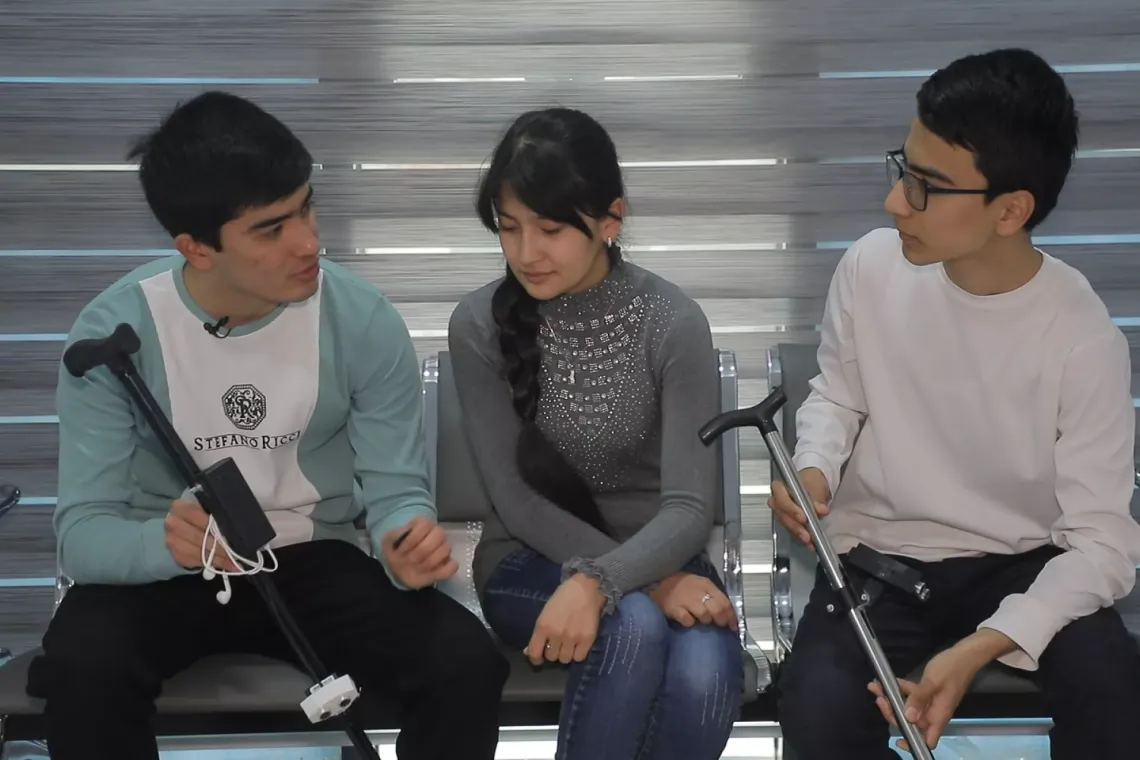
Among the UPSHIFTers were three siblings who developed a GPS-powered Smart Cane — the first of its kind in the country — designed to detect obstacles, provide voice alerts, and improve mobility for people with visual impairments.
In Armenia, outreach teams worked with organizations of persons with disabilities to reach youth who had never joined such programmes before. In 2021, the UPSHIFT Gyumri Bootcamp brought together adolescents with and without disabilities, aged 12–24, to develop IT and social innovation projects at the Gyumri Technology Center.

These UPSHIFTers developed practical solutions like a website to help patients navigate hospitals more easily and a book-sharing system using QR codes to borrow and return books.
“Every young person deserves the chance to discover their potential. Inclusion is not just a right — it’s the key that unlocks the full strength of our collective future”.
— Hasmik Aleksanyan, Adolescent Development Officer, UNICEF Armenia

In Bhutan, inclusion was a guiding principle in how UPSHIFT was designed and scaled in 2022. It quickly became part of both the formal and non-formal education systems: a national model for youth innovation.
While implementing UPSHIFT with the Wangsel Institute for the Deaf, the community realized there was no Bhutanese Sign Language vocabulary for “innovation,” “entrepreneurship,” or “problem-solving”. Students, teachers, and interpreters co-developed new signs, recording them in short instructional videos. The community also created a new word for “UPSHIFT” in Bhutanese Sign Language.
Months later, a Deaf UPSHIFT team won the first National Innovation Challenge 2023, embodying the very words they helped create.

Now, a recent UNICEF study on inclusive UPSHIFT has documented how the UPSHIFT model adapts across different contexts to empower young people with disabilities and the tangible change that follows. From Latin America to South Asia, UPSHIFT is proof that when opportunity expands, so does possibility.